
Why go
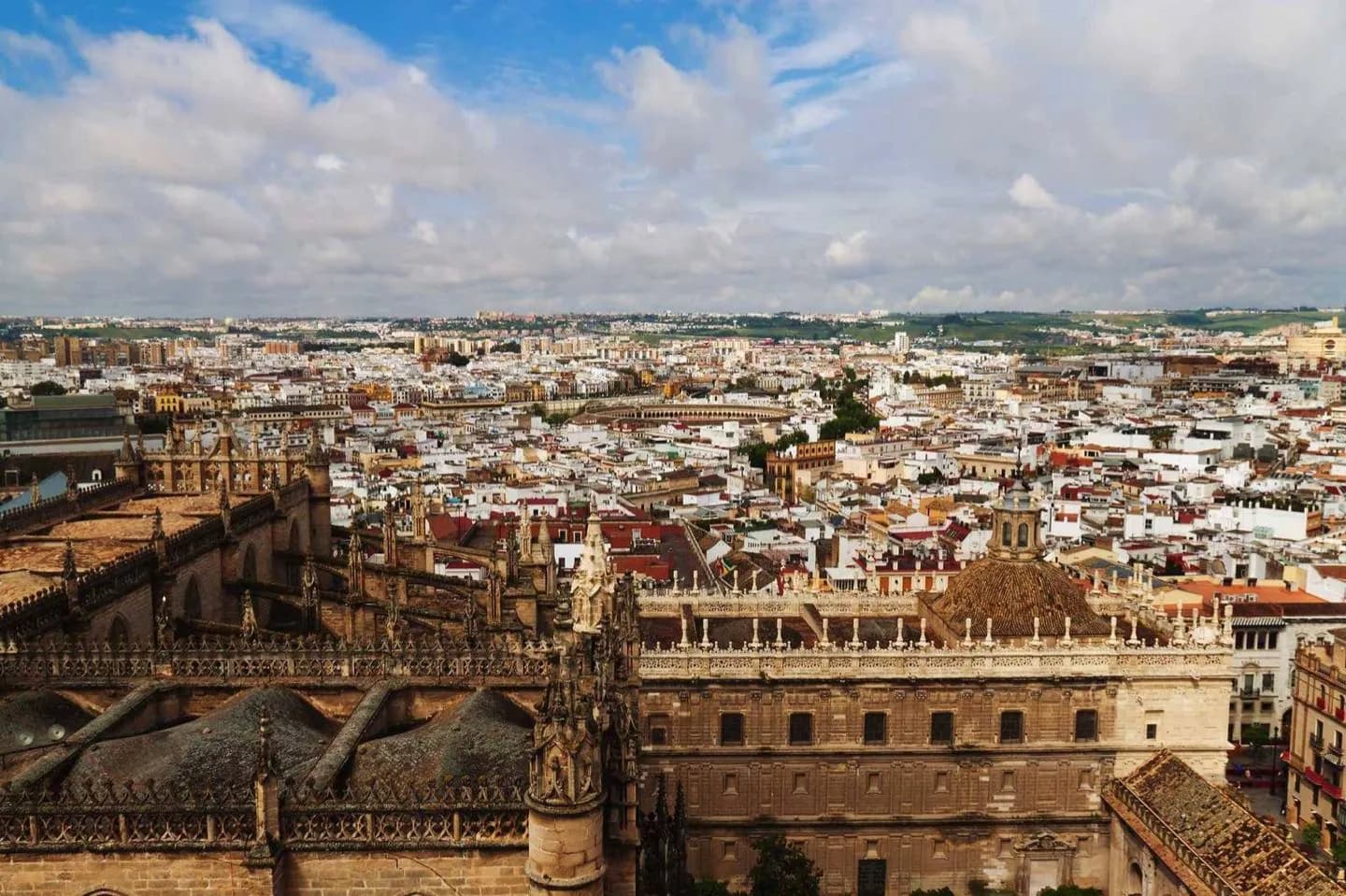
This overview helps you read the city before choosing sights. The monumental core lies east of the river, Triana faces it from the opposite bank, and later civic landscapes extend south toward San Telmo and Plaza de España. The river, Triana and the southern exposition grounds then form one readable geography.
The full story
Seville developed on the low plain of the Guadalquivir, a river that connected inland Andalusia with the Atlantic. The historic core grew on the east bank, where the Cathedral, Alcázar and Archivo de Indias now stand close together. Across the water, Triana formed a distinct riverside district tied to ceramics, workshops and maritime life. The city's role expanded after Castile centralized trade with the Americas here, leaving merchant houses, churches and civic buildings around the old centre. Later growth pushed south toward the Royal Tobacco Factory, San Telmo and the grounds reshaped for the Ibero-American Exposition of 1929. Reading these zones as connected chapters makes Seville easier to navigate: medieval lanes near Santa Cruz, formal Renaissance and Baroque institutions, the working river edge, and broad twentieth-century avenues and gardens.