
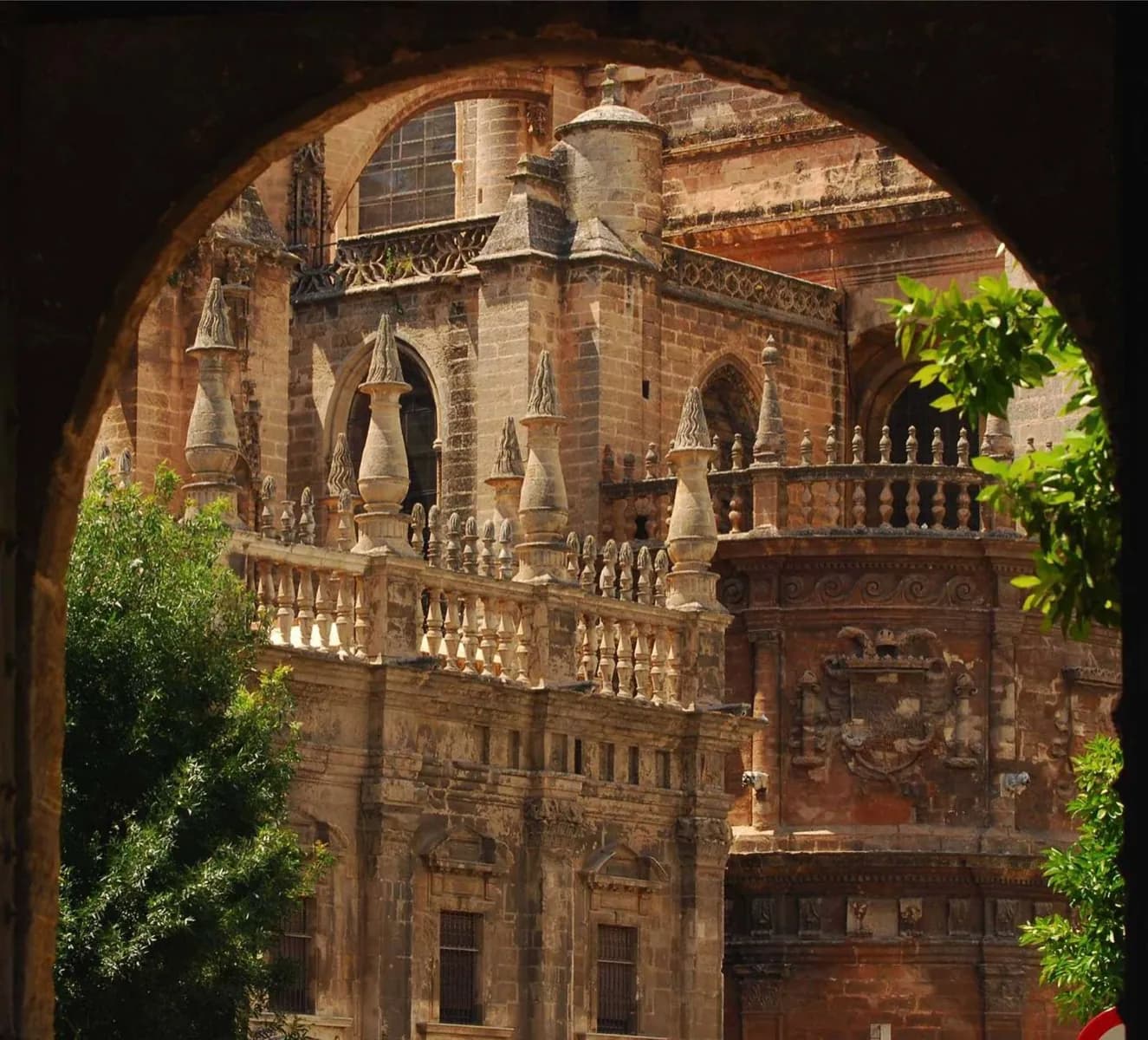
Why go
The vast Gothic nave, main altarpiece and Columbus monument reward a slow interior circuit. The Patio de los Naranjos preserves the footprint of the earlier Almohad mosque. At Seville Cathedral, compare both closely. Seville Cathedral rewards a slower circuit. Seville Cathedral rewards a slower circuit.
What to look for
- The vast Gothic nave, main altarpiece and Columbus monument reward a slow interior circuit.
- The Patio de los Naranjos preserves the footprint of the earlier Almohad mosque.
The full story
The Cathedral of Seville is a religious building in Seville, Andalusia, southern Spain: it is the largest Gothic cathedral and the third-largest church in the world. It is also known as Catedral de Santa María de la Sede (Cathedral of Saint Mary of the See). At the time of its completion in the 16th century, it supplanted the Hagia Sophia as the largest cathedral in the world. Previously, the Hagia Sophia had held the title for more than a thousand years. The cathedral also serves as the burial site of Christopher Columbus. Description The cathedral was built to demonstrate Seville's wealth, as it had become a major trading center in the years after the Reconquista. The builders of the cathedral decided in July 1401 to build a new temple, as the ancient Muslim mosque was in bad shape after the 1356 earthquake. Construction began in 1402 on the site of a former mosque, following the capture of Seville from the Moors; it continued until 1506. Church workers gave half their salaries to pay for architects, builders and other expenses.
Useful to know
- Check the official visitor calendar and reserve ahead when timed entry matters.
- Combine it with nearby stops to avoid crossing the city twice in the strongest afternoon heat.
Your next visit
Estimated · Declared scenario and planning estimates; no live opening, weather, queue or booking service.
Outdoor visit · 30–45 min
World planning estimate; admission, opening, visit duration and access need checking.