
Why go
West Lake brings water, causeways, pagodas and temple settings into one landscape. Hangzhou also sits at the southern end of the Grand Canal, giving the city a second water-related history to explore. The choice is between concentrating on the lake and dividing time across a much wider urban area.
What to look for
- Two causeways cross West Lake within its lake-and-hill landscape.
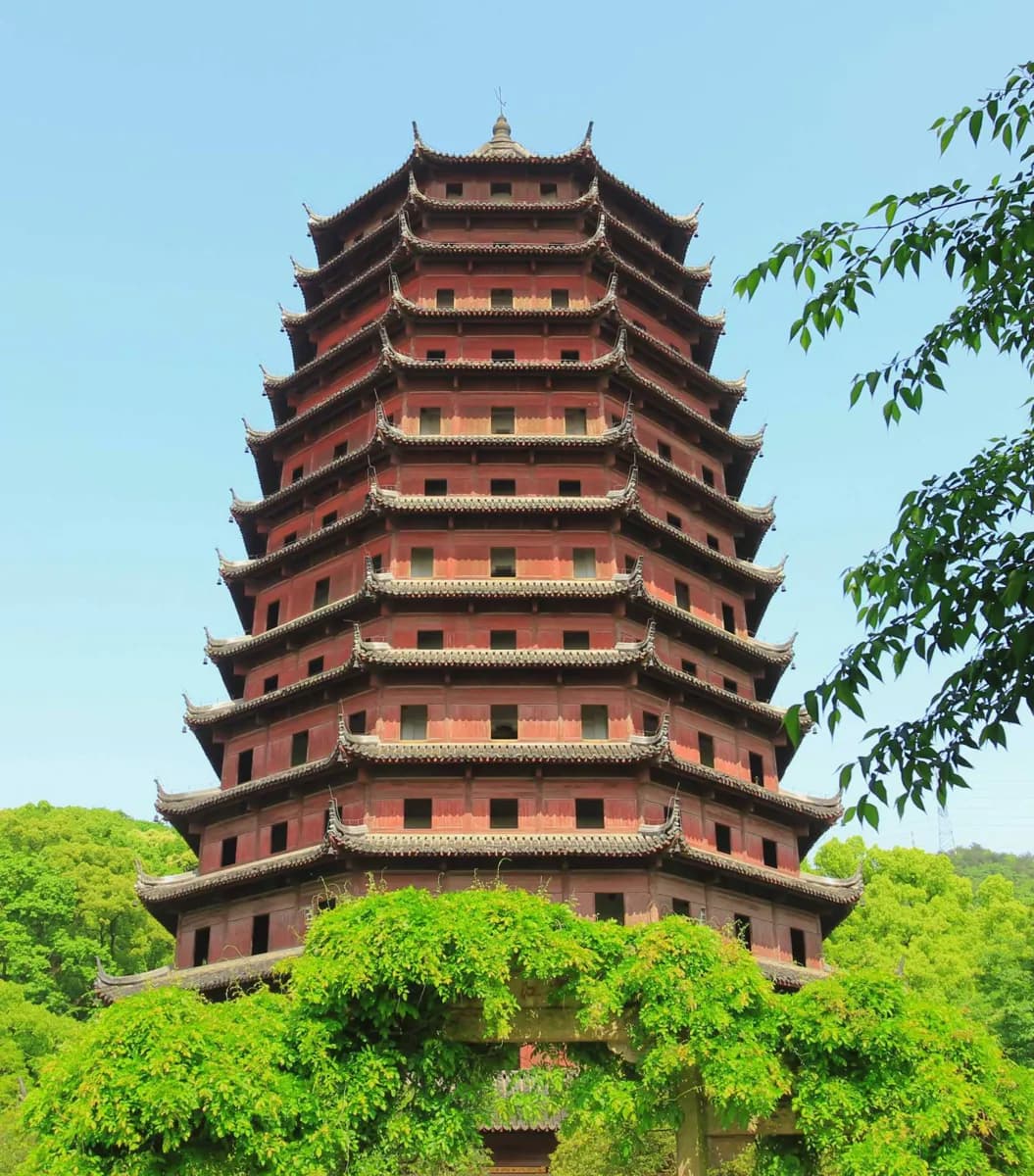
- Baochu Pagoda stands on Precious Stone Hill north of West Lake.
- Yue Fei Temple occupies a site on the lake’s northwestern shore.
The full story
Hangzhou’s geography helps explain its enduring appeal. The city center grew around the eastern and northern sides of West Lake, with hills and cultural sites shaping the surrounding landscape. Causeways cross the water, while pagodas and temples provide landmarks that make a lake walk more than a sequence of viewpoints. Yue Fei Temple on the northwestern shore commemorates a general whose life ended through political persecution. Originally constructed in 1221, the memorial adds a specific historical association to that part of the shoreline. North of the lake, Baochu Pagoda rises on Precious Stone Hill; farther west, Lingyin Temple belongs to another Buddhist landscape with a history of destruction and rebuilding. Hangzhou also marks the southern end of the Grand Canal. That connection places the scenic lake city within a much larger history of movement through eastern China. Lake scenery and canal history are related reasons to visit, but they occupy different parts of the city and call for a deliberate choice of focus.
Useful to know
- Give Hangzhou a separate day from Shanghai and organize that visit around a defined West Lake area.
- Treat the Grand Canal as another city focus; Qiandao Lake requires separate regional planning.
Your next visit
Estimated · Declared scenario and planning estimates; no live opening, weather, queue or booking service.
Outdoor visit · 30–45 min
World planning estimate; admission, opening, visit duration and access need checking.