
Why go
The temple’s namesake jade images make the visit more specific than a general temple stop. Its halls follow a carefully ordered axis, with carved eaves and brackets overhead. Alongside the sculptures, the architecture and the custom of eating vegetarian noodles after worship reveal different aspects of an active Buddhist sanctuary.
What to look for
- A seated jade Buddha brought to Shanghai from Burma
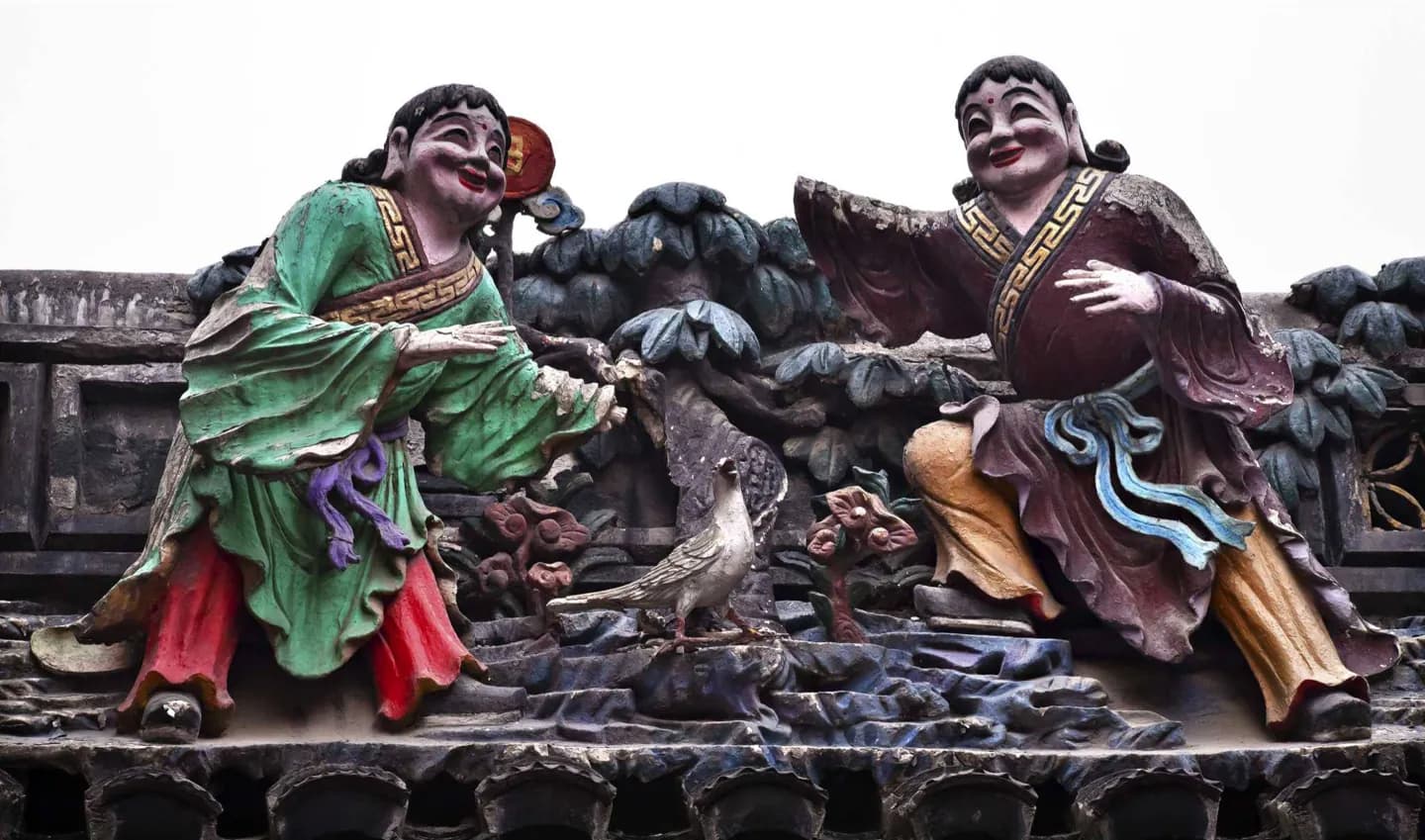
- Song-inspired halls with carved eaves and brackets
- Five large stone tablets across the mountain-gate front wall
The full story
The temple was founded in 1882 with two jade Buddha statues brought to Shanghai from Burma by sea. One represents the Buddha seated, while the smaller reclining figure depicts his death. A later, much larger reclining Buddha is made of marble and came as a donation from Singapore. This distinction matters on site because the larger sculpture can easily be mistaken for the original jade image. The temple draws on both Chan and Pure Land traditions within Mahayana Buddhism. Its other figures place the namesake statues within a wider religious setting: heavenly kings, golden Buddhas, arhats and Guanyin occupy the halls. The result is not a gallery organized around two imported objects. The images belong to a working temple whose arrangement of halls, worship and vegetarian food gives them a continuing ritual context.
Useful to know
- Leave time for separate halls instead of going straight to a single statue.
- Distinguish the smaller original reclining jade Buddha from the larger marble reclining image.
- Consider the temple’s vegetarian noodles as a separate pause after viewing the halls.
Your next visit
Estimated · Declared scenario and planning estimates; no live opening, weather, queue or booking service.
Outdoor visit · 30–45 min
World planning estimate; admission, opening, visit duration and access need checking.