
Why go
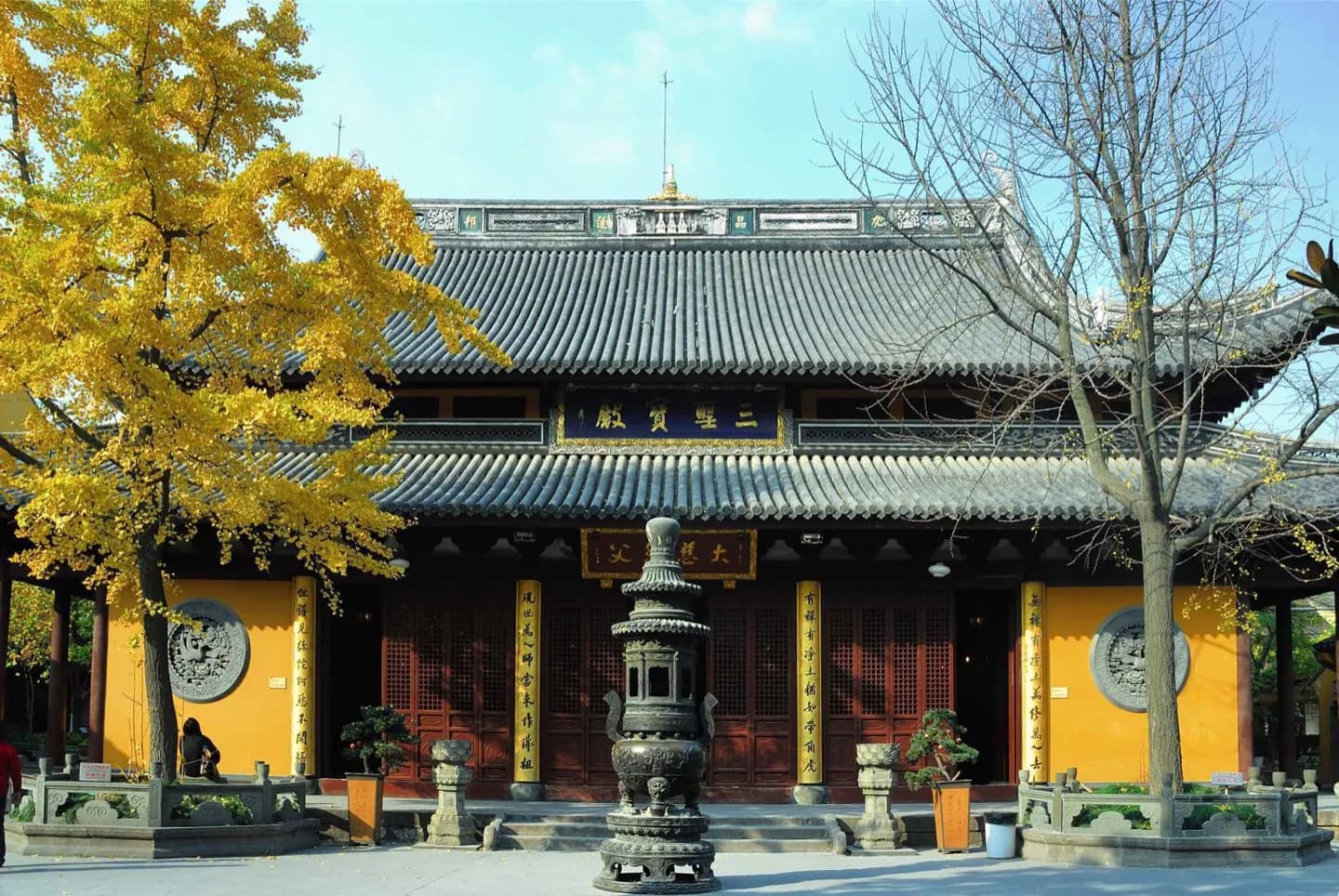
The monastery’s north–south axis creates a clear progression through halls rather than a single shrine. Its Song-style arrangement and the separate pagoda give you two ways to read the complex: through the ordered worship spaces and through the tower’s diminishing tiers. Longhua’s temple-fair tradition adds a wider cultural context to the religious setting.
What to look for
- Five principal halls arranged along the monastery axis
- A seven-storey octagonal pagoda beside the temple
- Maitreya and other Buddhist figures within the successive halls
The full story
Longhua’s surviving arrangement follows the model of a Chan monastery of the Song dynasty, although many individual buildings come from later reconstructions. The sequence begins with a hall devoted to Maitreya and continues through the Heavenly Kings to the main Buddha hall, followed by further worship and meeting spaces. Bell and drum towers stand off the main axis, supporting the rhythm of monastery life. The pagoda has a brick core surrounded by wooden elements, with seven octagonal storeys becoming smaller toward the top. Its more vulnerable exterior components have been renewed repeatedly, illustrating how preservation can involve replacement as well as survival. The precinct also has a longstanding temple-fair tradition recognized as intangible cultural heritage. These different elements show that Longhua’s importance rests in a continuing religious and cultural setting, rather than in a single untouched ancient building.
Useful to know
- Leave time to follow the hall sequence instead of stopping only at the pagoda.
- Observe the pagoda from outside; do not plan the visit around climbing it.
- Treat the neighboring memorial precinct as a separate visit if you want more historical context.
Your next visit
Estimated · Declared scenario and planning estimates; no live opening, weather, queue or booking service.
Outdoor visit · 30–45 min
World planning estimate; admission, opening, visit duration and access need checking.