
Why go
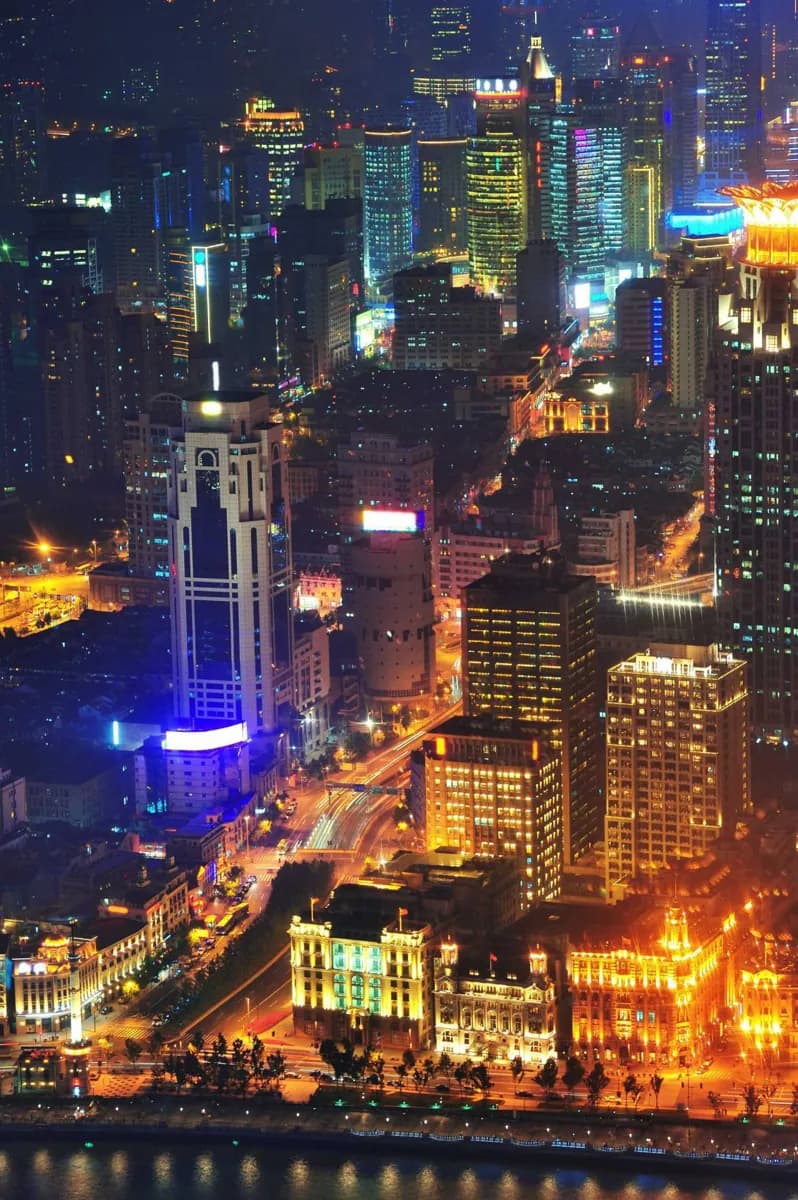
The Huangpu divides the city into two contrasting banks. From Lujiazui, you can compare the Oriental Pearl’s spheres with Jin Mao’s stepped tiers and the World Financial Center’s cut summit. This concentration of landmarks makes a focused riverfront visit more useful than trying to cover all of Pudong.
What to look for
- The Oriental Pearl, Jin Mao and Shanghai Tower clustered in Lujiazui
- Historic Bund buildings across the Huangpu
- A financial district shaped by development begun in 1990
The full story
Pudong’s name describes its position east of the Huangpu River, opposite Puxi on the western bank. That geographic division is visible from either waterfront, but the difference between their skylines comes from a particular period of development. China announced Pudong’s development and opening-up in April 1990. Lujiazui subsequently became a concentration of finance, trade and high-rise construction, turning land previously associated with farms and docks into a major commercial district. The Oriental Pearl, Jin Mao and World Financial Center appeared at different stages of that transformation. Pudong also grew beyond the tower district, incorporating the former Nanhui area in 2009. This history explains why Lujiazui is a useful introduction but only one part of the area. The district includes widely separated neighborhoods and institutions, while its most familiar riverfront towers form a compact architectural group.
Useful to know
- Start with Lujiazui for a compact introduction to Pudong.
- Pick one tower interior and leave time to compare the buildings from ground level.
- Treat other Pudong museums and parks as separate stops requiring a transfer.
Your next visit
Estimated · Declared scenario and planning estimates; no live opening, weather, queue or booking service.
Outdoor visit · 30–45 min
World planning estimate; admission, opening, visit duration and access need checking.