
Why go
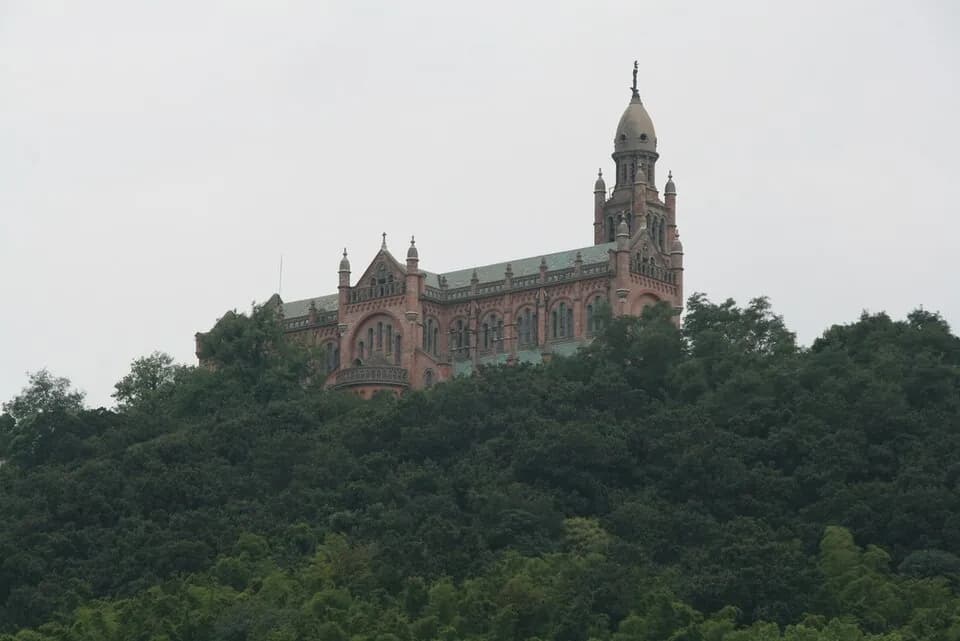
The hill approach is integral to this church’s identity: Stations of the Cross follow the zigzag climb toward the basilica. Granite walls, a Latin-cross plan and Chinese-style glazed roof tiles bring distinct architectural traditions together. The setting makes the journey uphill as meaningful as the building at its summit.
What to look for
- Stations of the Cross mark the zigzag hill approach.
- Granite walls and Chinese-style glazed tiles distinguish the basilica’s exterior.
- A Madonna and Child statue stands above the bell tower.
The full story
The basilica takes its name from the western peak of Sheshan Hill. Its pilgrimage history grew during the nineteenth century, when the church became a destination for Catholics traveling from across China. In 1874, Pope Pius IX granted an indulgence associated with a May pilgrimage here, linking the site to the month traditionally devoted to Mary. The approach expresses that religious purpose physically. Fourteen Stations of the Cross are arranged along the zigzag climb, with shrines to the Sacred Heart and the Virgin Mary at a midway square. The route invites pilgrims to pause before reaching the church above. The building also combines forms and materials worth distinguishing. Its Latin-cross plan belongs to the basilica tradition, while the exterior uses granite and parts of the roof carry Chinese-style glazed tiles. The bell tower’s Madonna and Child figure makes the Marian dedication visible from outside. Together, the climb and architecture explain why this is more than a church placed on a scenic hill.
Useful to know
- Account for the steep uphill approach when deciding whether Sheshan suits your group.
- Plan Sheshan as a dedicated Songjiang outing and confirm church visitor access before traveling.
Your next visit
Estimated · Declared scenario and planning estimates; no live opening, weather, queue or booking service.
Outdoor visit · 30–45 min
World planning estimate; admission, opening, visit duration and access need checking.