
Why go
The organisation grew from training programmes that helped revive traditional craft skills after years of conflict. Stone and wood carving, lacquering and silk work each involve different tools and gestures. Looking at the making process gives more context than treating the finished pieces as souvenirs alone.
What to look for
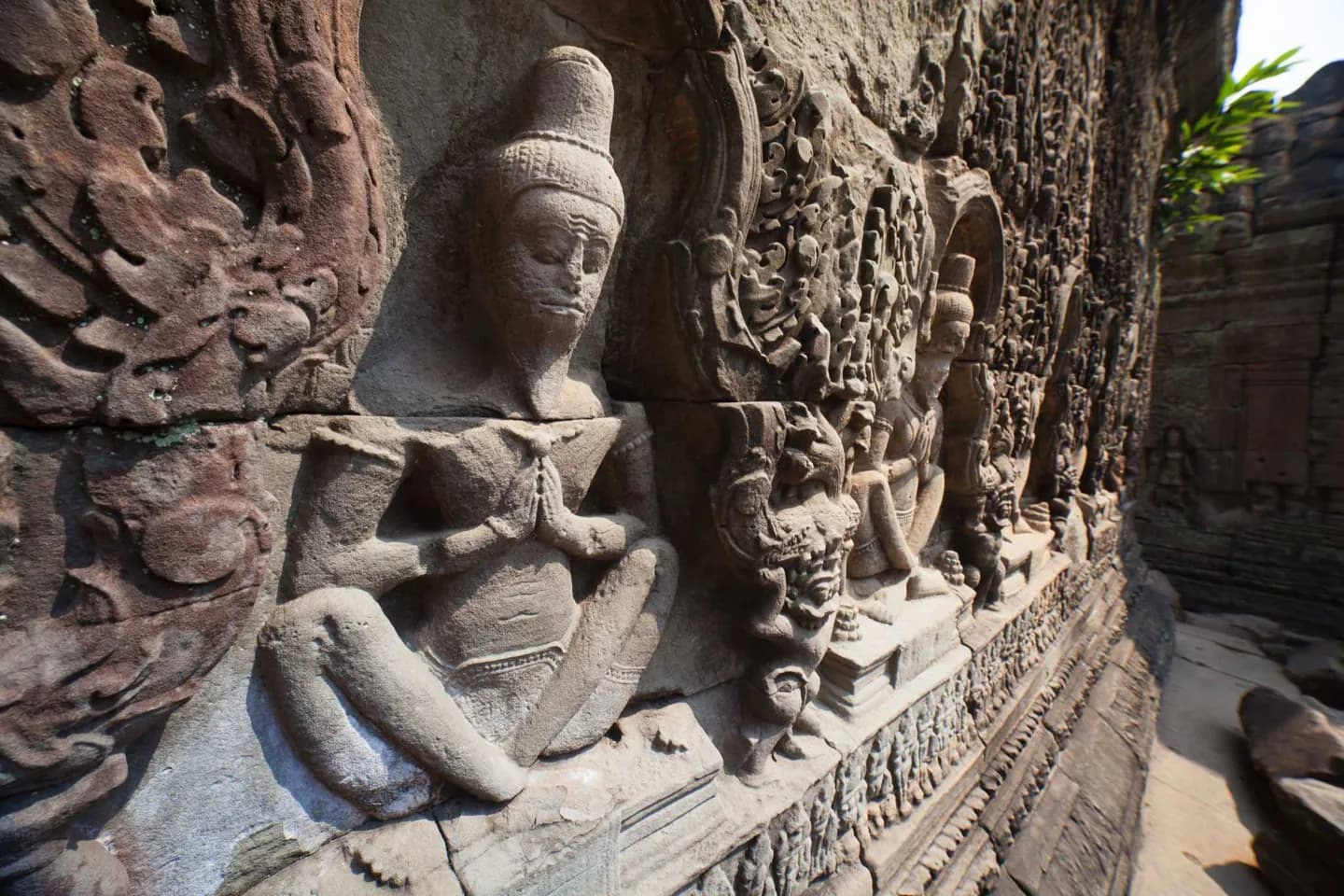
- Stone and wood carving reveal different ways artisans shape a design.
- Lacquer work adds layers of finish to handmade objects.
- Silk work is another branch of the organisation's craft training.
The full story
Artisans Angkor grew from training efforts begun in the 1990s, when Cambodia was rebuilding skills and employment after years of war. Craft training expanded from an earlier vocational project into stone and wood carving, lacquer work and other traditional techniques. The aim was both to teach these skills and to create work for young people from rural communities. That history changes what is worth noticing. A carved or lacquered object is the result of repeated hand movements, and small differences between pieces are part of the work. Looking at how a material is shaped or finished can be more revealing than looking only at a row of completed objects. The organisation has described both central craft workshops and a separate silk site. Their locations and visitor arrangements can change, so decide which process interests you and confirm where it can currently be seen.
Useful to know
- Check which workshop or silk site is open to visitors before setting out; they are not one location.
- Pair a central craft visit with Psah Chas rather than assuming the silk farm is nearby.