
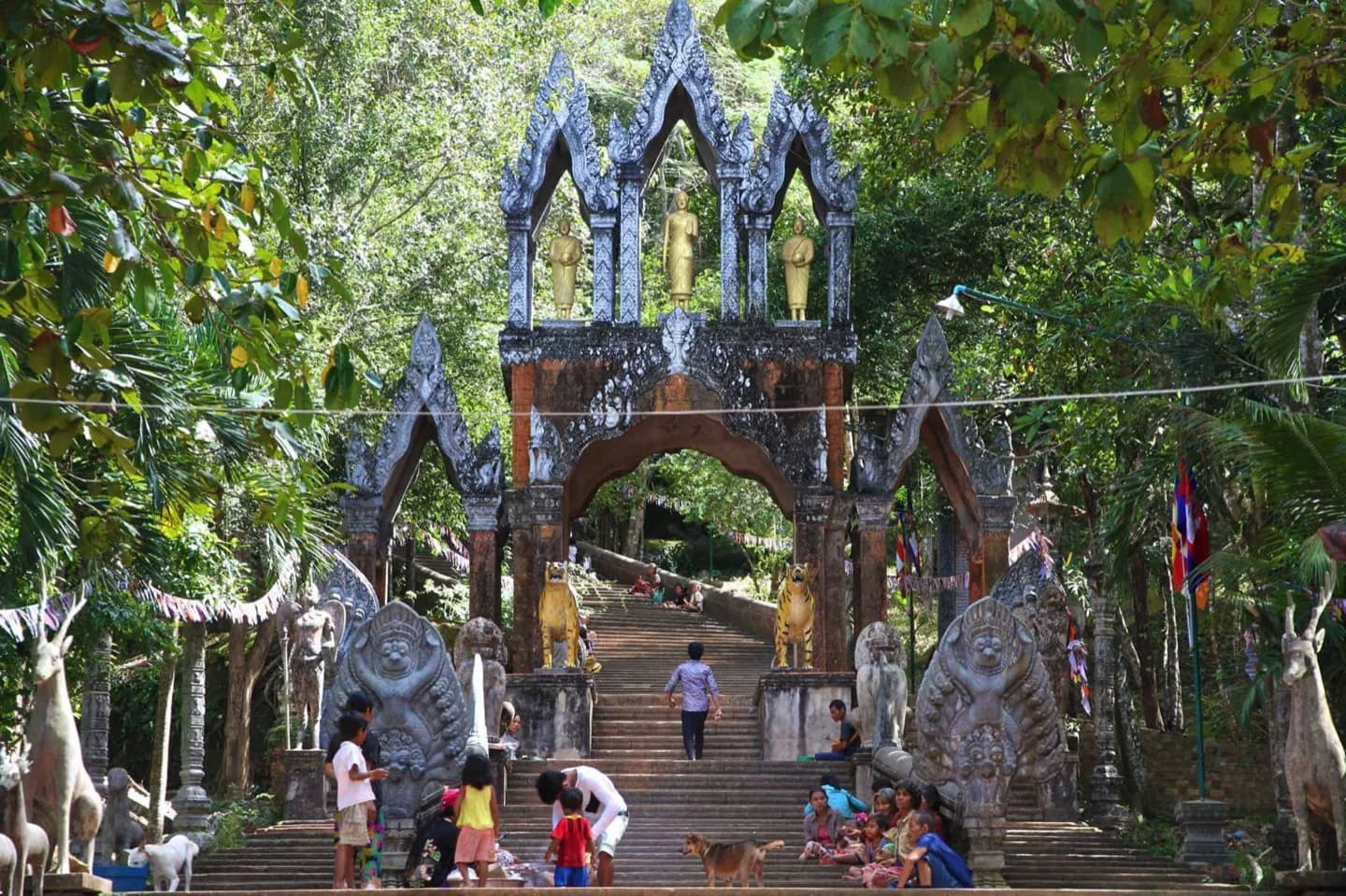
Why go
The mountain is tied to early Khmer royal history and remains significant to Hindu and Buddhist worshippers. Sandstone from this landscape was quarried in Angkorian times. The riverbed carvings, sacred sites and waterfalls within the wider area connect its natural setting to the history of the temples below.
What to look for
- Sandstone shaped the mountain and supplied material during the Angkorian era.
- Riverbed carvings link water and Hindu imagery.
- Phnom Kulen National Park contains waterfalls and sacred sites within the wider mountain area.
The full story
Phnom Kulen means 'Mountain of Lychees.' The sandstone massif north of Siem Reap holds a special place in accounts of the early Khmer Empire. Jayavarman II is associated with a declaration of kingship on the mountain in the early ninth century, though details of that story remain debated. The mountain has continued religious meaning for Hindu and Buddhist visitors. The geology also connects Phnom Kulen to Angkor. Sandstone was quarried here during the Angkorian period. At river sites, carvings cut into the stone bed include linga forms and Hindu figures. Flowing water makes the setting part of the meaning of the carvings, rather than a backdrop to them. The wider mountain area includes the protected national park, waterfalls and places of worship. Think of Phnom Kulen as a landscape with several possible visits, and select the sites that fit the time and access available to you.
Useful to know
- Treat the mountain as a separate excursion from the main Angkor temple circuit.
- Choose specific sites within the wider area before planning transport; the name covers more than one stop.