
Why go
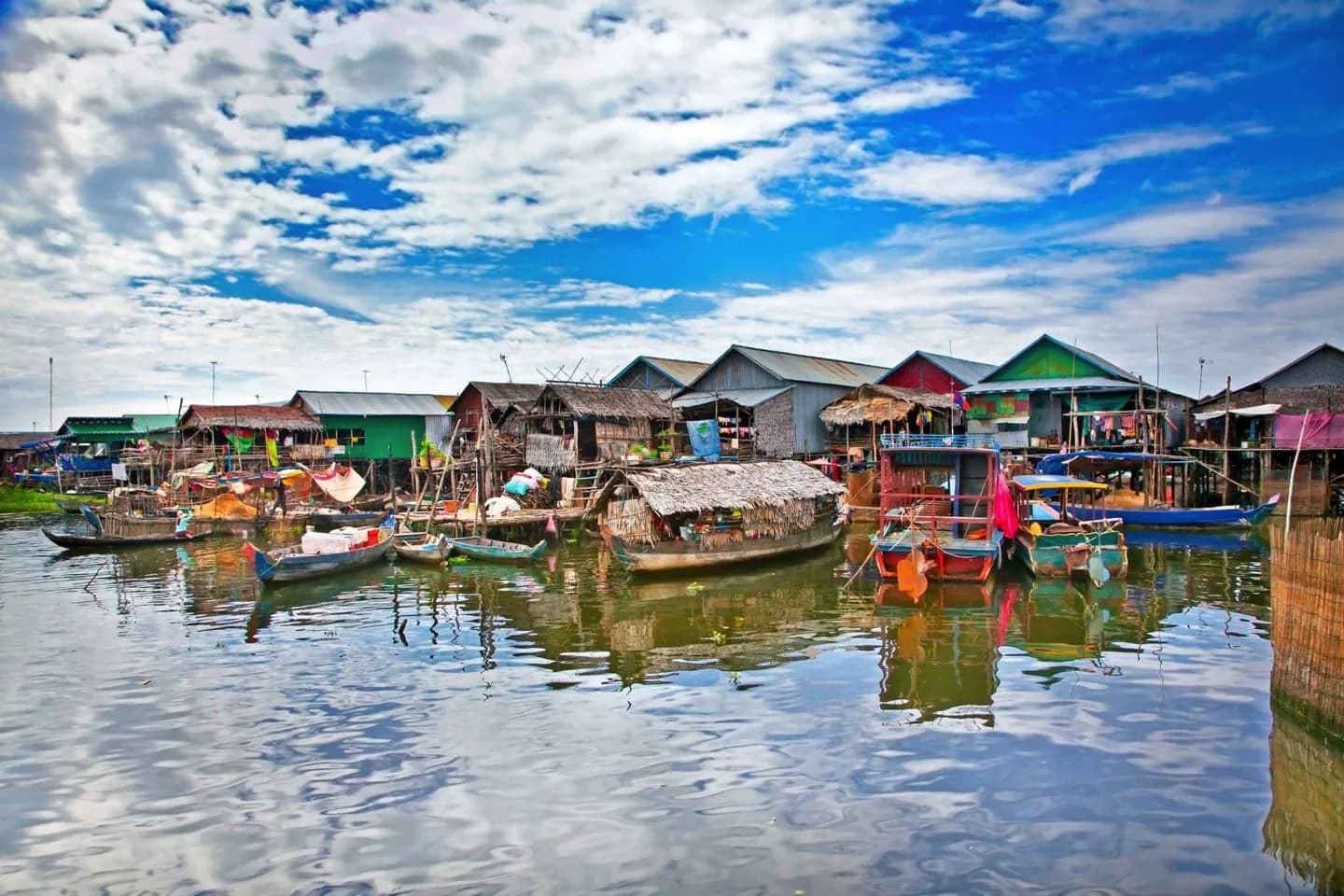
The lake is more than a side trip from the temples. Seasonal water pushed from the Mekong expands its flooded area, while the dry season changes the shoreline and river flow. Understanding that cycle helps you make sense of fishing communities, the landscape near the lake and the importance of water in Cambodian food and culture.
The full story
Tonlé Sap connects a large freshwater lake to the Mekong by way of the Tonlé Sap River. For part of the year, water drains from the lake toward Phnom Penh. During the rains, rising Mekong water reverses the flow and spreads across the lake's surrounding land. The extent of open water and flooded forest can therefore look very different between seasons. That changing water supports fish and ties the lake to livelihoods far beyond its shore. Fish also appears in Cambodian food, including prahok, a fermented fish paste. Temple carvings of fish and nets show how long water and fishing have mattered in the region. A lake outing from Siem Reap is best understood through this seasonal cycle. The views and routes you encounter depend on current water conditions, so check the details of any boat visit before setting out.