
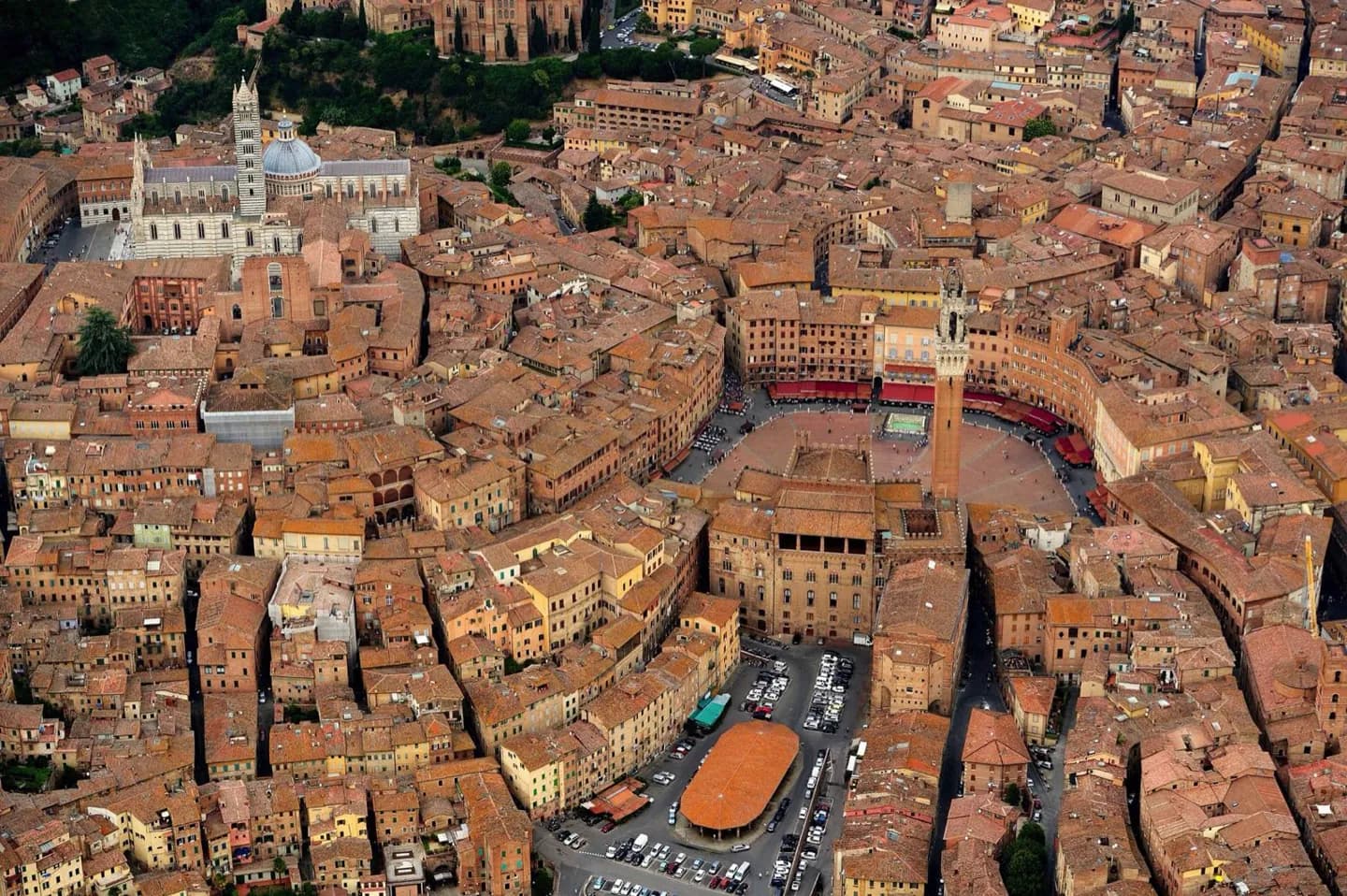
Why go
Read this before walking between Piazza del Campo and the cathedral. The city grew from a hill settlement into a trading and pilgrimage centre, then governed itself for centuries. Palazzo Pubblico expresses that civic identity, while the cathedral shows its religious and artistic reach. The contrast makes both places easier to read than a string of dates would.
The full story
Siena's story begins before its celebrated medieval buildings. The hill was settled in Etruscan times and later became the Roman Saena Julia. A local foundation legend instead names Senius and Aschius, sons of Remus, who supposedly brought the she-wolf emblem and the black and white colours still associated with the city. Treat that as a story Siena told about itself, rather than a record of its origins. The city gained importance as routes between northern Italy and Rome shifted through this area, bringing trade and pilgrims. After feudal power weakened, Siena developed into an independent republic that lasted until 1555. The republic's public life is legible at Piazza del Campo and Palazzo Pubblico: the square gathered the city, while the palace housed its government. Across the centre, the cathedral's scale and decoration show another form of collective ambition. The Black Death interrupted Siena's medieval rise, and the later loss of independence ended the republic. These changes are easier to grasp by comparing the civic Campo with the religious complex around Piazza del Duomo.