
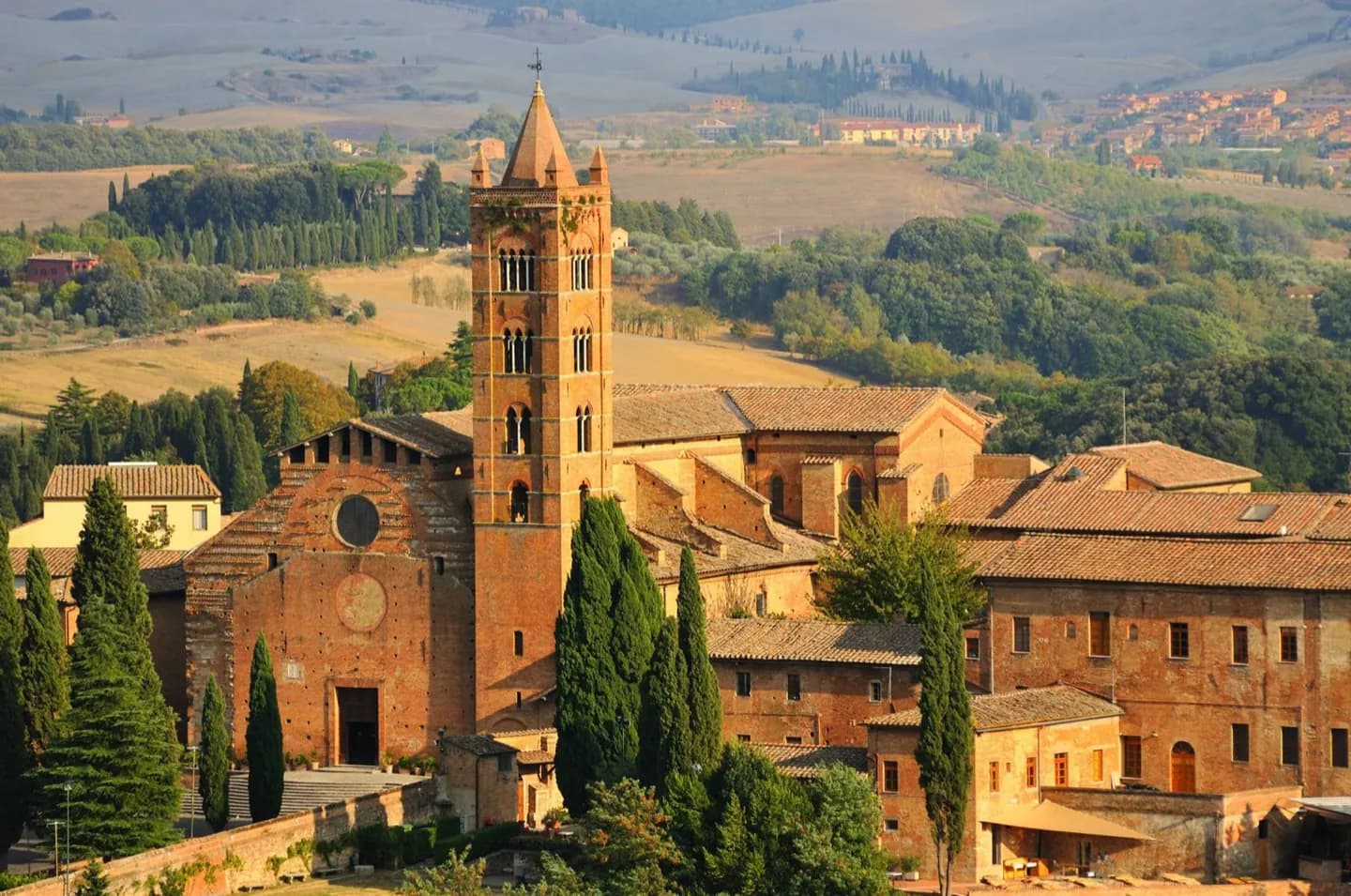
Why go
The church's broad entrance stairs and unadorned facade prepare you for a different interior: Renaissance aisles meet older Gothic parts at the transept and apse. A fourteenth-century crucifix and a thirteenth-century holy-water stoup bring the building's long life into focus without requiring an exhaustive art survey.
The full story
The Servite order established Santa Maria dei Servi on the site of an earlier church dedicated to Saint Clement. Building and alteration continued across centuries, which helps explain the contrast visible in its fabric. Outside, the facade has a single doorway and rose window, with a bell tower beside it. Inside, the Latin-cross plan brings Gothic elements in the transept and apse together with Renaissance forms in the aisles. The church's art also has a wider history. Bernardino Fungai painted a Coronation of the Virgin altarpiece, but panels from its Saint Clement predella later left Siena and entered collections elsewhere. That dispersal is a useful reminder that an artist's work in the church may now be represented by surviving pieces in different places. Near the entrance, an older crucifix and holy-water stoup anchor the building in its medieval past.