
Why go
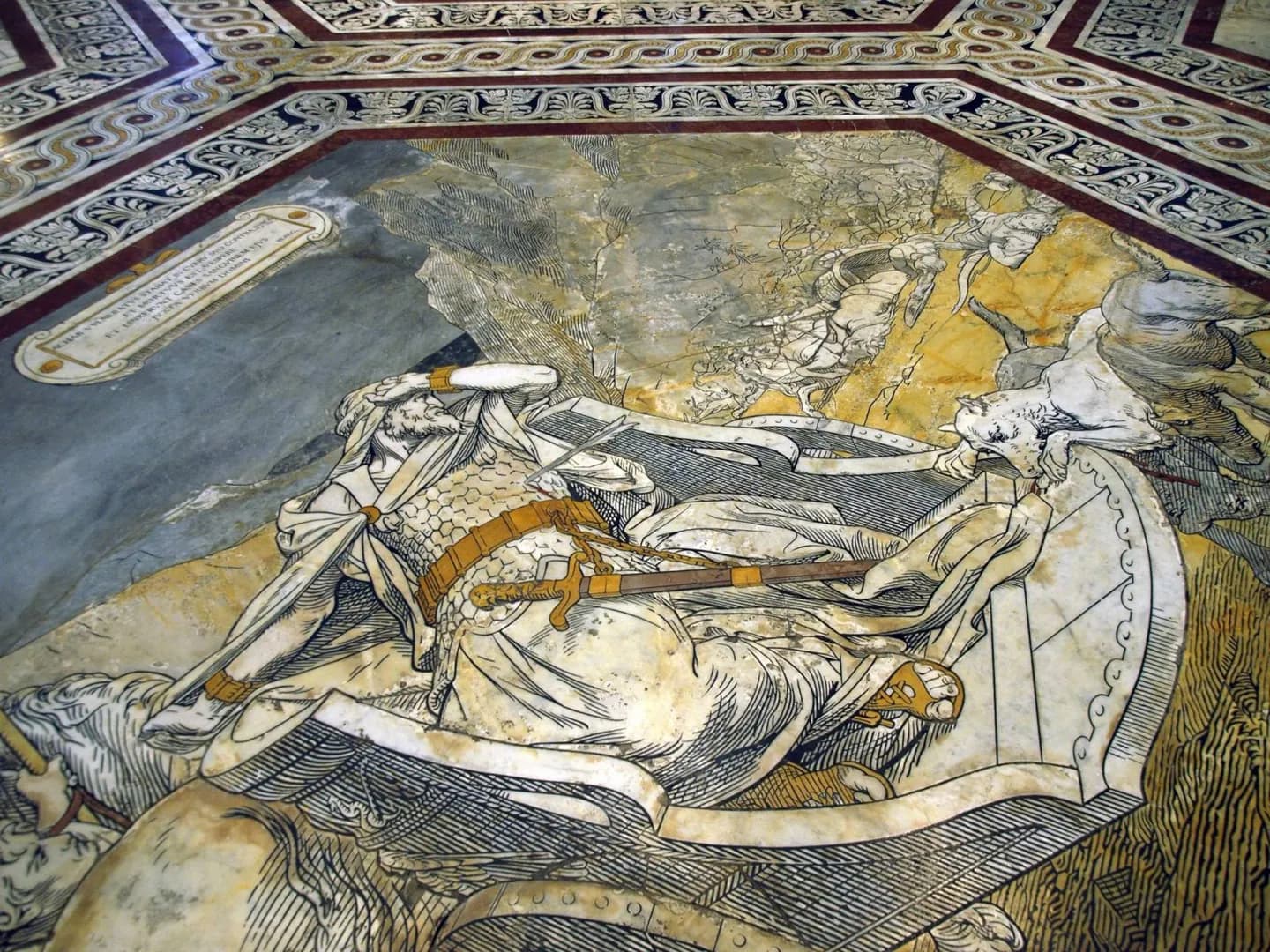
The floor is more than decoration: scenes from scripture, figures of sibyls and images of virtue unfold as you move through the church. Early scratched designs and later coloured marble inlay produce different visual effects. Looking for those changes gives the long project a shape and makes individual panels easier to remember.
The full story
The cathedral floor was built up over generations, from the fourteenth through the sixteenth centuries, with many artists contributing designs. Its panels vary in shape and subject. Sibyls, Old Testament scenes, allegories and virtues are arranged across the church, so the pavement works as a sequence rather than one image. Early makers scratched lines into marble and filled them with dark material. Later sections use pieces of differently coloured stone, allowing sharper contrasts and more complex scenes. Notice how a panel's technique changes the way figures emerge from the ground. The She-Wolf of Siena ties the pavement to the city's own imagery, while biblical subjects connect it to the church around you. The display of floor sections changes to protect the marble, so check the cathedral's current information before making a particular panel the sole purpose of your visit. Even a partial view can show how Siena turned the act of walking through a church into an encounter with art.