
Why go
Learning the Palio's structure changes what you see in Siena, even outside race time. Contrada symbols mark local identity, while the Campo becomes a temporary track when the festival arrives. The painted silk prize and historical procession explain why the event belongs to the city's civic and religious life as much as to sport.
The full story
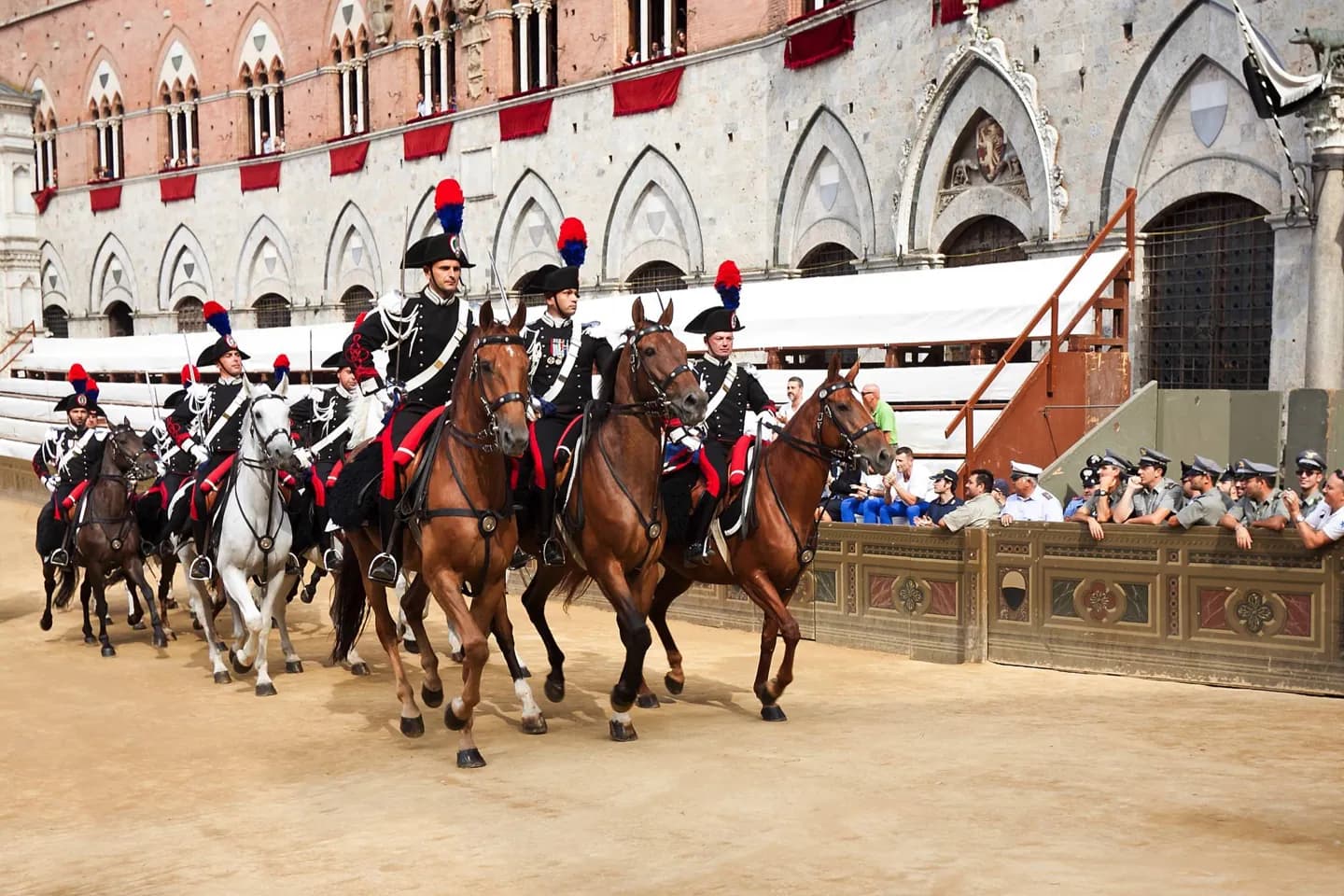
The Palio brings ten of Siena's 17 contrade, or neighbourhood communities, into a race around Piazza del Campo. The track is laid temporarily around the square, and the race runs for three laps. That brief contest is the end of a much longer sequence: horses are assigned, trials take place, jockeys and horses receive a blessing, and the Corteo Storico historical procession precedes the start. The winning contrada receives a painted silk banner called the drappellone. Each race has its own banner, so the prize is both an artwork and a record of a particular moment in Siena. The contrade's ties do not begin or end with the race; their symbols, alliances and celebrations explain why a result matters long after the horses leave the Campo. If you plan to attend, consult the city’s current programme for that race’s timing and access arrangements; an ordinary-day visit to the Campo needs a different plan.