
Why go
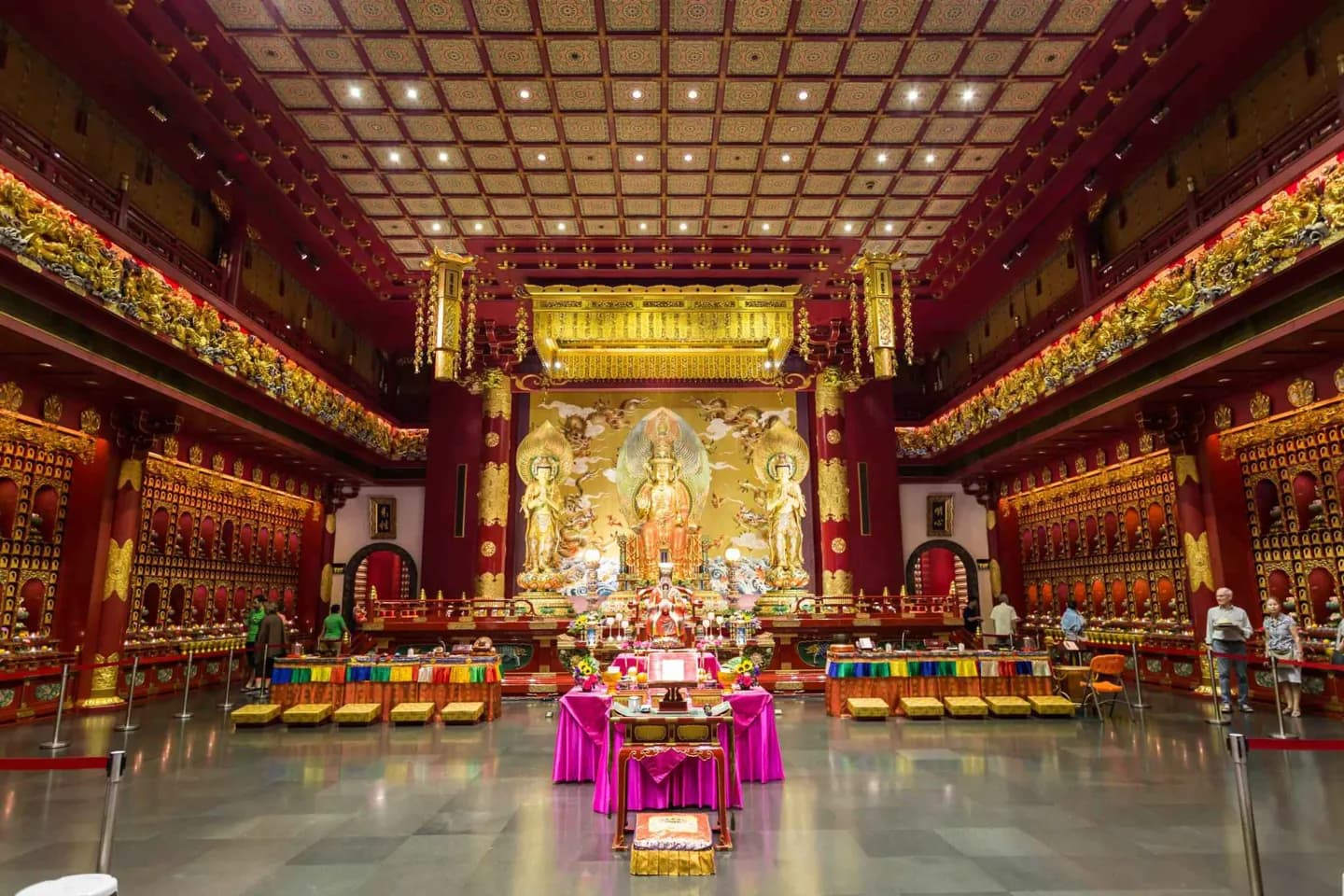
The temple offers more than a striking façade on a Chinatown walk. Its Tang-inspired design, museum spaces and relic shrine let you compare architecture, devotional practice and the stories attached to a sacred object. The tooth's identification is a religious claim, so approach it as part of the temple's tradition.
What to look for
- Tang-inspired architectural forms shape the temple's exterior and interior.
- The museum adds context to the Buddhist setting.
- A shrine is associated with the tooth relic for which the temple is named.
The full story
The Buddha Tooth Relic Temple and Museum stands in Chinatown, where several religious traditions have long shared nearby streets. Its architecture draws on forms associated with China's Tang dynasty, giving the building a historical visual language despite its modern construction. The temple opened in the 2000s and was built around a relic identified by the temple as a tooth of the historical Buddha. That identification belongs to the religious tradition; it is not something a visitor can verify by looking. The building joins a working temple and a museum. This combination changes the pace of a visit. Architectural details and displays invite close looking, but worshippers are also using the space for reasons separate from sightseeing. The nearby Hindu and Muslim sites in Chinatown offer a broader comparison of the district's communities, yet each place has its own beliefs and etiquette. Inside this temple, focus on how the shrine, museum and decorative forms work together before returning to the surrounding streets.
Useful to know
- Leave time for both the worship spaces and museum rather than judging the site from the street.
- Follow the temple's visitor notices and give worshippers room during religious activity.
Your next visit
Estimated · Declared scenario and planning estimates; no live opening, weather, queue or booking service.
Outdoor visit · 30–45 min
World planning estimate; admission, opening, visit duration and access need checking.