
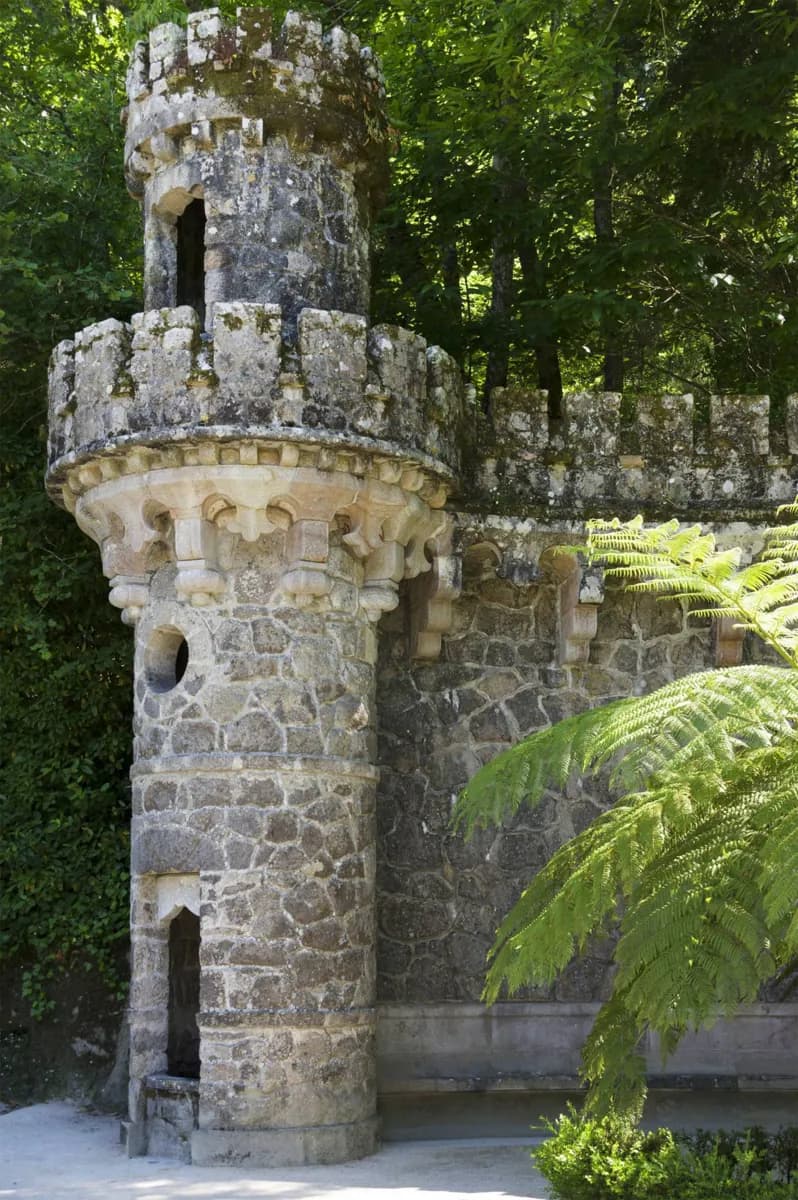
Why go
Read the palace, chapel and park as parts of one early twentieth-century commission rather than unrelated curiosities. Monteiro’s interests shaped the mix of architectural styles and enigmatic structures, while the estate’s later closure and restoration explain why this once private world can now be explored.
The full story
The property passed through several owners before the Barons of Regaleira sold it to Carvalho Monteiro in 1892. Working with Italian architect Luigi Manini, Monteiro remade its four hectares with buildings and symbols associated with alchemy, Masonry, the Knights Templar and Rosicrucianism. Their design drew on Roman, Gothic, Renaissance and Manueline forms. Work on the present estate began in 1904, and much was finished by 1910. Look for that mix across the palace, chapel and grounds: the symbolism was conceived as part of an estate-wide design. In 1942, Waldemar d’Orey bought Regaleira for his family and commissioned repairs. The Aoki Corporation acquired it in 1987 and kept it closed to the public for a decade. Sintra Town Hall bought the estate in 1997, started an extensive restoration and opened it to visitors in June 1998. Its public-interest classification followed that August.