
Why go
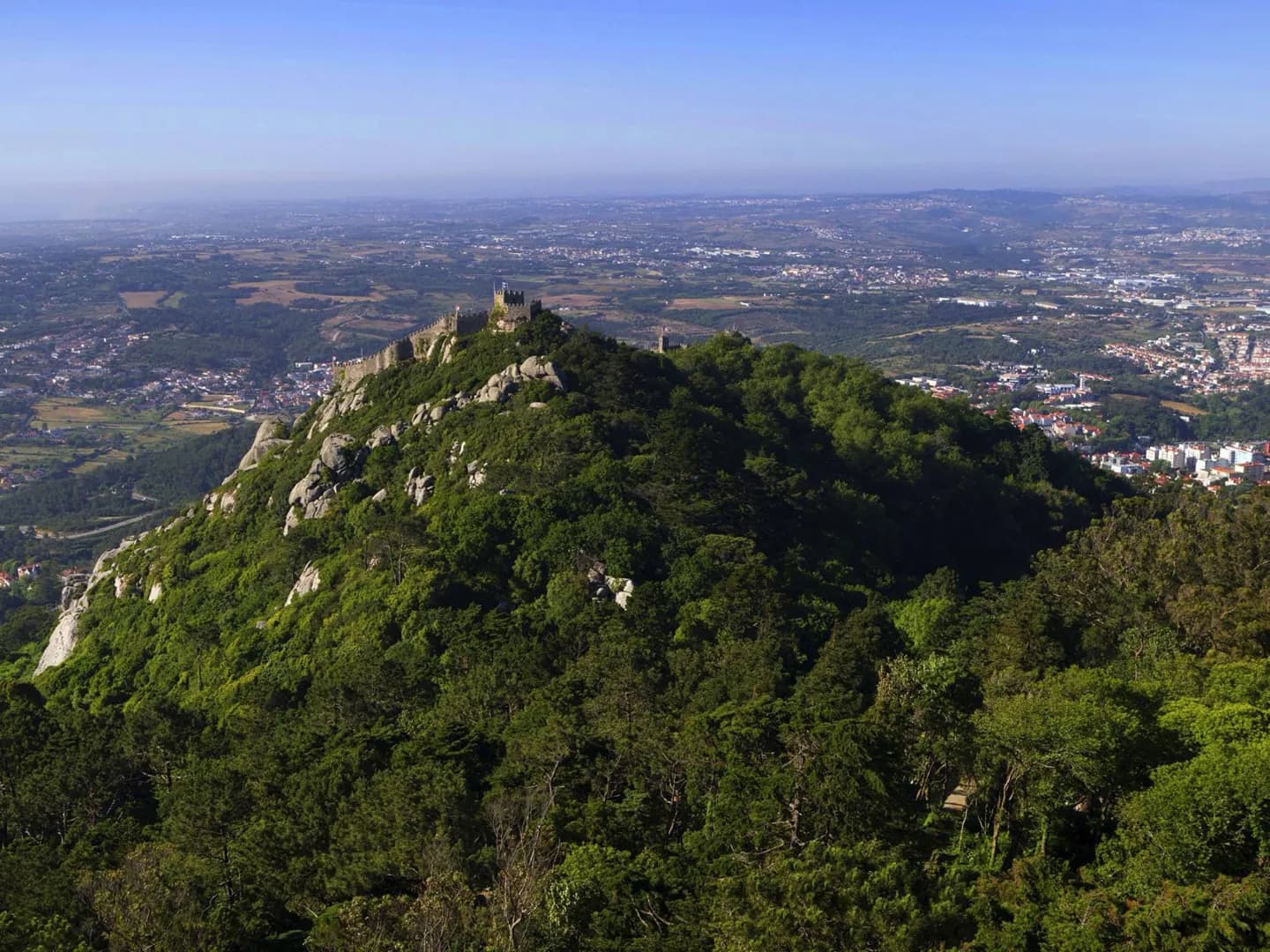
The geography explains why Pena Palace and the Moorish Castle sit high above the town, why dense greenery became central to estate design, and why the landscape continues toward Cabo da Roca. Understanding the mountain's shape makes it easier to plan an outing that matches the terrain and weather.
The full story
The Sintra Mountains form a short but pronounced rocky massif running west toward the Atlantic. Their resistant igneous rocks and deformed surrounding layers create steeper ground than the nearby plains; around Praia Grande the northern edge becomes especially abrupt. The ridge leads the eye toward Cabo da Roca on the coast. Atlantic influence makes the mountains wetter than some surrounding areas, helping explain the dense foliage and the appeal of cool, sometimes misty estates. That contrast is part of Sintra's cultural landscape: a palace in the town, a fortress on the ridge and landscaped grounds in the hills each respond to a different piece of terrain. The historical sources describe a rich botanical setting, while also noting that fire and introduced fast-growing trees changed parts of the original forest. Conditions can differ between the town and exposed coast, so check the day's weather when combining mountain sites with Cabo da Roca.