
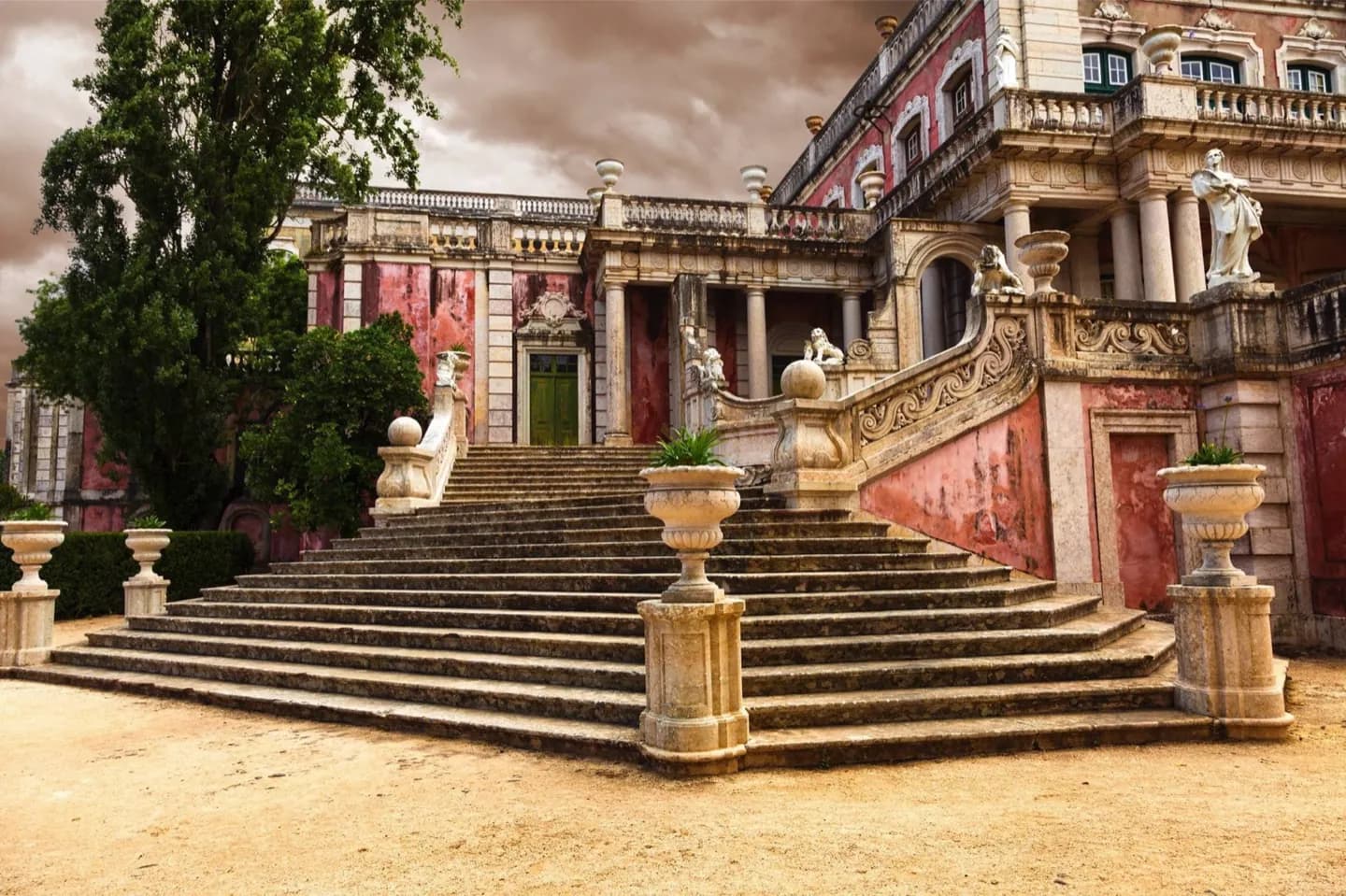
Why go
This later history gives emotional and political depth to the decorated rooms. The King’s Bedroom, the altered Robillon wing and the restored interiors become reminders of the court’s retreat, return and eventual departure. It also explains why a palace designed for leisure bears the marks of war and exile.
The full story
After fire damaged Ajuda Palace in 1794, the prince regent João and Carlota Joaquina used Queluz more extensively. The Robillon wing gained an upper floor for the princess and her children, though those additions were later lost in the 1934 fire. In 1807 the royal family fled to Brazil as Napoleonic forces approached, and General Junot’s occupying forces took control of the palace. When the court returned in 1821, João VI preferred Mafra; Carlota Joaquina continued to live at Queluz. João died in its circular domed King’s Bedroom in 1826, and Carlota Joaquina died at the palace in 1830. Queluz then saw only intermittent royal use. King Miguel occupied it during the civil war against his brother Pedro IV; Pedro himself died at Queluz in 1834. Later monarchs lived chiefly at Ajuda. The palace passed to the state in 1908, shortly before the monarchy ended. These events explain why a site designed for leisure also carries traces of exile, conflict and loss.