
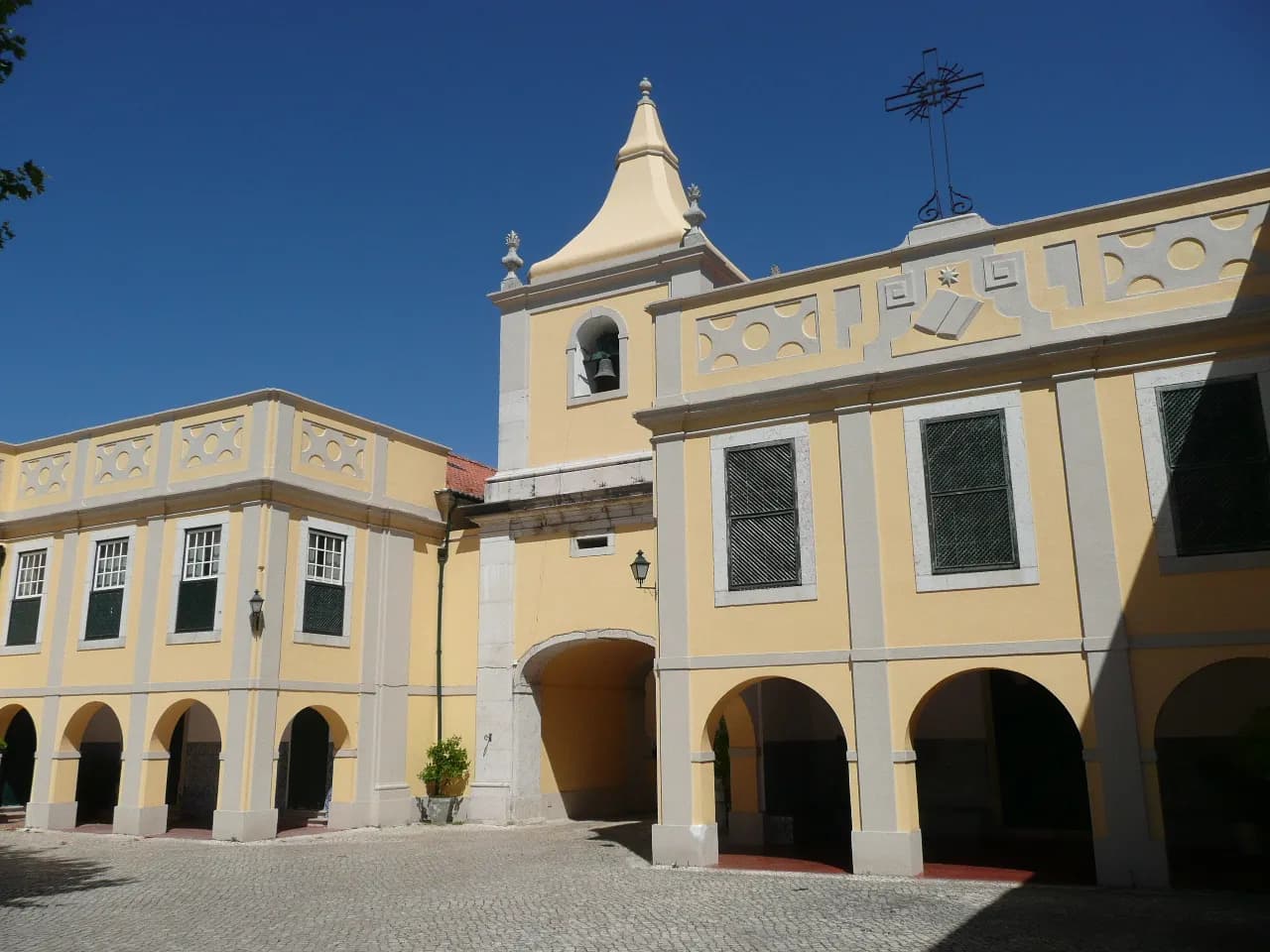
Why go
The palace connects a neoclassical building to the constitutional crisis of 1822, when Carlota Joaquina was confined here after refusing the new constitution. Treat it as a historical reference unless current permission to enter has been confirmed. The building’s decorated rooms make that connection especially pointed.
The full story
Ramalhão began as a small farm that Luís Garcia de Bivar enlarged into a palace in 1470. The building later acquired Louis XVI-style neoclassical decoration, with exotic interior frescoes attributed to Manuel da Costa, who also worked at Queluz National Palace. Its strongest historical association is with Carlota Joaquina, the Spanish-born queen consort of John VI. She stayed at Ramalhão frequently after 1802. When she refused to swear allegiance to Portugal’s Constitution of 1822, she was exiled here. That episode makes the palace more than another entry in Sintra’s list of grand residences: it anchors a national political dispute in a particular building. The local connection is the palace, its decoration and the queen’s enforced stay. Check permission before considering an interior visit.
Useful to know
- Verify permission before attempting an interior visit; the historical association alone does not establish public access.