
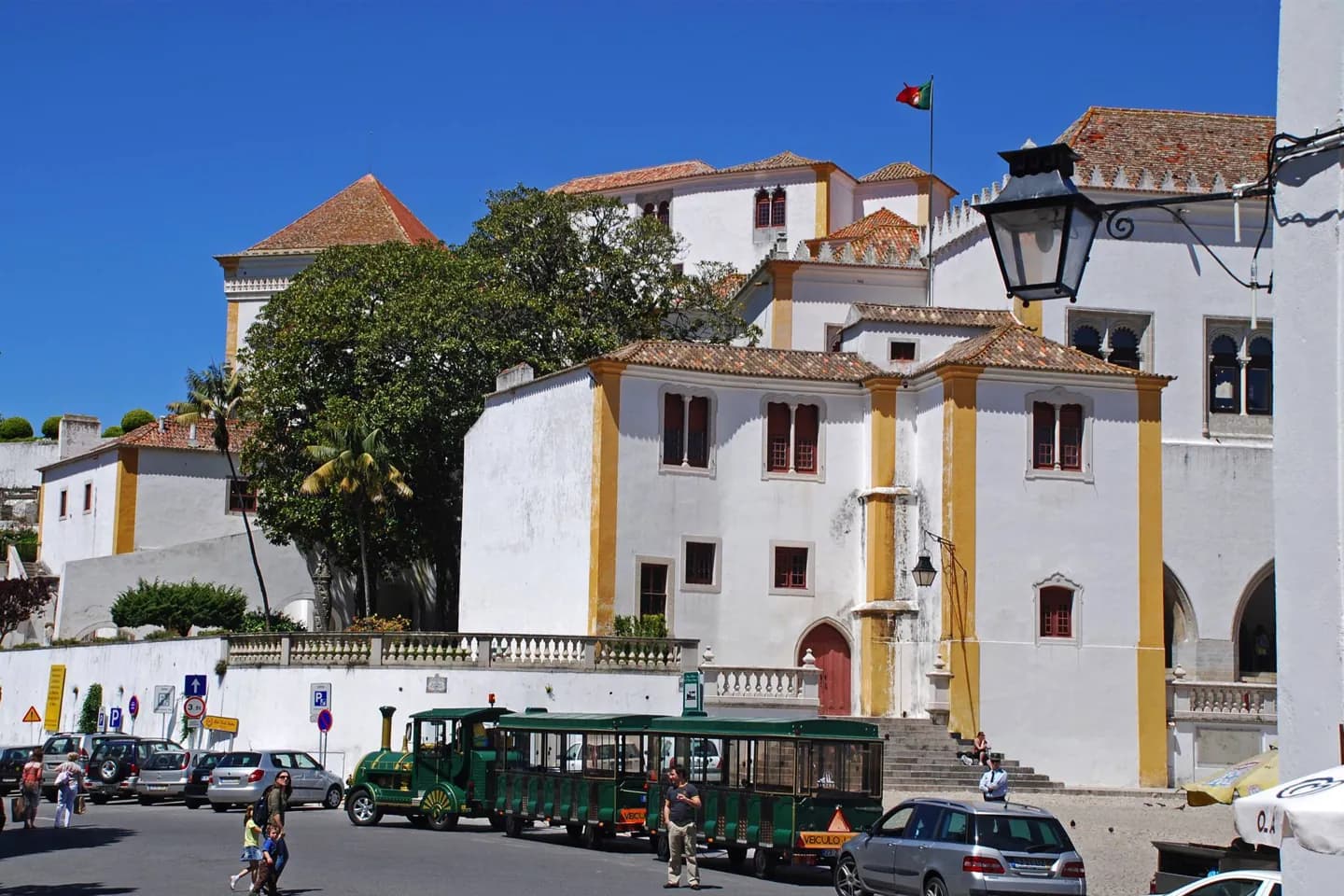
Why go
The useful transport distinction is geographic: the train brings travelers into Sintra, the old town and mountain monuments lie on steep ground, and the tramway historically points west toward the Atlantic. Treat a coastal outing as a separate leg, and verify today's services before building a day around a particular connection.
The full story
Sintra developed a strong rail relationship with Lisbon, which helped turn the town into a place for summer visits and later daily travel. The tramway followed a different axis. Opened in the early twentieth century, it linked Sintra with Praia das Maçãs through the Colares area and also carried freight, especially from Banzão toward the railway. Its historic route was altered and interrupted over time; a former extension reached Azenhas do Mar, while later operation centered on the surviving corridor to Praia das Maçãs. These details explain why the tram is part of Sintra's story as well as a possible coastal ride. They do not establish its current operating days, endpoints or frequency. For a visit, first decide whether the priority is the palace hills or the coast. Then check official rail, local bus and tram information for the day of travel before relying on a connection.
Useful to know
- Check current rail and local bus routes before linking the station, old town and hilltop monuments.
- Confirm the tram's operating status and endpoints before planning a trip to Praia das Maçãs.
- Allow separate travel time for Colares or the coast beyond a town-and-palaces visit.