
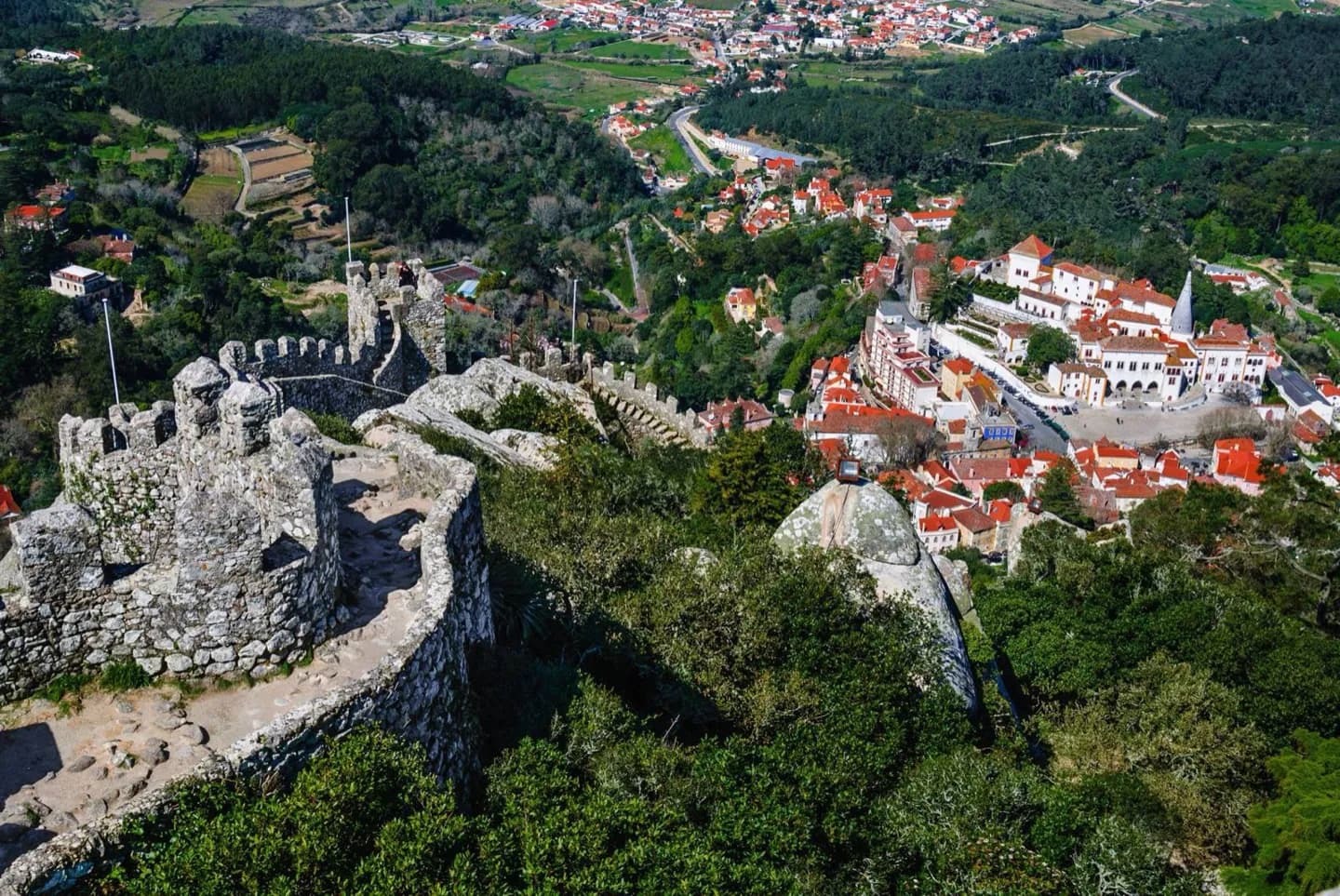
Why go
Take time here for details the wide ramparts can overshadow: plant and animal motifs on capitals, the narrow sanctuary and surviving painted fragments. The building’s presence also marks the castle’s later role as a parish centre. That contrast between fortified exterior and painted worship space is easy to miss.
The full story
The chapel has a rectangular nave and a narrower, lower sanctuary. Its limestone and masonry walls stand close to the castle’s inner defences. An arched doorway on the south has carved capitals with vegetal and fantastical-animal motifs; another opening reflects the steep terrain around the building. Within the chapel, a triumphal arch on paired columns separates the spaces. Remains of frescoes in the vaulted sanctuary include a haloed figure, floral forms and geometric designs. These fragments show that the building was once a decorated place of worship, not simply an annex to a fortress. In the later twelfth century it became a parish seat, and its religious use persisted after the castle’s military importance declined. A tradition says the chapel had been a mosque before the Reconquista, but there is no firm basis for identifying this particular structure as a former mosque. Its surviving Christian fabric is the firmer story to read on site.