
Why go
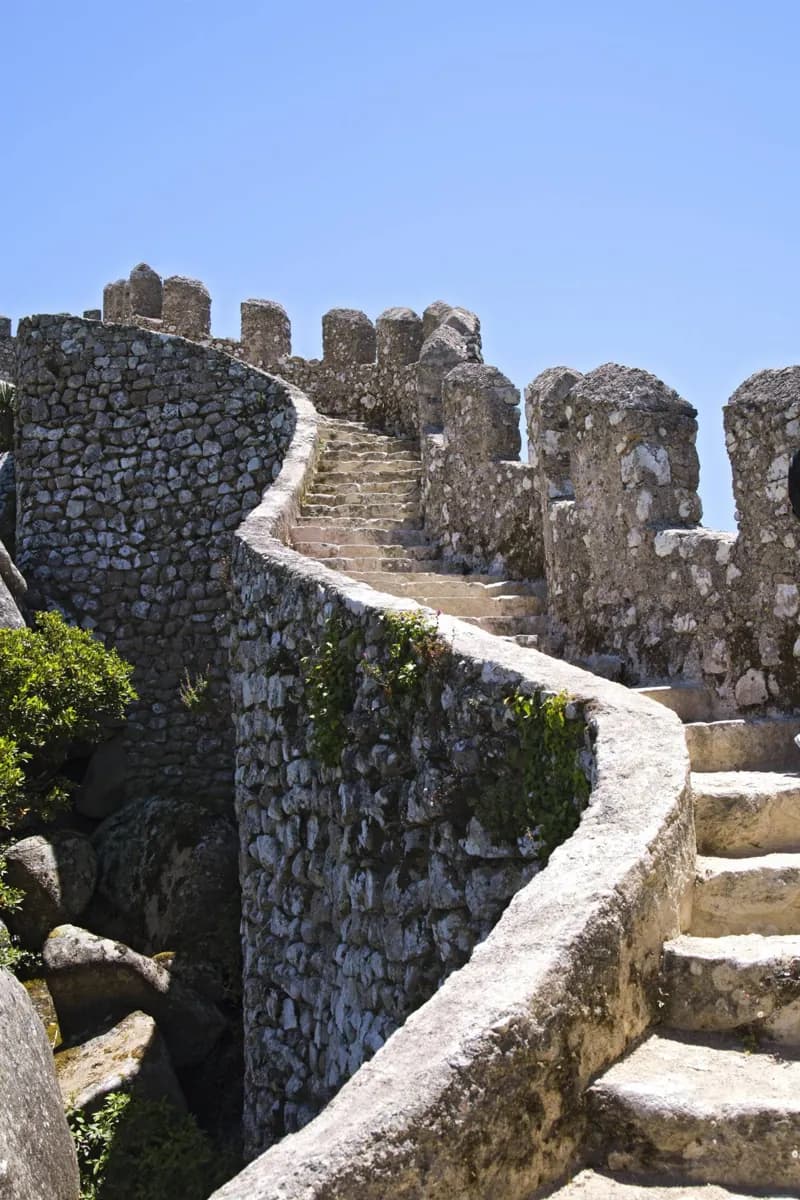
See this castle for its relationship with the mountain: the walls follow the rock, and the height explains its defensive role. Its present appearance also reflects Ferdinand II’s nineteenth-century conservation, so the ruin is both medieval fabric and a Romantic-era interpretation.
The full story
The hilltop stronghold above Sintra was a strategic point during the period of Muslim rule and the Reconquista. After the Christian capture of Lisbon in 1147, it passed to forces loyal to Afonso Henriques. Its prominent ridge made it a place of surveillance and refuge as well as a fortified settlement. The castle’s story continues after its military importance faded. As people moved down toward Sintra’s old village, the structures fell into decline; the 1755 earthquake added further damage. Ferdinand II began conserving the walls and chapel in 1840 and replanted the surrounding landscape. That work helped form the Romantic character visitors now associate with the ruins. The site belongs to Sintra’s UNESCO-listed Cultural Landscape and is classified as a National Monument. On the ridge, look for the meeting of granite terrain, defensive walls and later planting rather than treating the battlements as a single untouched medieval scene.
Useful to know
- The ridge and walls are exposed; account for steep ground and changing mountain weather when planning time here.