
Why go
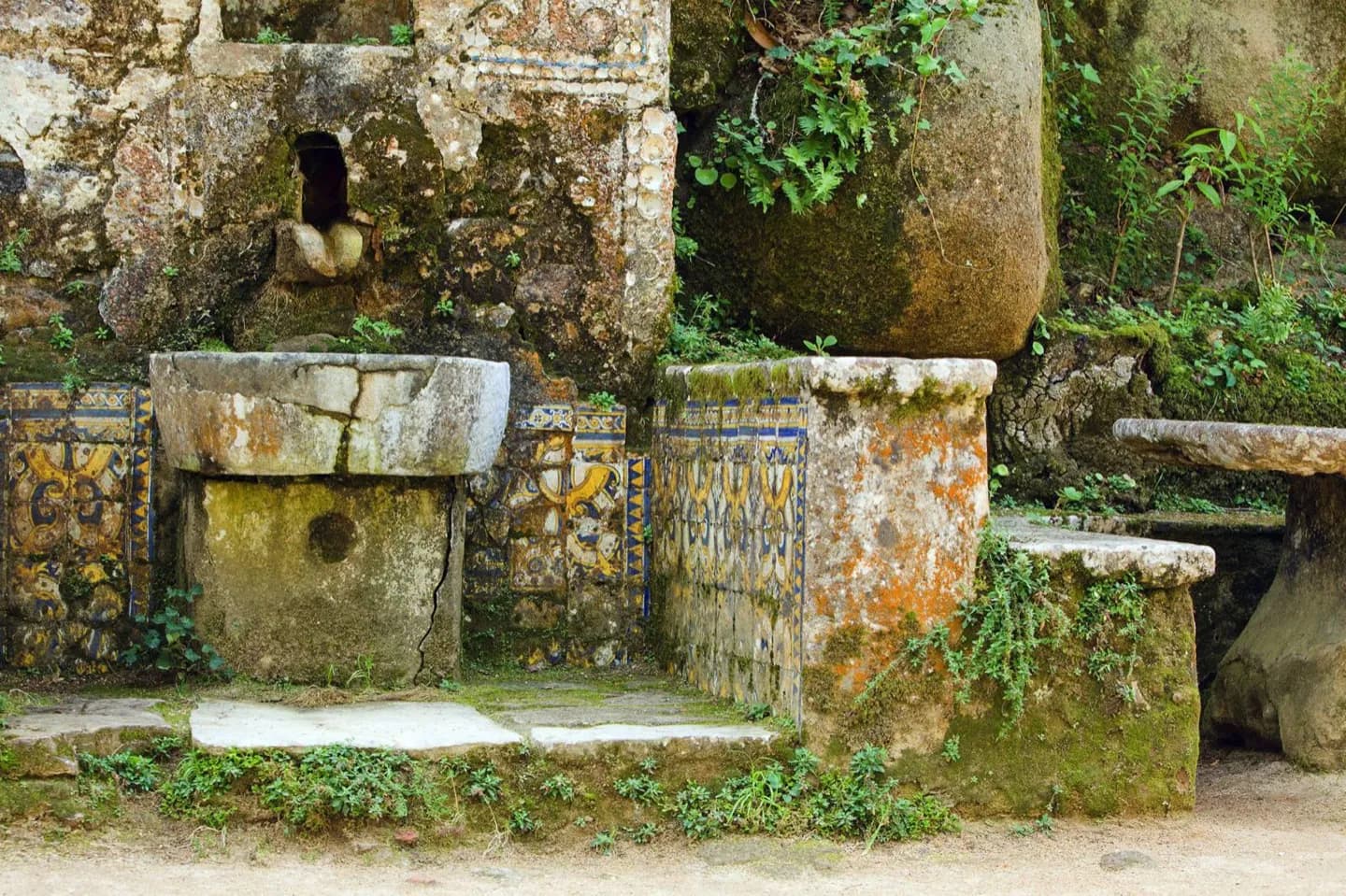
Capuchos offers a sharp contrast with Sintra’s showier palaces. Its tiny quarters and restrained materials make the community’s religious ideals tangible, while the surrounding boulders show how the complex was fitted into the mountain rather than imposed upon it. It is an unusually direct architectural expression of withdrawal.
The full story
The Convento de Santa Cruz da Serra da Sintra, commonly called the Convent of the Capuchos, was founded through the Castro family’s patronage in the sixteenth century. A small community of Capuchin friars lived here until Portugal abolished its religious orders. Their buildings were deliberately modest: quarters and shared spaces were compact, and the complex settled among the rocky slopes of the Sintra Mountains. Cork-covered openings and sparse decoration embodied the community’s ideal of poverty. The geography mattered too. Paths, levels and exposed boulders shaped movement through the convent, making the mountain part of the religious setting. Its foundation is linked to João de Castro, the former Portuguese viceroy of India, and to his son Álvaro, who established the house. When comparing Sintra’s estates, Capuchos is the useful counterpoint: it tells a story of withdrawal and restraint within the same landscape that later patrons filled with elaborate palaces.
Useful to know
- Allow for uneven, sloping ground as you move between the small rooms and exterior spaces.