
Why go
The National Palace, Moorish Castle and Pena Palace make Sintra's long history legible in a small area: a court town below, a medieval stronghold above and a Romantic royal retreat higher on the ridge. Monserrate and the Sintra-Cascais landscape widen the story beyond that familiar trio.
The full story
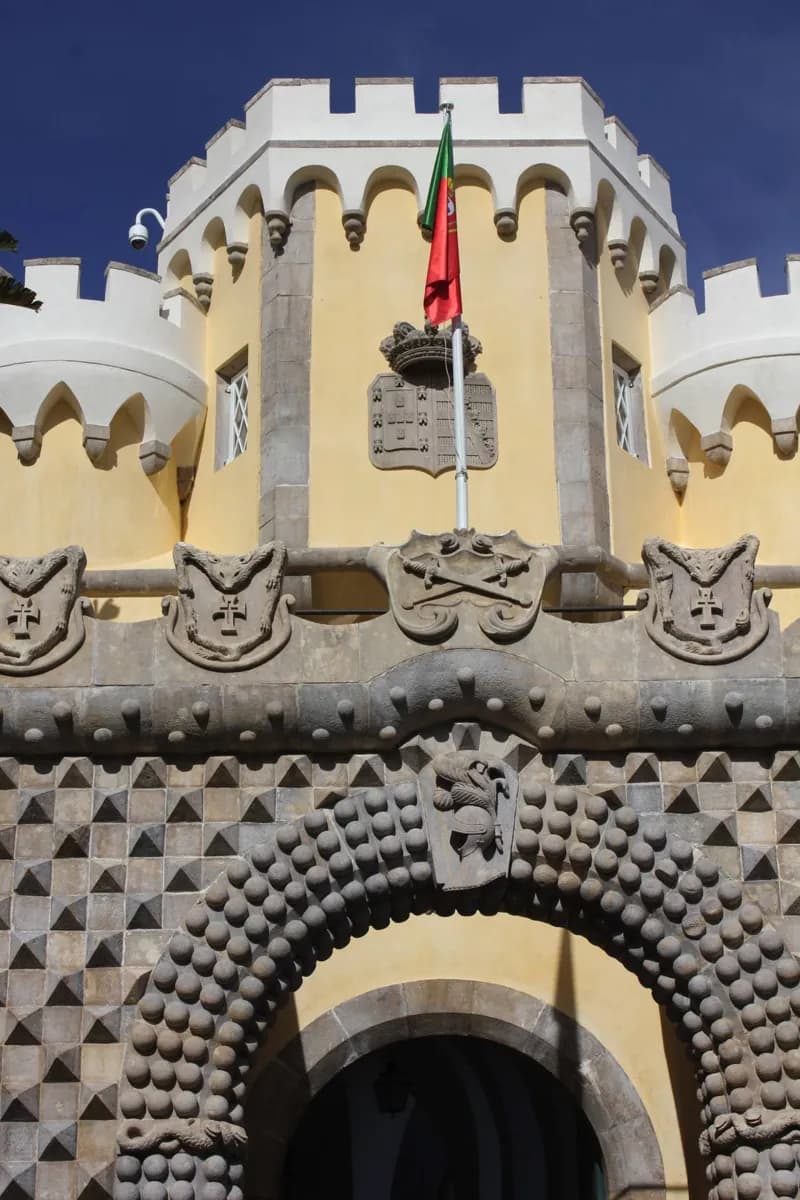
Begin in the old town, where the National Palace recalls Sintra's centuries as a royal residence. Above it, the Moorish Castle marks the fortified mountain settlement that passed into the emerging Portuguese kingdom in the twelfth century. Pena Palace belongs to a much later idea of Sintra: nineteenth-century Romanticism, which treated the wooded, often misty hills as part of the experience of architecture. Other estates and retreats spread through the mountains, including Monserrate, rather than lining up along one street. This layered landscape is why Sintra's cultural landscape is recognized as a UNESCO World Heritage Site. It also explains why a list of monuments can mislead: the town, high ground and outlying estates occupy different settings. A visit centered on the National Palace and one mountain site gives a clearer first reading than trying to treat the whole area as a single compact museum.