
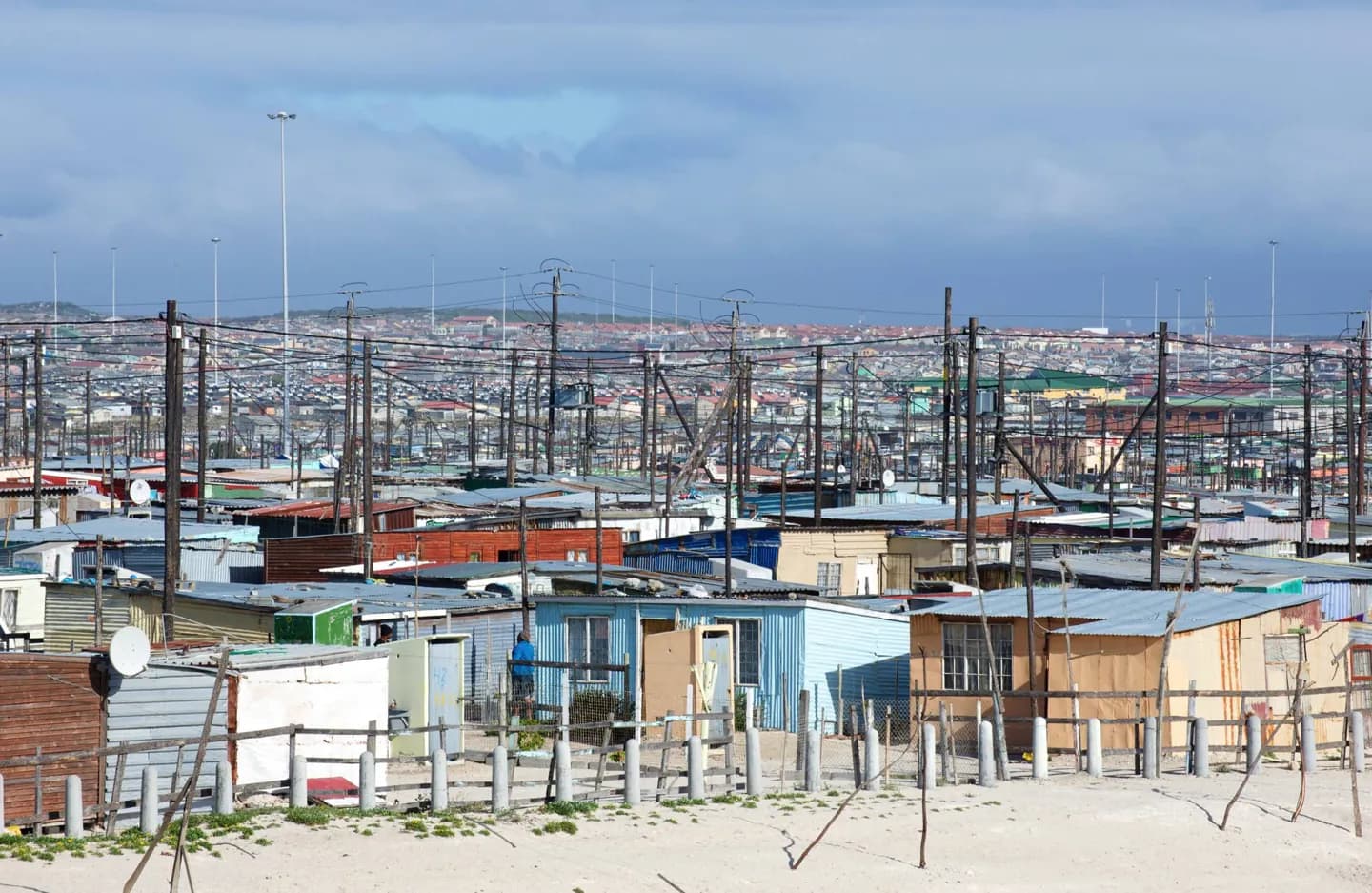
Why go
The township’s creation in the 1980s followed plans to move Black residents from other Cape Town areas. Its name means “New Home” in Xhosa, but that hopeful meaning sits alongside forced relocation and restrictions on movement. A visit needs a specific community destination, not a generic township circuit.
The full story
Khayelitsha lies on the Cape Flats, east of central Cape Town. The apartheid government announced plans for the township in 1983 while trying to control the growth of Black communities in and around the city. People arrived from crowded settlements including Crossroads and from the Eastern Cape; many relocations were forced or shaped by coercive policy. Earlier Group Areas rules and pass controls had already divided Cape Town by race and limited where people could live. Khayelitsha’s Xhosa name means “New Home,” a phrase that should be read against that history rather than as a simple founding story. After the 1994 election, further migration changed the township again. Khayelitsha is now a living urban area with many neighbourhoods. Understanding its origin helps connect the Cape Flats to the city’s museums about removals and apartheid, while leaving room for the community’s later history.