
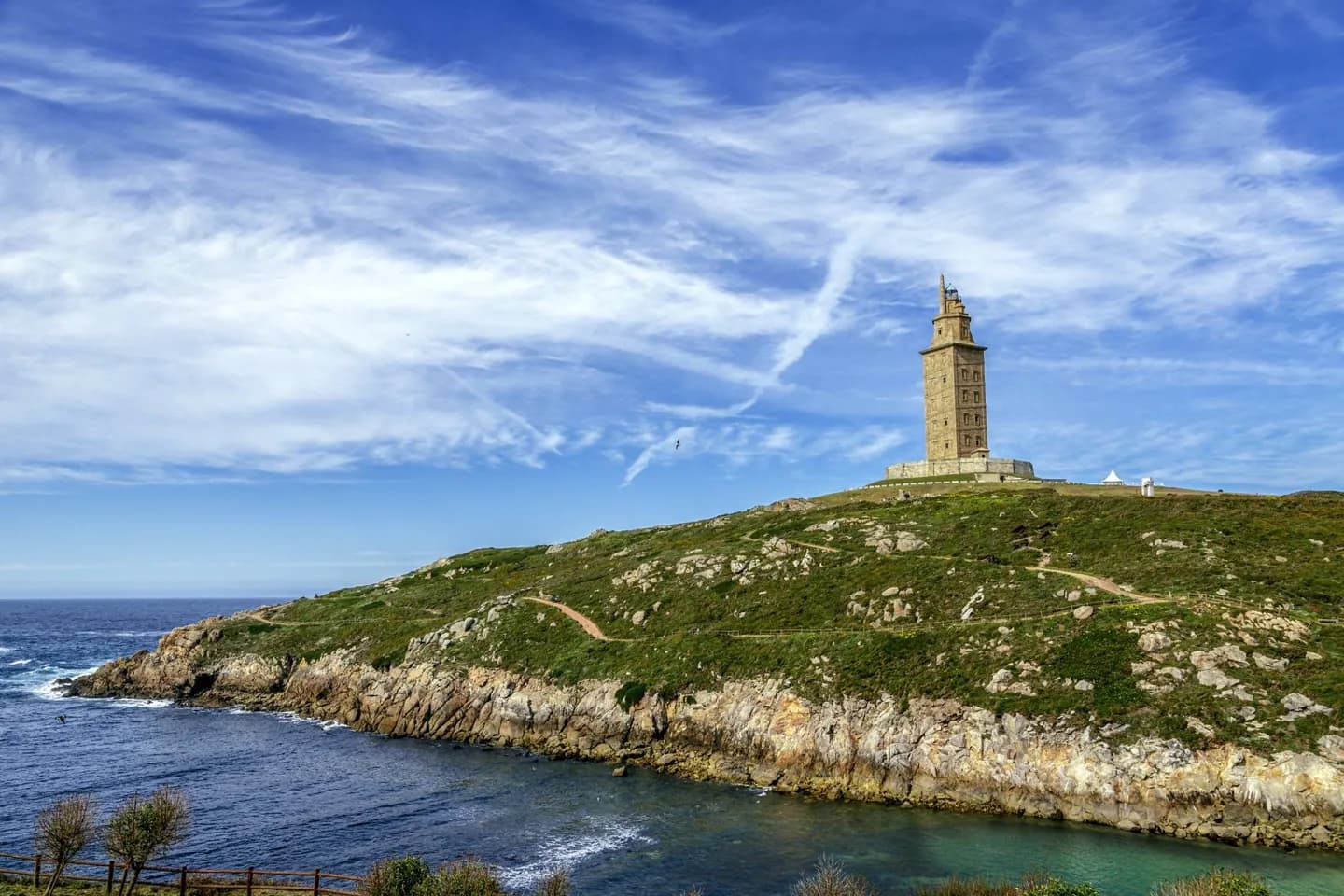
Why go
The rías give Galicia a coastline unlike the Mediterranean, while Santiago de Compostela, A Coruña and Vigo anchor different urban stops. Galician, closely related to Portuguese, is part of the region's everyday identity. Coastal seafood and an often wetter climate make it feel distinct from central and southern Spain.
What to look for
- Rías carry the sea deep into Galicia's coastline.
- Santiago de Compostela is the regional capital.
- Galician and Spanish are both official languages.
The full story
Galicia's landscape helps explain its distinctive cultural history. On the coast, rías are drowned river valleys that take the sea far inland; behind them, hills rise toward higher ranges in the east and south. Fishing and farming shaped much of the region's past, and seafood remains one of the clearest ways a visitor encounters that geography. The area also has a long history of regional identity. Its name recalls the ancient Gallaeci, while Roman, Suebi and later medieval rule each left a place in the historical account. For much of the Middle Ages, Galicia was linked to larger kingdoms while retaining its own customs and institutions. Modern self-government followed much later. Language is an immediately visible part of this separate identity: Galician is a Romance language closely related to Portuguese and shares official status with Spanish. A trip that moves from Santiago de Compostela to the coastal areas around A Coruña or Vigo can bring these strands together, showing how geography, language and history vary within the same region.
Useful to know
- Plan the coast and inland towns as separate legs; Galicia is a region, not a single stop.
- Pack for changeable Atlantic weather, especially for coastal walking.