
Why go
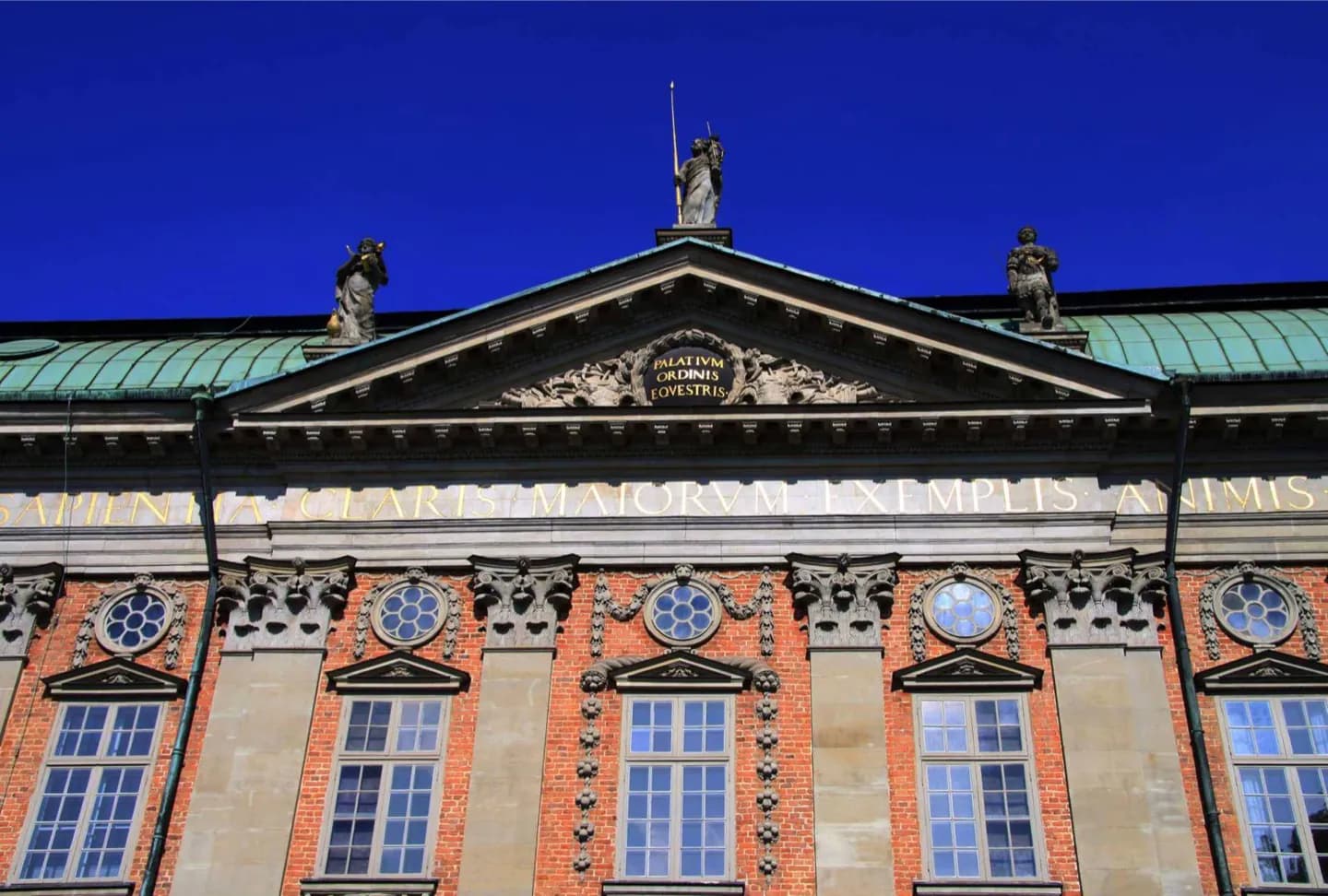
The exterior offers one of central Stockholm’s clearest expressions of aristocratic Baroque architecture. Its location between Gamla Stan and Riddarholmen also makes it useful for understanding how royal, parliamentary and noble institutions clustered around the city’s historic core. The waterfront approach strengthens its formal architectural presence.
What to look for
- The richly composed palace facades and steep roofline.
- Heraldic imagery associated with Sweden’s noble families.
- Views linking the building to the Riddarholmen waterfront and parliament district.
The full story
The Swedish term Riddarhuset refers both to the corporation of the nobility and to its palace in Stockholm. The institution represented titled and untitled noble families within Sweden’s historic political order. Its seventeenth-century building gave that corporate identity a prominent architectural home close to the royal palace and the old parliamentary quarter. The palace stands apart from Gamla Stan’s tighter merchant fabric through its freestanding scale, formal facades and emphatic roof. Heraldry is central to the institution’s visual language, connecting the building with the families recorded inside. The political privileges once associated with the nobility have changed, but Riddarhuset remains an active custodian of genealogy, archives and tradition. From outside, its significance is clearest in relation to neighboring institutions: crown, parliament, church and nobility occupy a remarkably compact part of Stockholm.
Useful to know
- Verify current public access before planning an interior visit.
- Approach from both Gamla Stan and Riddarholmen to see how the palace addresses the crossing.
Your next visit
Estimated · Declared scenario and planning estimates; no live opening, weather, queue or booking service.
Outdoor visit · 30–45 min
World planning estimate; admission, opening, visit duration and access need checking.