
Why go
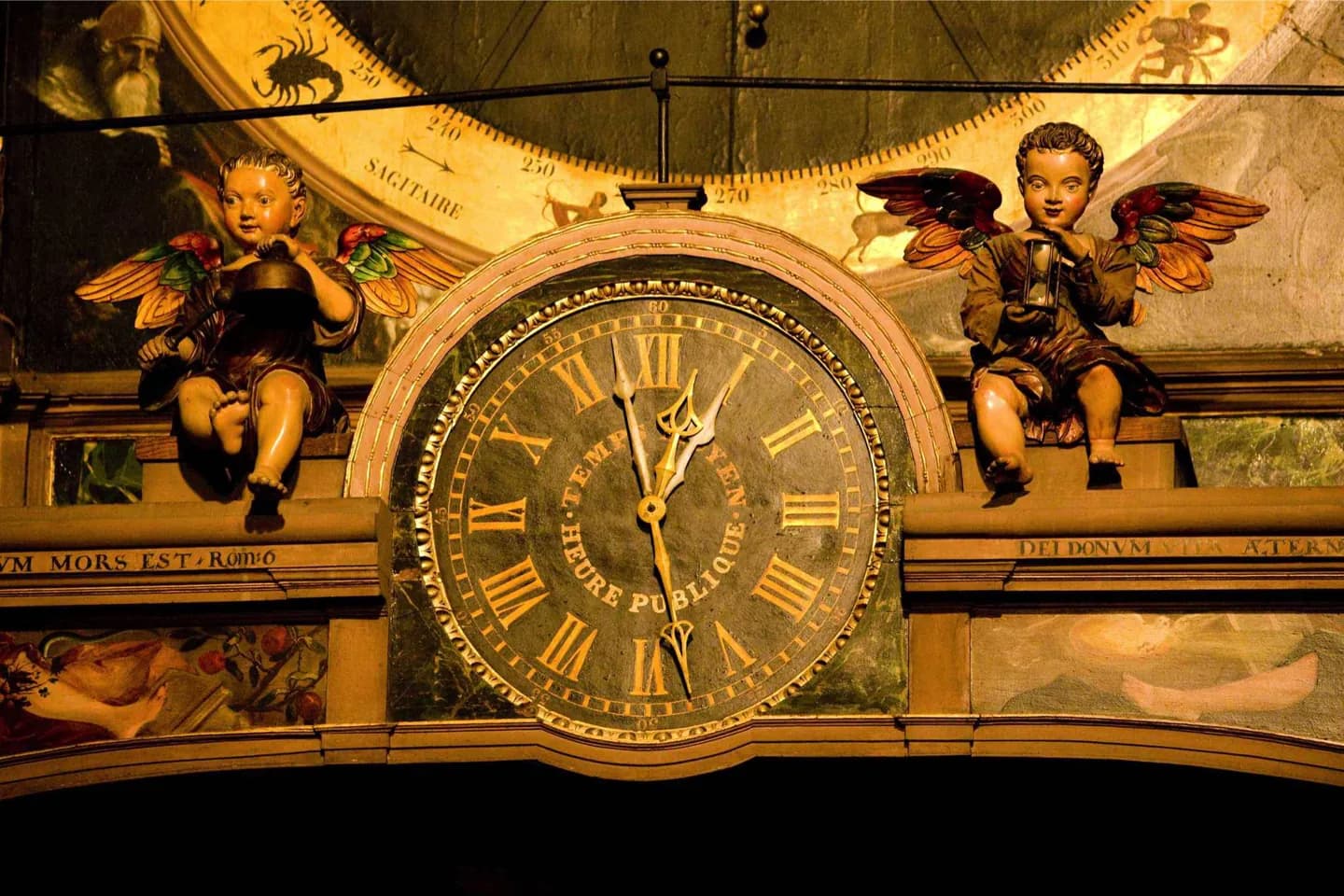
This clock turns timekeeping into a mechanical account of the heavens. Its calendar, planetary display and figures reward a slow look even before the moving sequence begins. It is especially worthwhile if you want to understand one remarkable object inside the cathedral rather than simply pass through the nave.
What to look for
- A perpetual calendar is built into the clock face.
- Planetary and solar-lunar displays sit beside the automata.
- Life-size apostles form part of the moving sequence.
The full story
The present astronomical clock dates from 1843, but it belongs to a longer cathedral tradition of using machinery to represent both religious and astronomical time. Its displays go well beyond ordinary hours. A perpetual calendar accounts for the changing date; planetary and solar-lunar indications place that date within a larger celestial cycle. The moving figures add a human and devotional layer to the mechanism, with the apostles and Christ making the passage of time visible as a procession. Clockmaker Jean-Baptiste Schwilgué designed the nineteenth-century work, drawing on careful calculation as well as theatrical effect. Look first at the separate dials and figures, then step back to see how they form one tall architectural composition. That sequence makes the object easier to read: it is part scientific instrument, part public spectacle, and part expression of the cathedral’s religious setting.
Useful to know
- Check the cathedral’s clock-presentation information before planning your visit.
- Set aside a separate slot for the presentation rather than folding it into general nave time.
Your next visit
Estimated · Declared scenario and planning estimates; no live opening, weather, queue or booking service.
Indoor visit · 20–35 min
World planning estimate; admission, opening, visit duration and access need checking.