
Why go
Built after Strasbourg became part of the German Empire, the observatory joined scientific teaching with a public statement of the refounded university. Its historic dome and telescope reward interest in astronomy and nineteenth-century politics. Access to the instrument and interior depends on arranged visits.
What to look for
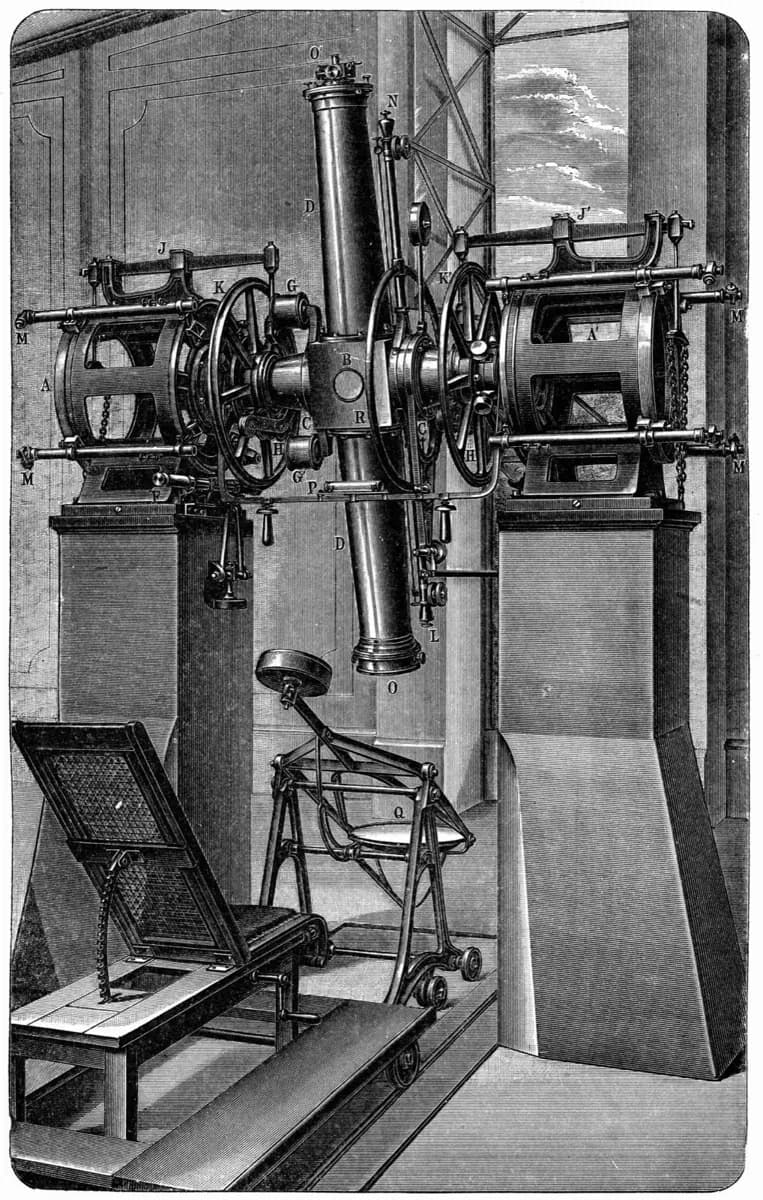
- The Grande Coupole houses a historic telescope.
- A Coronelli celestial globe is part of the observatory story.
- The site belongs to Strasbourg’s nineteenth-century university expansion.
The full story
After the Franco-Prussian War, Strasbourg became part of the German Empire and its university was refounded in 1872. Construction of a new observatory began soon afterward. The main telescope first saw light in 1880, and the observatory’s inauguration followed in 1881. Its location and scale were shaped as much by the university’s teaching and political symbolism as by ideal observing conditions; the low site was prone to mist. That tension makes the building a revealing part of Strasbourg’s nineteenth-century history. It was meant to demonstrate serious scientific ambition in a city whose institutions were being remade. Research there later included observations of comets, variable and binary stars, and nebulae. The Grande Coupole and historic instrument make this story tangible when an official visit is offered. Outside such an opening, the observatory is best treated as historical context for the university quarter, not as an assured sightseeing stop.
Useful to know
- Check the university’s public-visit programme before considering a tour.
- Do not build a walk around presumed self-guided entry.
Your next visit
Estimated · Declared scenario and planning estimates; no live opening, weather, queue or booking service.
Indoor visit · 60–90 min
World planning estimate; admission, opening, visit duration and access need checking.