
Why go
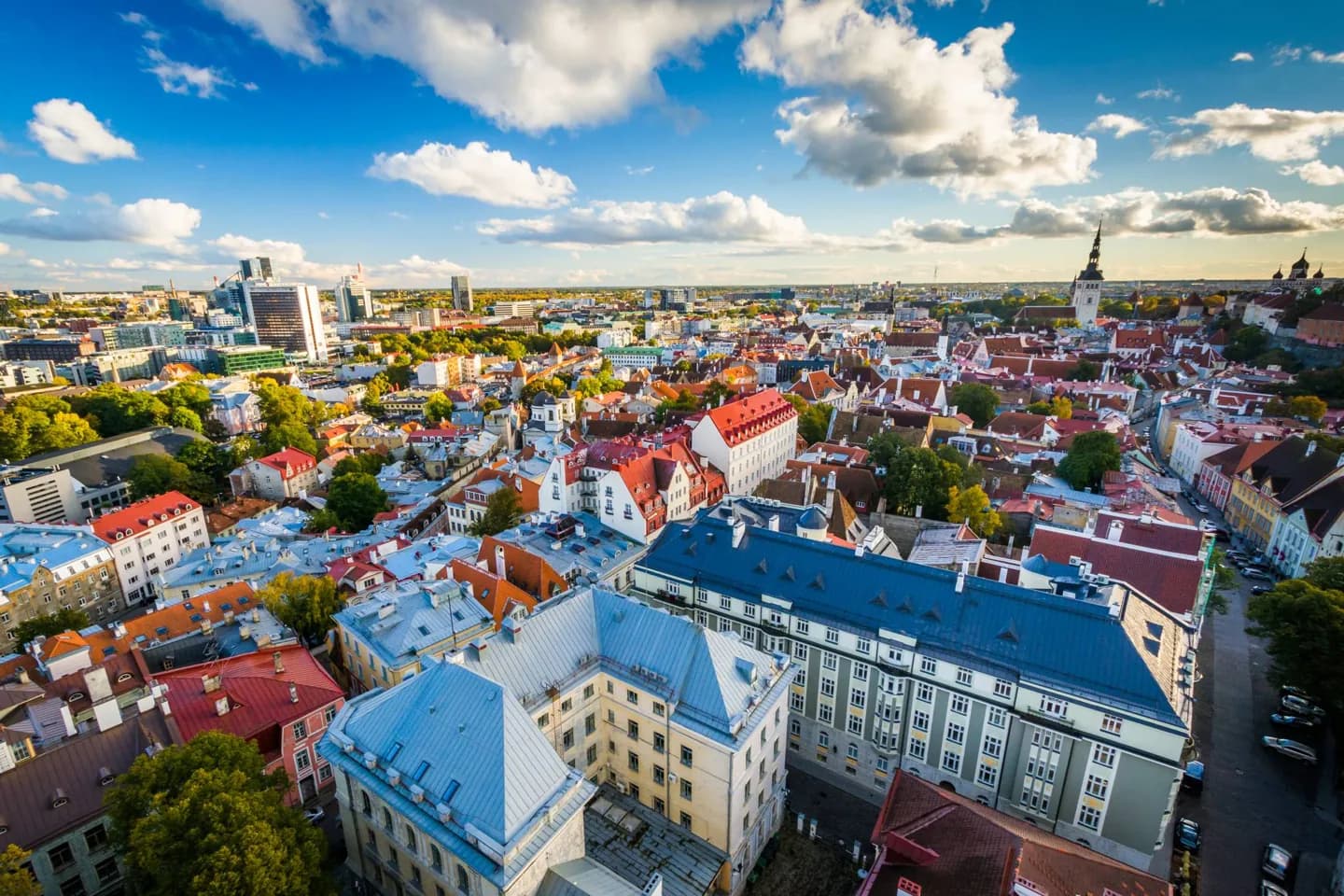
Start at Raekoja plats to understand the Lower Town as a merchants' civic centre, then follow the surviving walls and gates toward Toompea. The contrast between the town hall, church buildings, defensive towers and hilltop authority gives the streets more meaning than a sequence of picturesque façades alone.
The full story
Tallinn's Old Town preserves the form of a northern European trading city. In the Lower Town, Raekoja plats gathered civic life around the Gothic Town Hall. Its tower carries the figure of Vana Toomas, or Old Thomas, a city emblem dating from the sixteenth century. Across the square, Raeapteek's long history as a pharmacy points to the continuity of commerce around the market square. The walls tell a different story. Fortifications grew over several centuries as weapons and the city's needs changed. The Great Coastal Gate, beside the broad Fat Margaret tower, recalls the maritime approach to the town. Kiek in de Kök, another former cannon tower, makes the defensive scale easier to grasp. Churches add the merchants' world to that picture. Niguliste, or St Nicholas' Church, began as a medieval stone church and later took basilica form. Its art, including work associated with Hermen Rode and a fragment of Bernt Notke's Dance of Death, connects Tallinn with the wider Baltic trading network. A walk from the Town Hall Square to the walls and then uphill to Toompea brings these layers together without reducing the city to one architectural period.
Useful to know
- Begin at Raekoja plats, then look for the wall and towers on the edge of the Lower Town.
- Continue uphill to Toompea to compare the merchants' town with the fortified seat of power.