
Why go
Knowing a few turning points makes the streets easier to read. Toompea reflects the city's long role as a seat of power; the Lower Town's walls and Town Hall recall Hanseatic trade. Pirita's Olympic structures and twentieth-century sites add a more recent layer beyond the medieval centre.
The full story
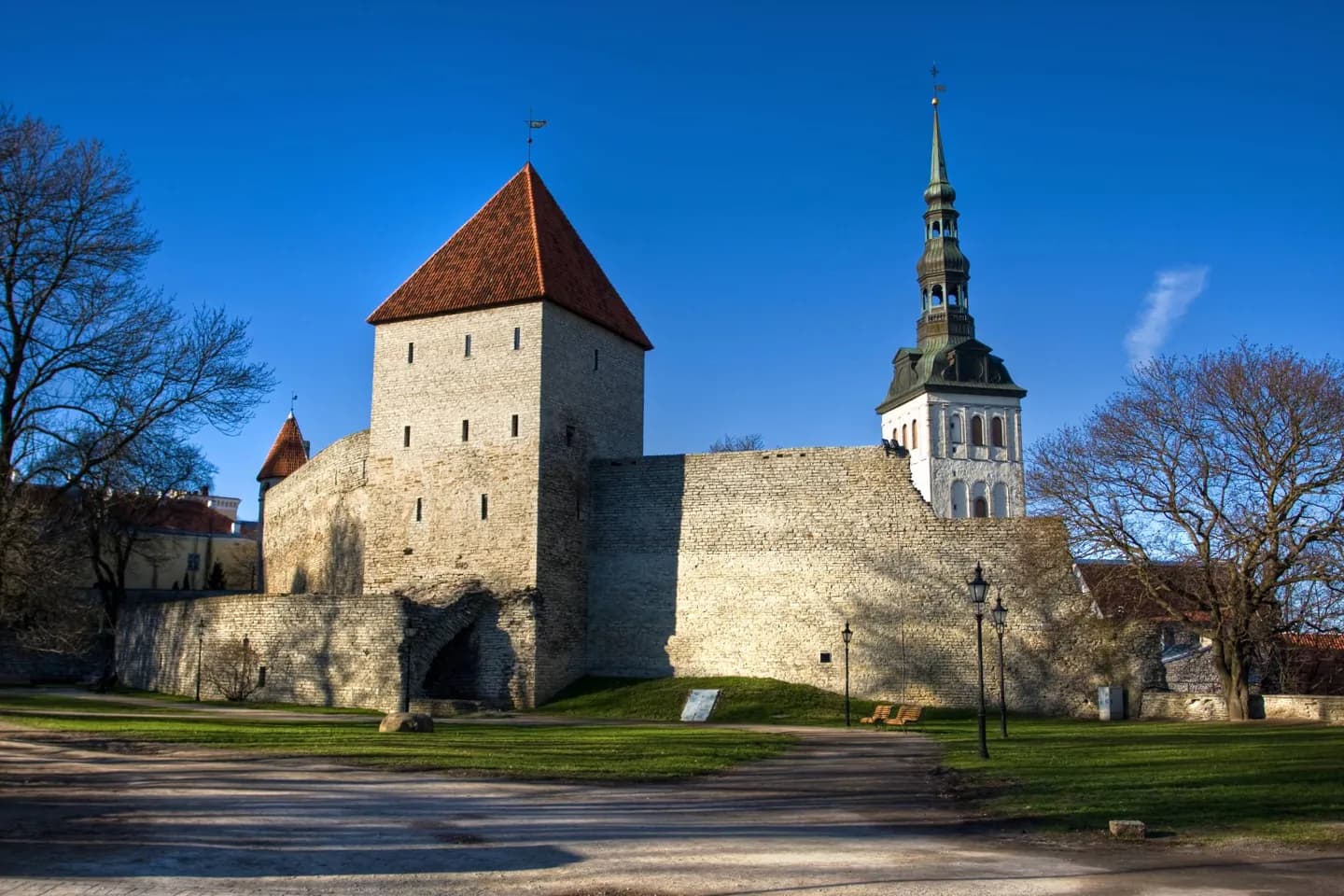
People lived in the Tallinn area long before the medieval city took shape. A stronghold on Toompea became important as northern crusading powers reached the eastern Baltic. Danish rule began in the early thirteenth century, and the town later joined the Hanseatic League, the network of trading cities that linked northern Europe with routes toward Russia. Its position on the Gulf of Finland helped make the port valuable, while the walls and towers protected the Lower Town below Toompea. Power changed hands again. The city, long known as Reval, passed through the rule of the Teutonic Order and then Sweden. It capitulated to Russia during the Great Northern War. In the nineteenth century, industrialisation and the port reshaped the city beyond its medieval core. Estonia declared independence in 1918, and the 1920 Treaty of Tartu recognised the new republic. The twentieth century brought occupation and upheaval. Soviet and German rule left marks that sit alongside the older townscape, and the sailing events of the 1980 Moscow Olympics brought new construction to Pirita. Read Tallinn from the hill down to the harbour: the castle, merchants' square, defensive walls and maritime edge each represent a different claim on the city.
Useful to know
- Compare Toompea Castle with Raekoja plats to see the upper seat of power and the merchants' Lower Town.
- Include Pirita for a twentieth-century layer linked to the 1980 Olympic sailing events.