
Why go
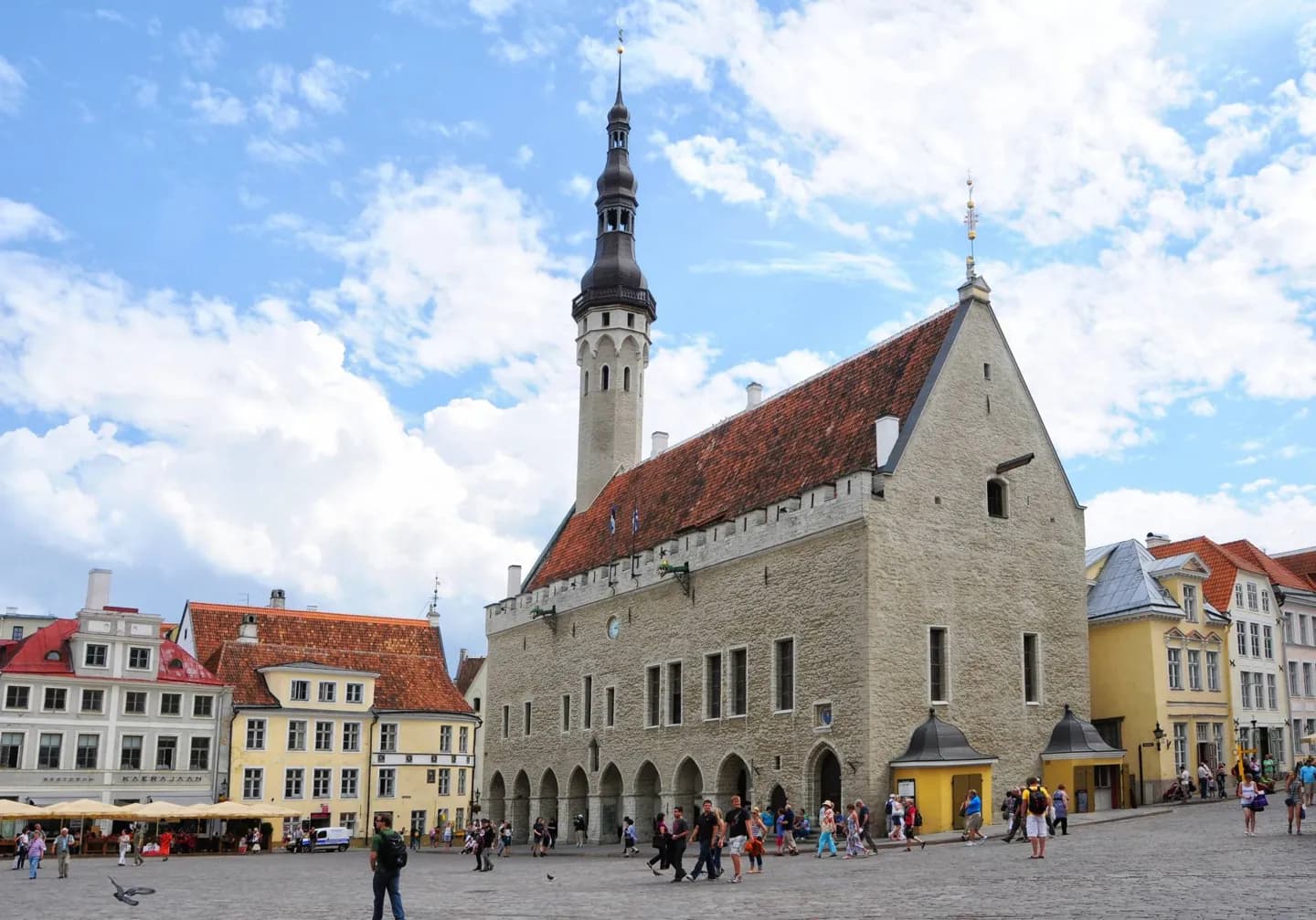
Stand in the square to see how the Town Hall addresses the old market, then look at its arcade and tower. The building grew through several medieval phases rather than from a single design. Its council rooms, when accessible, add the story of the merchants who governed trade, law and daily life in the town.
What to look for
- The limestone façade facing Raekoja plats
- The arcade and tower rising from the eastern end
- The relationship between the civic building and former market square
The full story
Tallinn Town Hall began as a place for urban citizens to meet and grew into the centre of municipal government, justice and trade regulation. It stands beside the former market square, where a public building could address the commercial life it governed. The grey limestone walls conceal a construction history in several stages. The early building expanded in the fourteenth century as Tallinn's Hanseatic trade grew; the exterior took on much of its enduring form in the early fifteenth century. Its slightly irregular plan is a useful reminder that this was an adapted working building rather than a monument conceived all at once. The tower and later spire added another layer to the skyline. If the interior is open, the rooms carry the story beyond the façade: councillors made decisions there about markets, courts, walls and the town's obligations to other trading cities. Even from the square, the scale of the building shows how much civic power Lower Town's merchants held.
Useful to know
- Begin outside in Raekoja plats to understand the building's civic setting.
- Check the Town Hall's current visitor arrangements before planning an interior visit.