
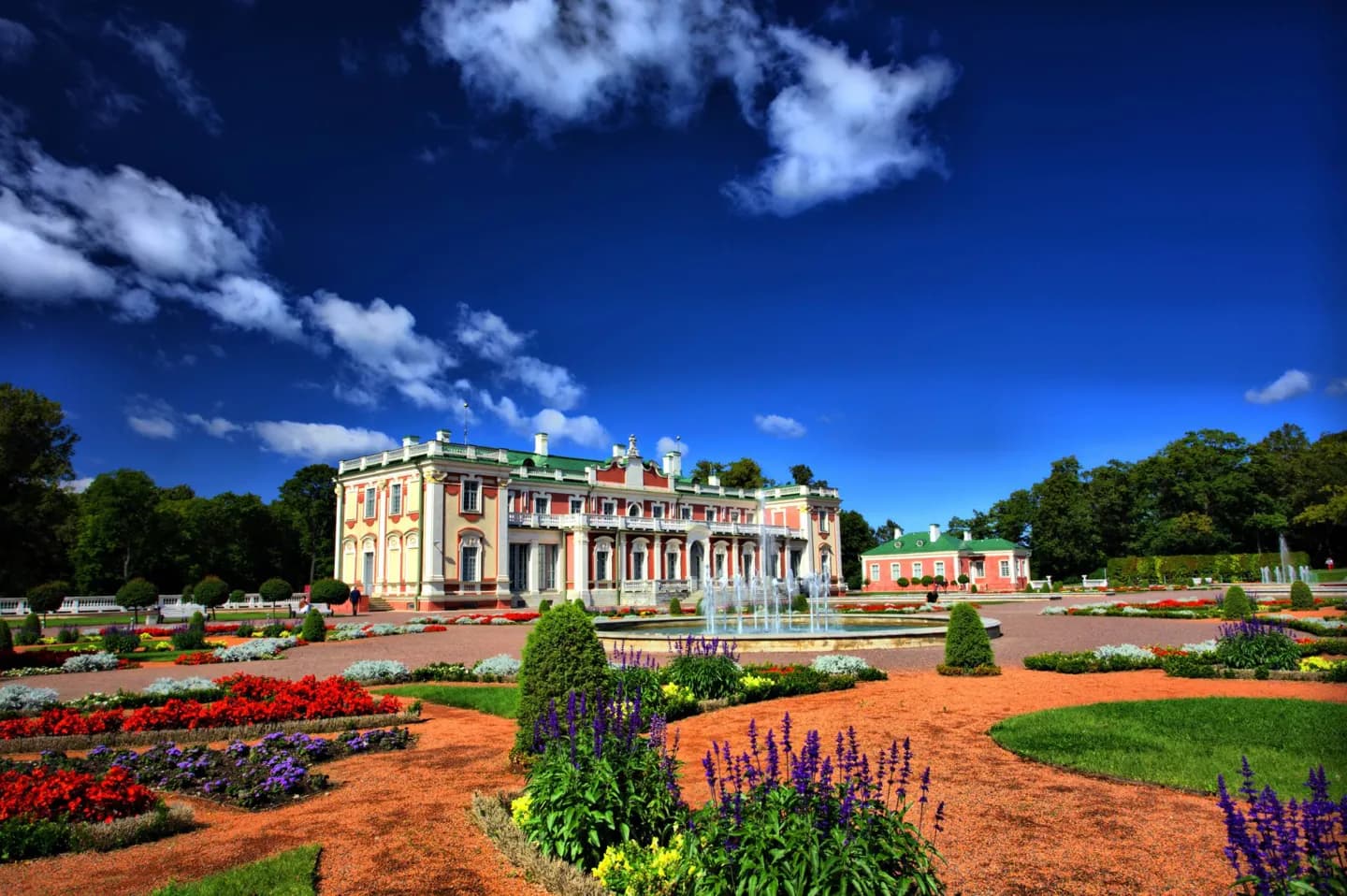
Why go
The palace offers a rare chance in Tallinn to see foreign art inside the setting of Peter the Great's early 18th-century project. Look up at the decorated rooms as well as at the paintings and sculpture; the building is part of the museum experience.
What to look for
- Baroque rooms retain rich decorative work, including the great hall.
- The ceiling painting of Diana and Actaeon rewards a closer look.
- The collection spans Western European and Russian art from the 16th to 20th centuries.
The full story
Peter the Great began building a larger palace in Kadriorg in 1718 for his wife Catherine I, after Russia had taken Tallinn during the Great Northern War. Its name means Catherine's valley. The palace was conceived in the Petrine Baroque style, and the great hall still gives a sense of its original ceremonial ambition, with Catherine's initials and elaborate stucco. Later rulers altered parts of the building and grounds, so the interiors do not all belong to one moment. In the 20th century it had several roles, including use by the Art Museum of Estonia and a period as a presidential residence. After a major restoration begun following Estonia's return to independence, the palace reopened in 2000. It now houses the Kadriorg Art Museum's Western European and Russian collections. The layers of use explain why the rooms themselves deserve as much attention as the works displayed inside them.
Useful to know
- Combine the museum with a walk through Kadriorg Park rather than treating the palace as an isolated stop.
- Check the museum's current calendar before choosing a visit day.
Your next visit
Estimated · Declared scenario and planning estimates; no live opening, weather, queue or booking service.
Indoor visit · 30–45 min
World planning estimate; admission, opening, visit duration and access need checking.