
Why go
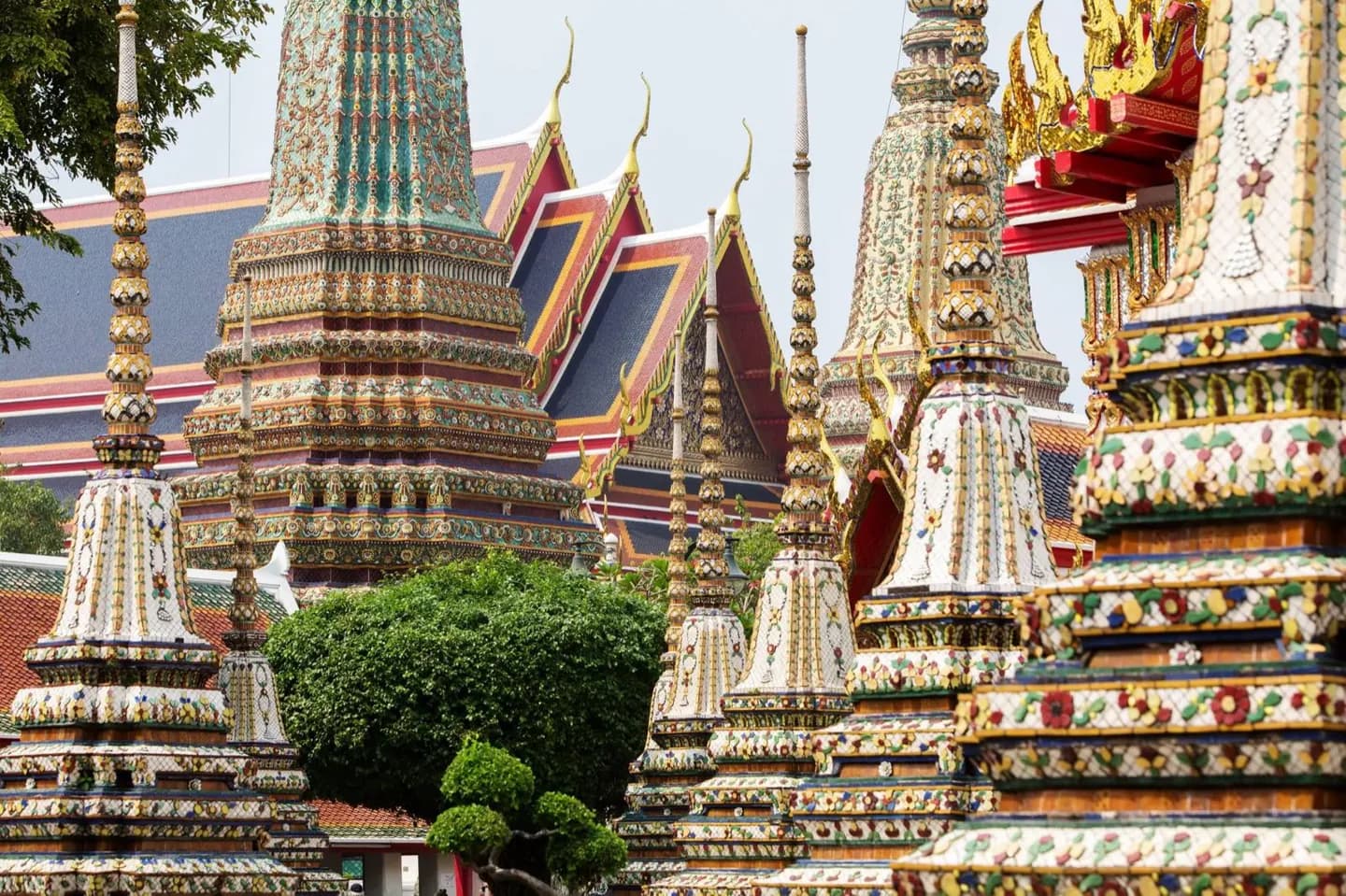
The Grand Palace and nearby temples are easier to read as parts of a rebuilt capital than as unrelated monuments. Rattanakosin joined a new riverbank location to older court ceremony, law and Buddhist institutions. Its layout and surviving religious buildings give Bangkok visitors a way to see continuity after Ayutthaya and the brief Thonburi period.
The full story
The Rattanakosin period began when Rama I, the first Chakri king, founded a capital on the east bank of the Chao Phraya in 1782. The new royal centre faced Thonburi across the water, yet it looked back to Ayutthaya for many institutions. Court ceremonies, legal practice and support for the Buddhist monkhood were restored or reorganised under the new dynasty. This is useful context for a walk through Bangkok’s old royal quarter. The Grand Palace and neighboring temple precincts are part of a deliberate capital, not simply a cluster of attractive buildings. Later rulers dealt with European powers and pursued reforms, adding further layers to the city. The first layer to notice, however, is the decision to rebuild royal authority beside the river while retaining selected traditions of the fallen Ayutthaya kingdom.