
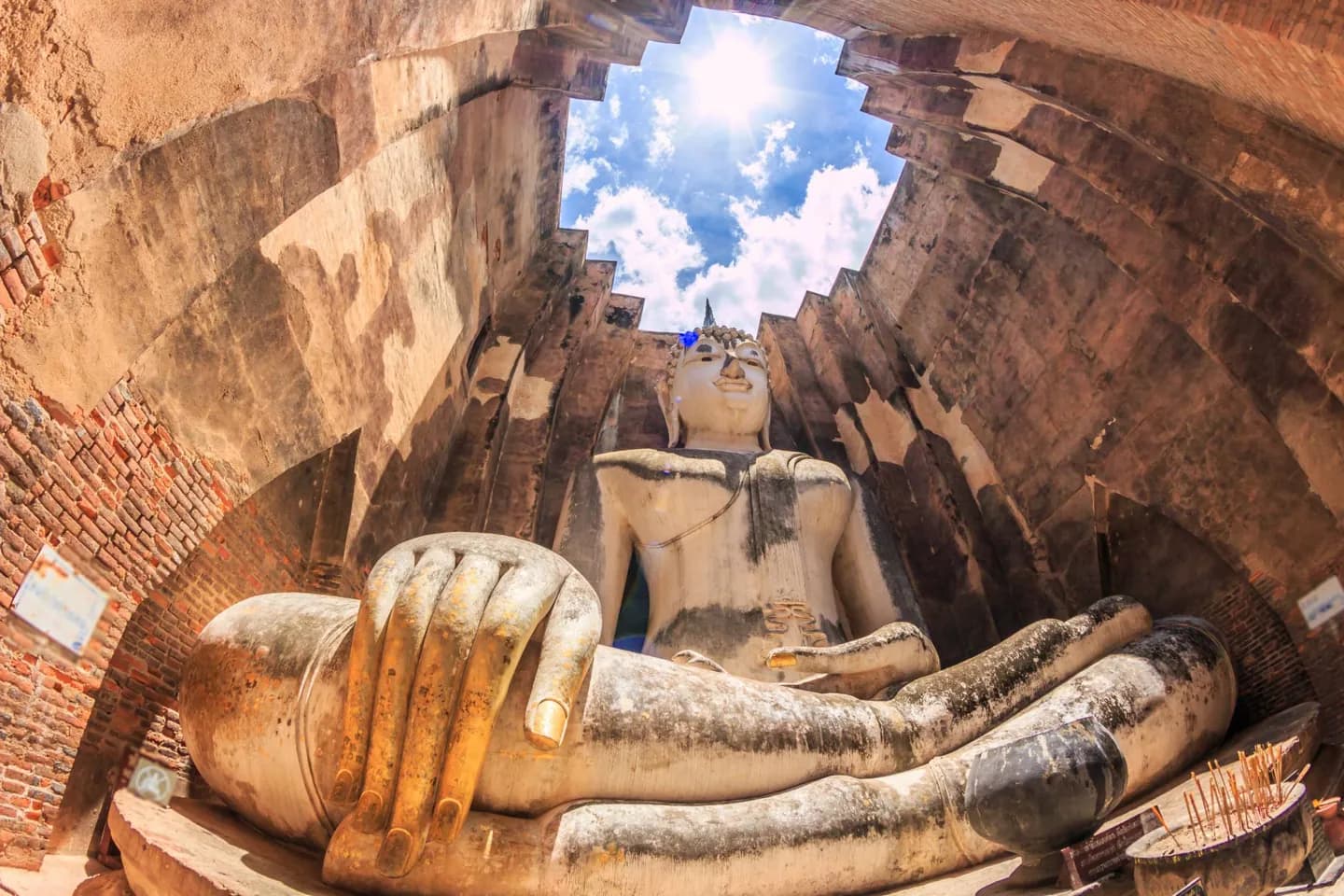
Why go
The distinction changes what you look for at each destination. Sukhothai’s ruined capital speaks to an early kingdom in the central north; Chiang Mai recalls Mangrai’s Lan Na state farther north. Their political links and later encounters with Ayutthaya do not make them one continuous capital, so comparing both places is more rewarding than treating one as the other’s sequel.
The full story
As Khmer power weakened, new Tai-led states developed across mainland Southeast Asia. Sukhothai became an important kingdom in the central north, remembered for its old capital and royal traditions. Farther north, Mangrai established Lan Na with Chiang Mai as its centre. The two states existed in the same broad period and had political ties, but they occupied different landscapes and followed different later paths. Ayutthaya expanded its influence over Sukhothai, while Lan Na remained a northern power before periods of Burmese control and eventual integration into the Bangkok-centred state. That sequence gives visitors a clearer way to read the sites. Sukhothai’s temple ruins belong to its own royal landscape. Chiang Mai’s old city and nearby temples speak to Lan Na’s separate northern culture, even when the two histories meet in a wider Thai narrative.