
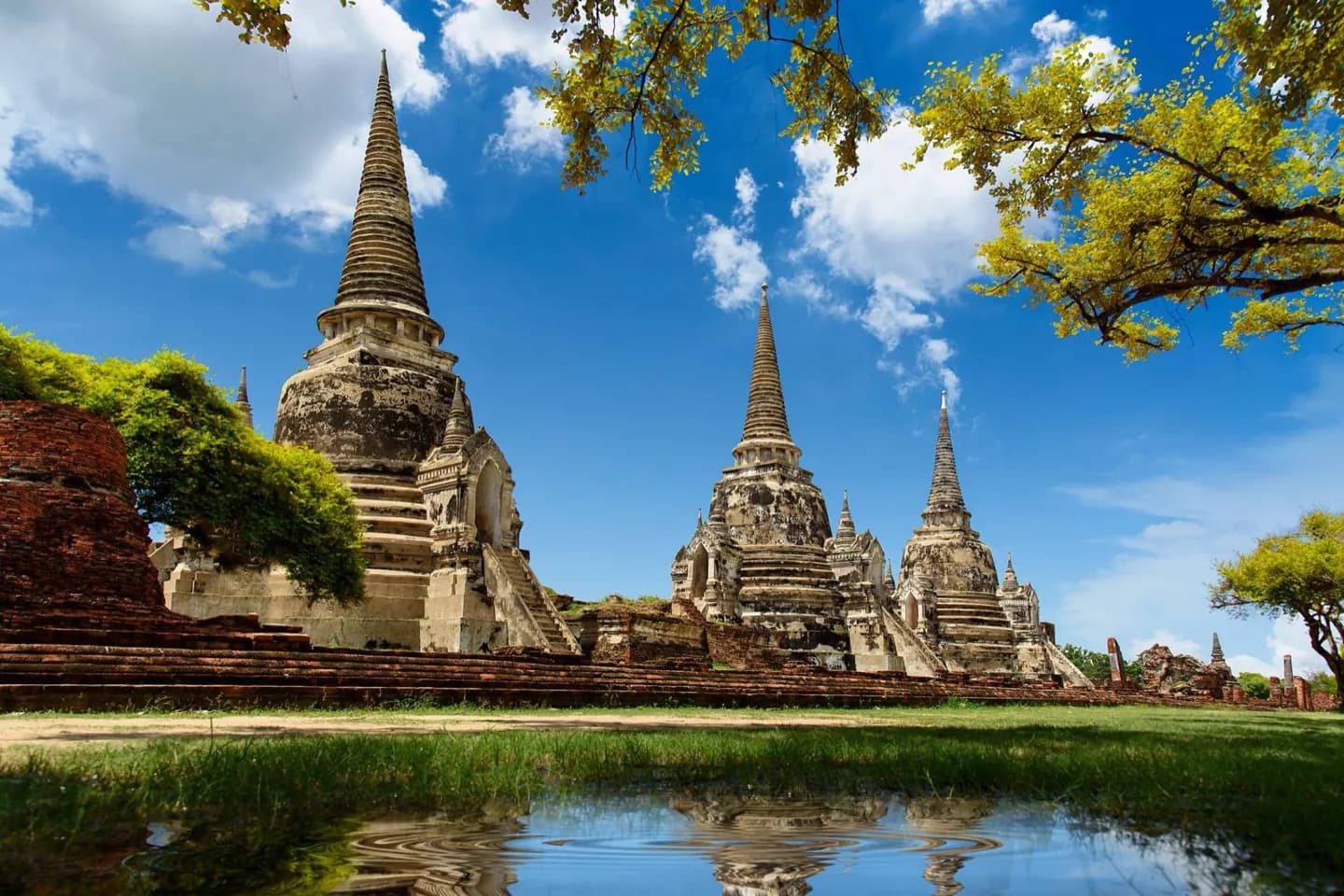
Why go
Thailand's warmer, drier months and wetter monsoon period change what a day outdoors feels like. The central and northern regions often become especially hot before the rains, while the south follows a different pattern. That distinction helps you choose between open-air ruins, mountain walks and coastal time.
The full story
Much of Thailand has a tropical pattern with a drier period and a wetter one. Heat tends to build in March and April, before southwest monsoon rains reach many parts of the country between May and July. The wetter period can extend into October, but the south does not follow exactly the same timing. As the drier season begins later in the year, nights in the northern highlands can feel much cooler than days on the central plain. The contrast matters more than a single national average: an exposed archaeological park, a shaded city museum and a mountain trail respond differently to the same forecast. Pick outdoor priorities with the specific region in mind, and keep a sheltered alternative for days when rain or heat would dominate the visit.
Useful to know
- For exposed ruins or long outdoor walks, allow flexibility around the hottest part of the day.
- Check the forecast for the specific coast or highland area you will visit; seasons differ across Thailand.