
Why go
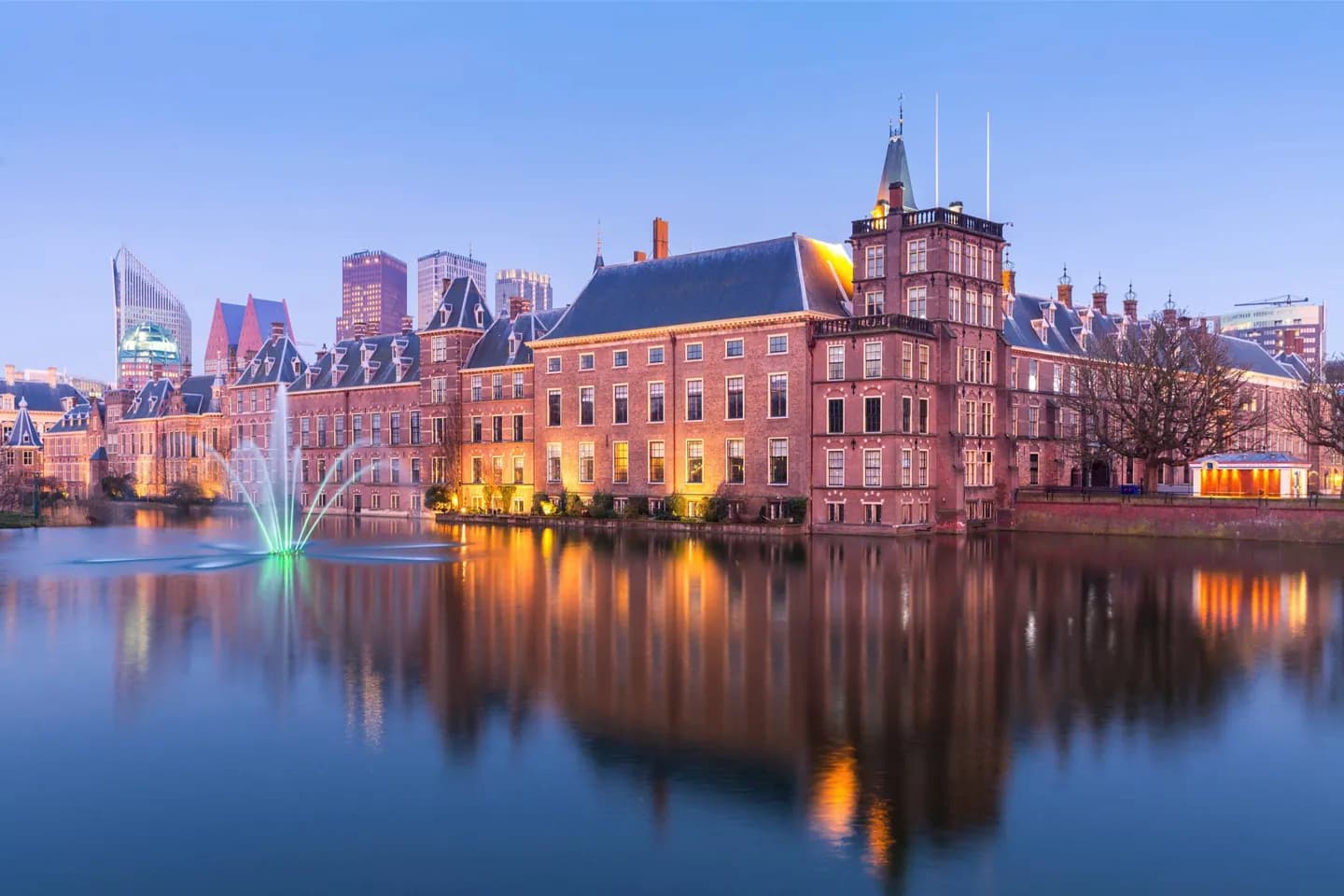
The city's civic identity is unusually visible on an ordinary walk: the Binnenhof faces the Hofvijver, Noordeinde Palace stands in the centre, and the Peace Palace connects The Hague to international law. Understanding these roles makes the surrounding streets and buildings more than a sequence of facades.
The full story
Begin at the Hofvijver, where the Binnenhof marks the historic seat of political power. The Netherlands' parliament and government are associated with The Hague, although Amsterdam is the country's capital. That distinction explains why national institutions cluster here without the city carrying the capital title. Royal sites add another layer: Noordeinde Palace is in the centre, while Huis ten Bosch is set within the Haagse Bos. International institutions extend the story beyond Dutch politics. The International Court of Justice has its seat in the Peace Palace, and the International Criminal Court is also based in The Hague. These institutions are distinct from one another; their buildings and public access need to be considered separately when planning a visit. A short walk around the pond links the old governing complex to the Mauritshuis, while the royal residences and international sites widen the city's civic story. Use those anchors to decide which layer to explore in more depth.