
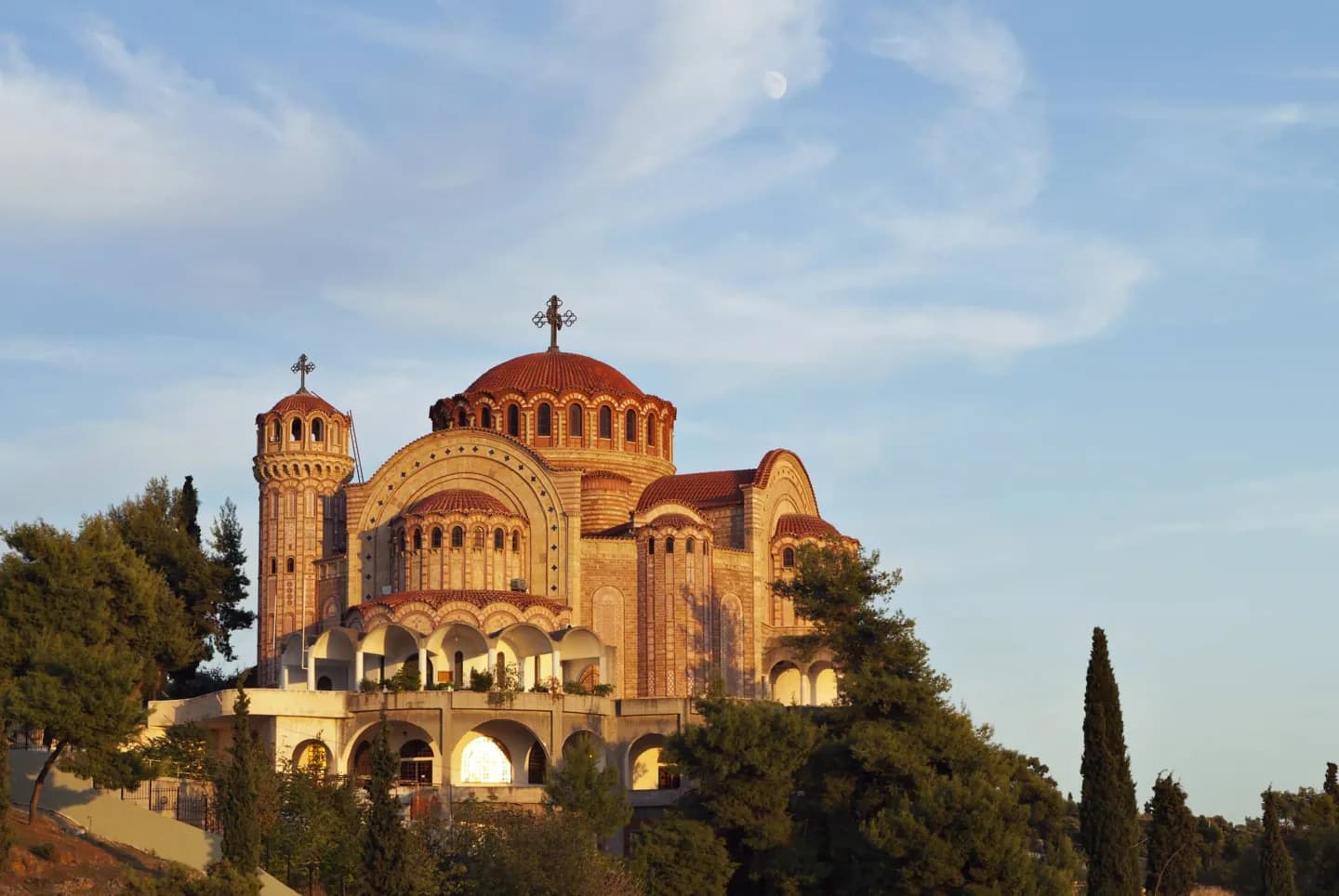
Why go
Agios Dimitrios, Hagia Sophia and smaller churches such as Hosios David connect religious art with the city's place in the Eastern Roman world. Pair them with the walls to understand how a wealthy regional centre defended itself through repeated attacks.
The full story
Thessaloniki held an important place in the Eastern Roman Empire after the western empire fell. Its churches, mosaics and fortified edge are the clearest reminders today. The city survived attacks in the early medieval centuries, including sieges described in accounts associated with Saint Demetrius. Cyril and Methodius, who came from Thessaloniki, later helped create the first literary language for Slavic peoples. The city was sacked in 904 and again changed hands after the Fourth Crusade in 1204, when it became part of a Latin kingdom. Byzantine successor states recovered it, but the final medieval centuries brought further conflict and shrinking imperial control. Venice held Thessaloniki from 1423 until the Ottoman conquest in 1430. These shifts did not erase its Christian monuments. Looking at a large basilica in the centre and a smaller church in the Upper Town shows how Byzantine history survives at different scales, while the walls place those buildings within a formerly defended city.