
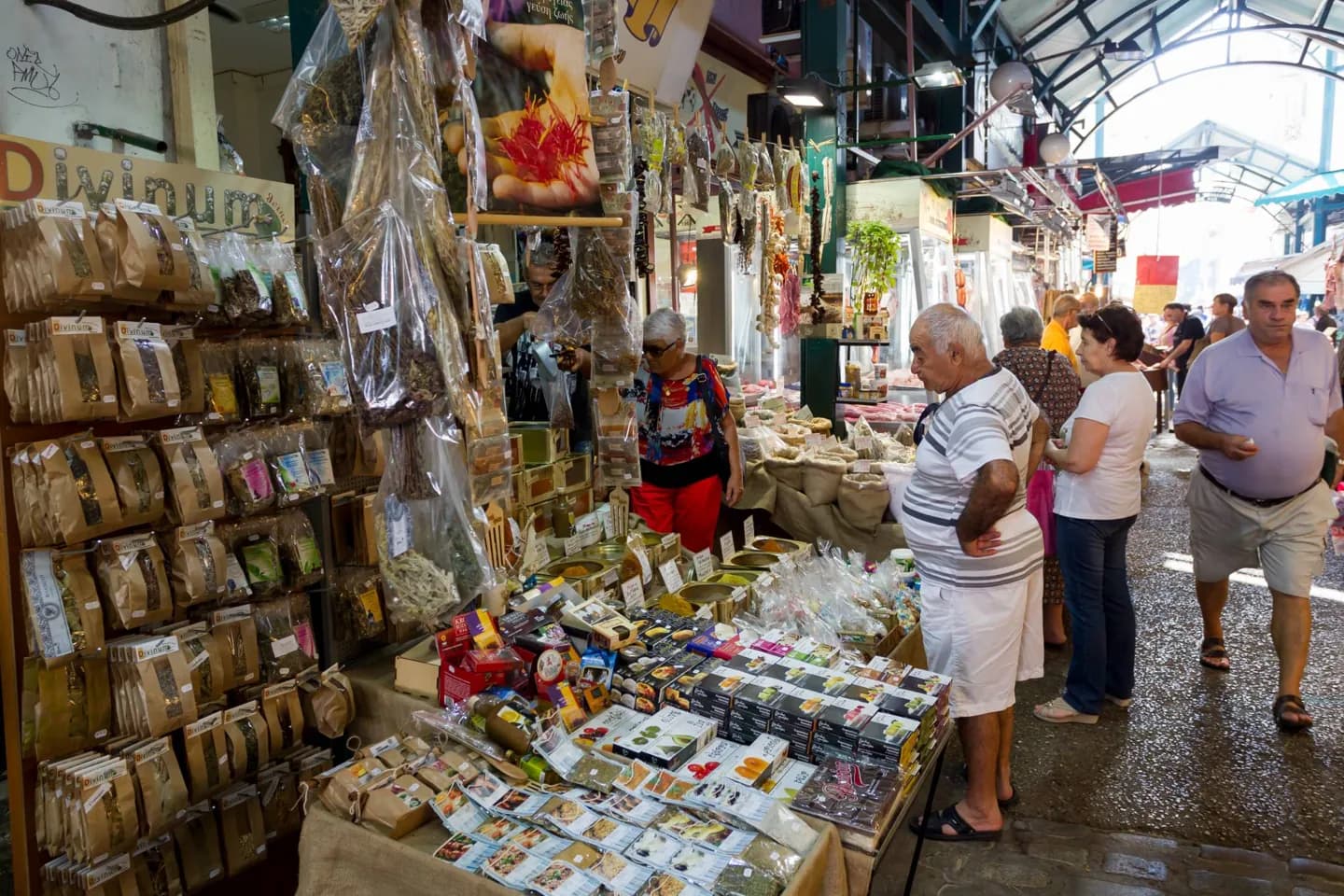
Why go
Bezesteni's domes recall an Ottoman covered market once known for textiles and goldsmiths. Modiano places food-market architecture close to Aristotelous Square. Together they make a focused city-centre look at how trade shaped the streets, even if today's stallholders and goods change.
The full story
The Bezesteni dates from the early Ottoman period. Its covered form and domes make it a useful architectural stop even for a visitor who has no shopping list. Sixteenth-century Ottoman travellers described a market noted for textiles and goldsmiths, a reminder that these spaces were once important commercial institutions rather than simply places to browse. Modiano Market offers a different scale of encounter: a food market close to Aristotelous Square, set within the dense commercial streets of the centre. The older account also points to nearby Ottoman-era baths, though their presence should be read as part of the area's history rather than a promise of present-day access. Looking at Bezesteni and Modiano together gives a clearer sense of how covered markets and neighbouring streets held the city's everyday commerce. The buildings and urban setting are the durable reason to explore them; individual stalls are a matter for the day of your visit.