
Why go
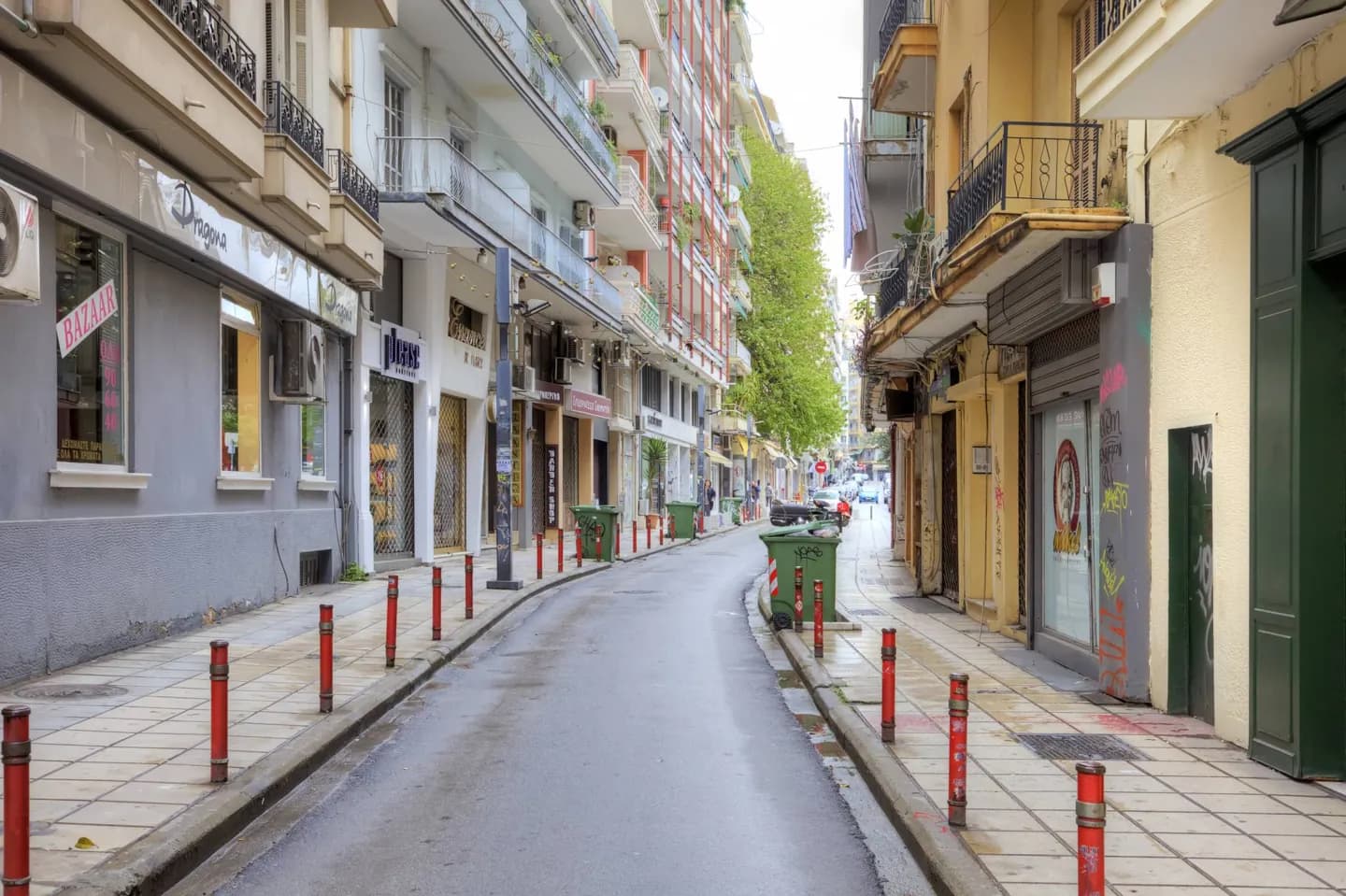
The pedestrian lanes around Morichovou and Katouni squares preserve the scale of Thessaloniki’s old merchant quarter. Look at the two-storey warehouse fronts before choosing a table: the area tells a more specific story than its present restaurant scene alone. The port is close enough to make the district’s former trading role easy to grasp.
What to look for
- Morichovou and Katouni squares break up the pedestrian lanes.
- Two-storey oil warehouses now frame restaurants and bars.
The full story
Ladadika takes its name from the olive oil trade that once occupied this part of the city beside the port. Merchants stored and sold goods in low warehouses, while Jewish residents and the neighbouring Frankish quarter formed part of its mixed urban life. The area later changed use and declined, but its nineteenth-century buildings survived. Protection and restoration brought the old street pattern and warehouse façades into the present restaurant district. That contrast is visible in a few blocks: commercial buildings built for storage now open onto outdoor tables, and the small squares still give the quarter its intimate scale. The surrounding port was the practical reason for the neighbourhood’s growth. Walk from one square to the other and the surviving façades reveal a working district whose buildings were adapted rather than swept away. That continuity distinguishes Ladadika from the grander post-fire centre nearby.
Useful to know
- Start at Morichovou Square, then thread through the lanes to Katouni Square.
- Pair the short walk with nearby Pier No. 1 or the seafront.
Your next visit
Estimated · Declared scenario and planning estimates; no live opening, weather, queue or booking service.
Outdoor visit · 15–25 min
World planning estimate; admission, opening, visit duration and access need checking.