
Why go
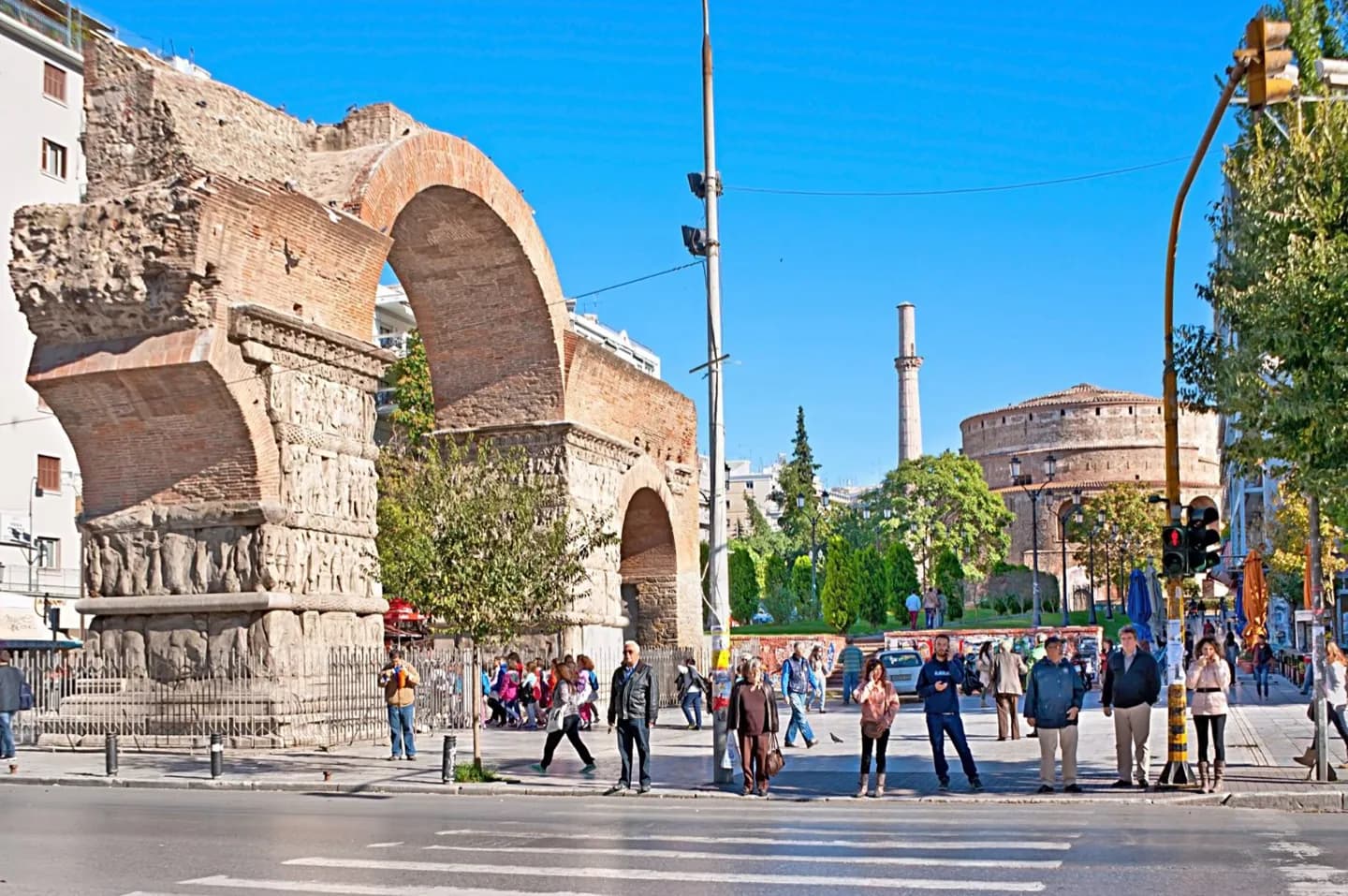
At the Arch of Galerius, the marble reliefs turn an imperial victory over Persia into public spectacle. The nearby Rotunda tells a longer story: its enormous circular form endured through Christian and Ottoman uses. Walking between them reveals a Roman axis still legible in today's street pattern.
The full story
Galerius commissioned the arch and Rotunda in the early fourth century as parts of an imperial precinct linked to his palace southwest of the arch. The arch rose where a route between palace and Rotunda crossed the city's main east–west road, the Via Egnatia. Its position made imperial power visible to people moving through Thessaloniki, while its marble panels celebrated the emperor's campaign against the Sassanid Persians. Much of the structure is gone, but the surviving reliefs and brick core still show the scale and message of the gateway. The Rotunda's massive circular shell outlived the original Roman scheme. It was adapted for Christian worship and later served as a mosque; a minaret survives as a sign of that Ottoman chapter. Its changing use makes the pair more than a snapshot of Roman rule. From the palace area through the arch to the Rotunda, the monuments trace both the ambitions of Galerius and the later city that reused his buildings.
Useful to know
- Follow the line from the palace remains near Navarinou Square through the arch to the Rotunda.
- Look at the arch's remaining marble panels before moving on; the surviving gateway is only part of the original structure.