
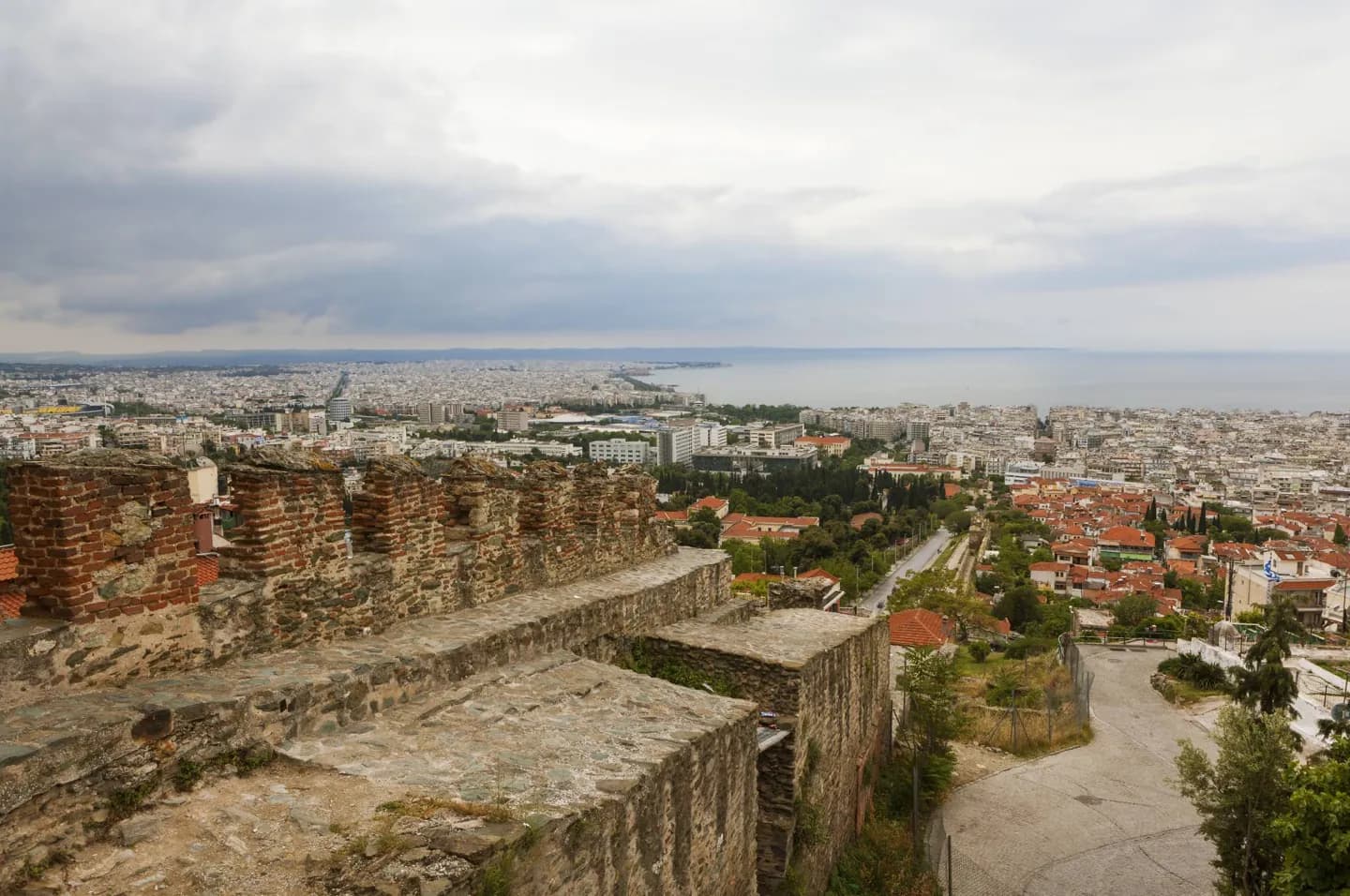
Why go
The fire explains a striking contrast: monumental axes and broad central streets stand close to much older churches and the lanes of the Upper Town. Understanding that break helps you read the centre as a rebuilt district rather than a continuous medieval one.
The full story
In August 1917, a fire spread through central Thessaloniki while the city was already under the strain of the First World War. It destroyed homes, businesses and much of the historic centre, leaving tens of thousands of people without housing. The damage fell especially heavily on the commercial heart of a city with a large Jewish population. Rather than simply replace the lost streets, the Greek government commissioned a new plan for the burned area. French architect Ernest Hébrard was closely associated with its design. The plan introduced broader streets, formal axes and monumental squares, although it was only partly realised. Aristotelous Square remains the most useful place to see its intent. Compare its ordered space with an older church preserved within the central grid, then look toward the Upper Town, where the street pattern tells a different story. The fire was a human disaster before it became a planning milestone; its legacy includes displacement as well as the shape of the modern centre.