
Why go
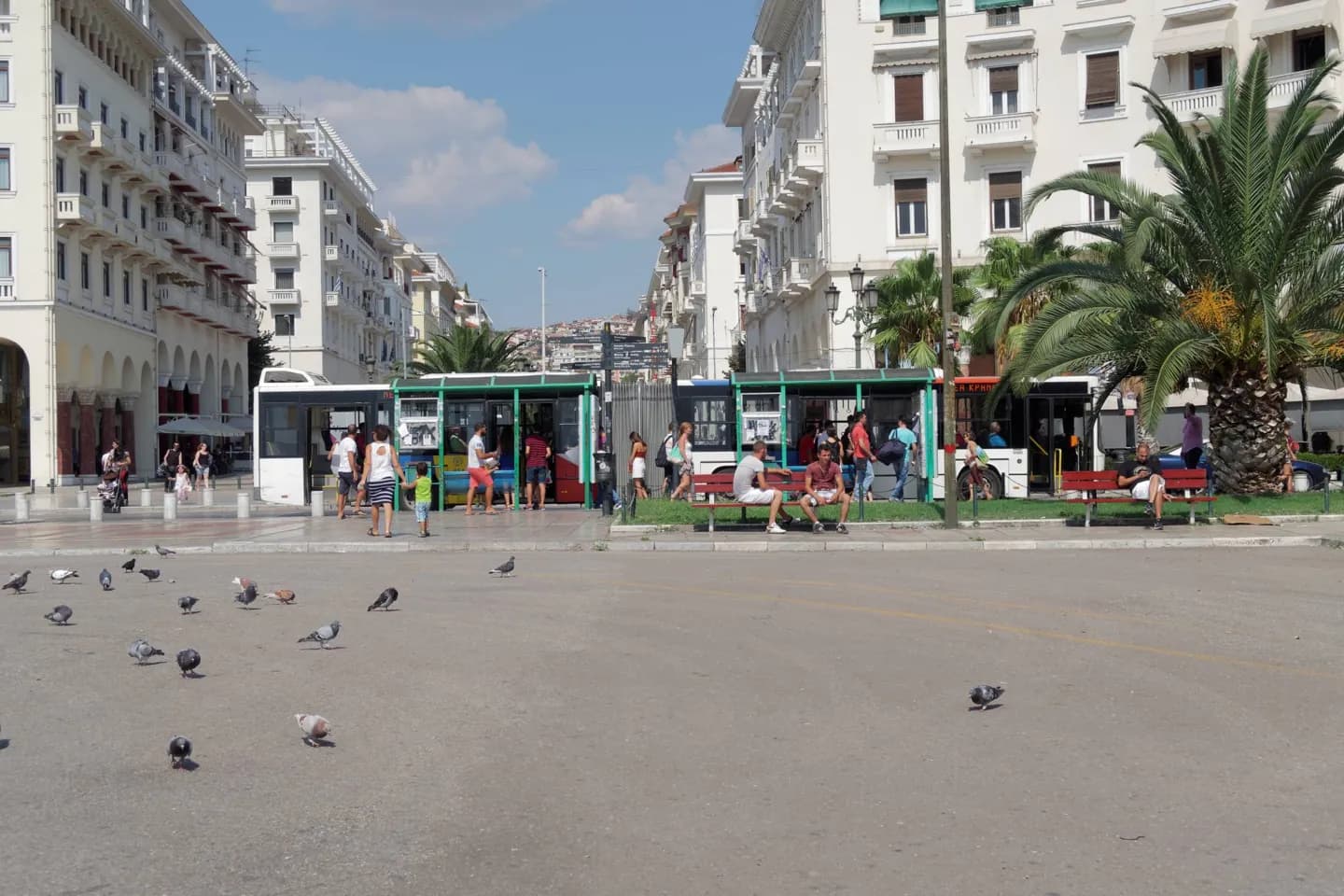
Use Aristotelous Square and the central street grid to see the response to the 1917 fire, then compare them with the Upper Town and port. That contrast makes the century's political upheaval and population change more legible in the city itself.
The full story
At the start of the twentieth century, Thessaloniki was still an Ottoman city with several large communities and active political movements. Greek forces took it during the Balkan Wars in 1912, and Allied troops used it as a base during the First World War. The fire of 1917 destroyed much of the centre, creating an opening for a new urban plan associated with Ernest Hébrard. After the Greek-Turkish War, refugee movement and population exchange changed the city's social makeup again. The German occupation during the Second World War brought the deportation and murder of most of Thessaloniki's Jewish residents, a loss that permanently altered the city. These events are not all visible in the same way. Aristotelous Square and wider planned streets express reconstruction; surviving churches, markets and Upper Town lanes show older layers; the Jewish Museum interprets a community whose loss cannot be read from the street plan alone. Visiting these places together gives a more honest account of the modern city than a single landmark can.