
Why go
The city's position explains why a waterfront stroll, a central museum visit and an Upper Town walk demand different plans. Summers can be hot; winter can bring cold, wind and occasional frost. Use the bay and hills to organise your day, keeping exposed walks flexible when the weather changes.
The full story
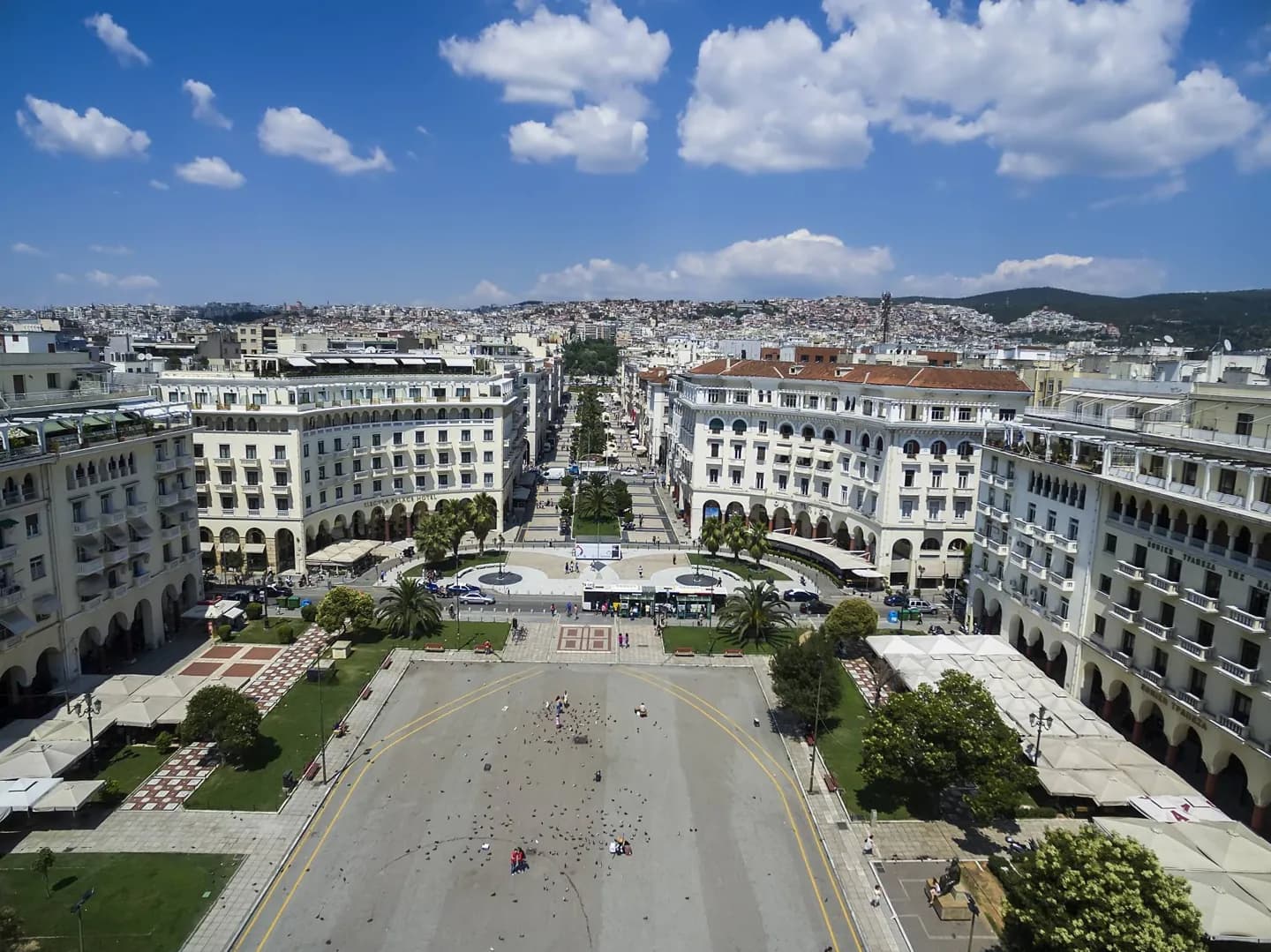
Thessaloniki sits along the northern edge of the Thermaic Gulf, with higher ground rising away from the water and Mount Chortiatis to the southeast. That shape is useful for orientation: the waterfront marks the low edge of the city, while Upper Town's streets climb toward walls and views. A route between the two asks more effort than a flat walk along the bay. The sea influences the climate, but it does not make every season gentle. Summers are commonly hot, with rain less frequent and occasional thunderstorms. Winters are cooler and can bring wind, morning frost and some snow. These broad patterns matter more to a visitor than old temperature tables: leave exposed seafront stretches or steep hill walks adjustable, and use churches or museums for part of a very hot or wet day. The same geography that gives the city its outlook over the gulf also makes conditions vary between the water and the upper slopes.
Useful to know
- Plan the climb into Upper Town as its own outing, especially in hot weather.
- Keep seafront time flexible on windy or wet days; use a museum or church as an indoor pairing.