
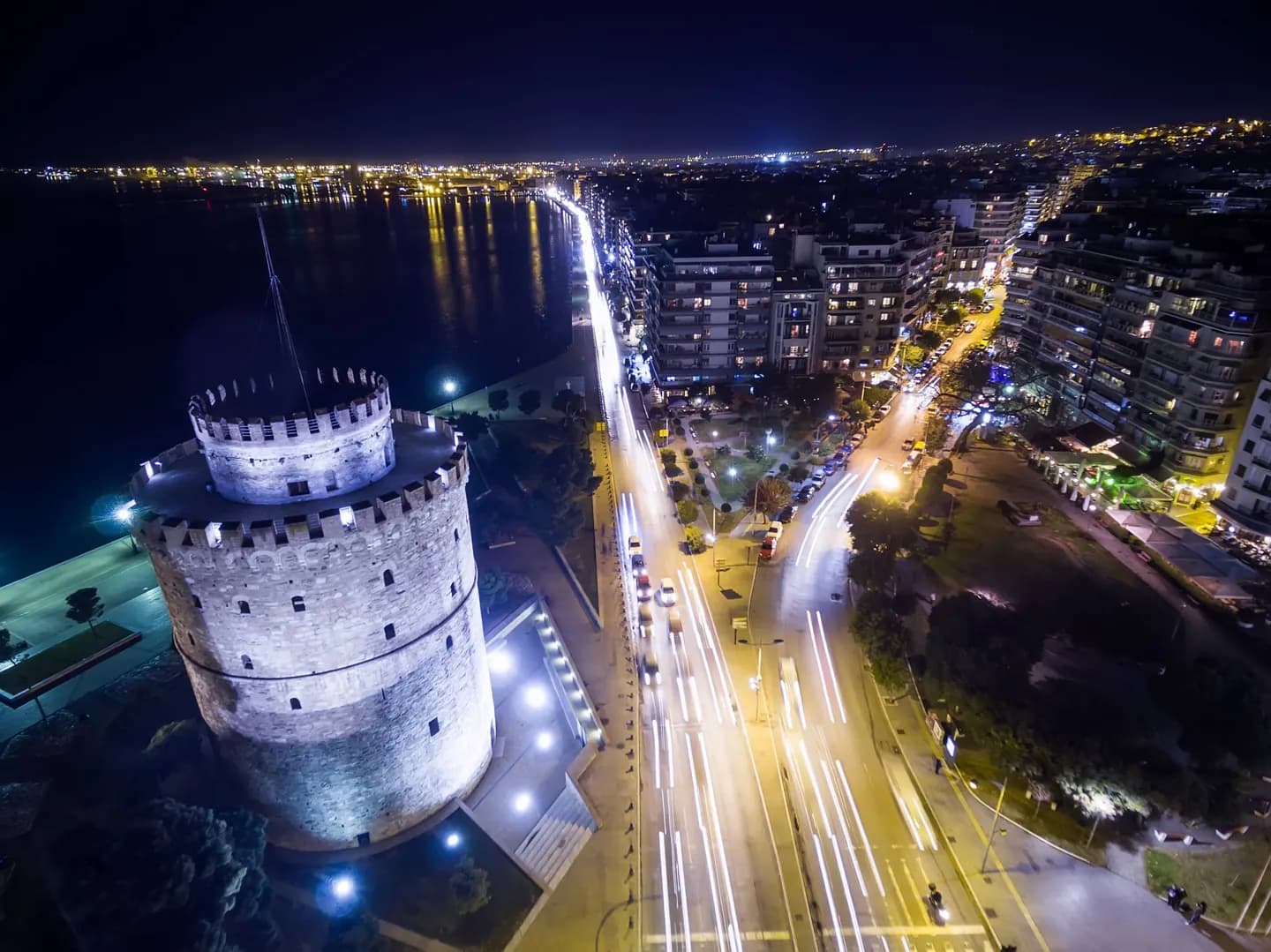
Why go
The city grew at a crossroads between the Balkan interior and the Aegean. That position helps explain the Roman route of Via Egnatia, its Byzantine churches, Ottoman commercial life and the Sephardic Jewish community that shaped Thessaloniki for centuries. The centre makes these connections visible.
The full story
Thessaloniki was founded in the Macedonian kingdom and named for Thessalonike, the wife of Cassander and half-sister of Alexander the Great. Its position beside the Thermaic Gulf and on overland routes made it a trading and administrative centre under Rome. Via Egnatia linked it with other cities across the southern Balkans. The Galerius complex and Roman Forum are useful starting points for seeing that ancient layer. In the Byzantine period, Thessaloniki became a major city of the Eastern Roman Empire; its surviving churches give that history a visible presence throughout the centre. Ottoman rule began in 1430. Sephardic Jews expelled from Iberia later settled here in large numbers, joining older communities and helping shape the city's commercial and cultural life. The devastating fire of 1917 and subsequent plan for the centre changed its street pattern, while the German occupation during the Second World War brought the deportation and murder of most of its Jewish residents. Move between the centre, waterfront and Upper Town to see how these histories occupy different parts of the same city.