
Why go
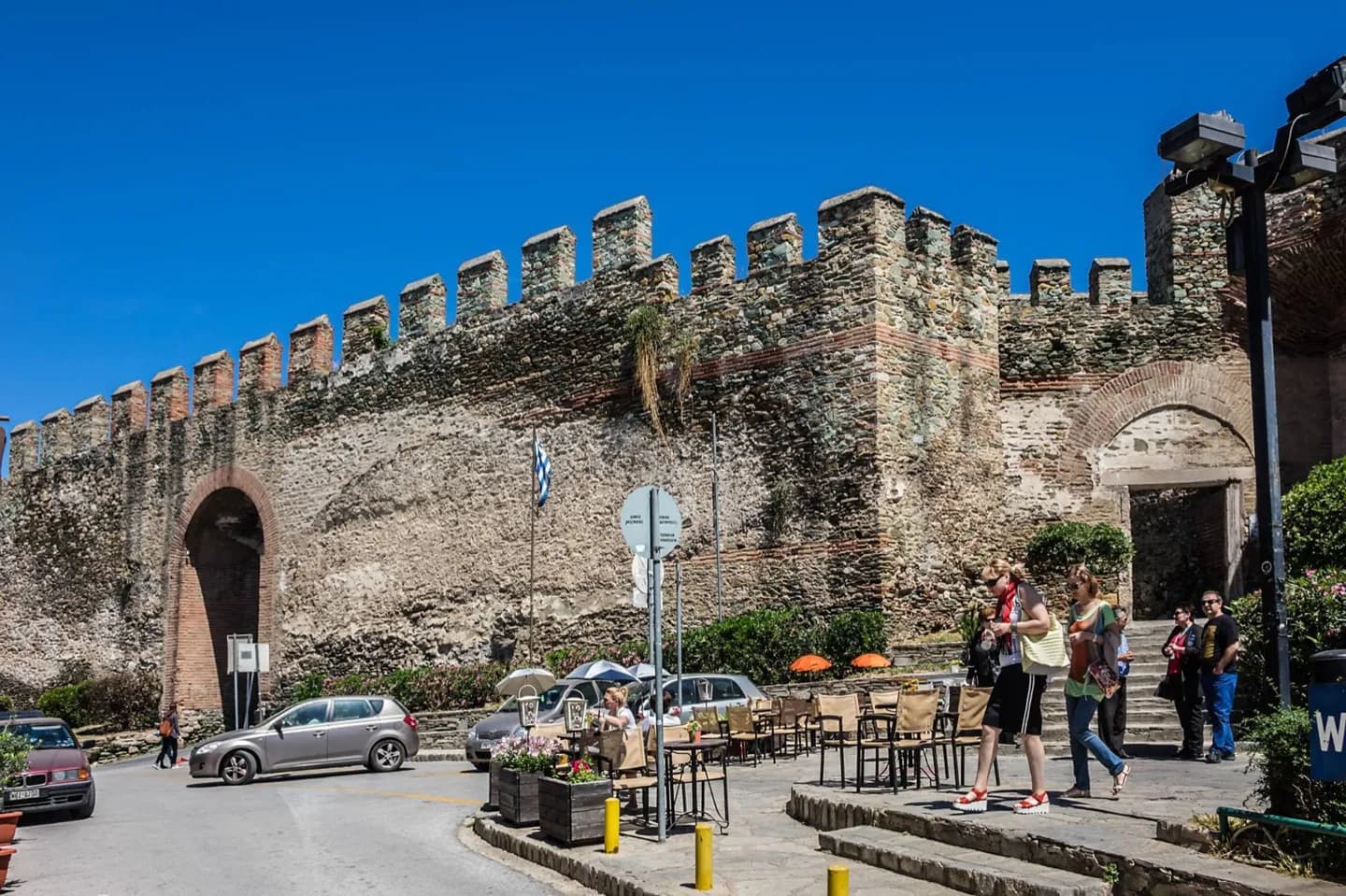
The northern walls, fortified acropolis and Heptapyrgion show how the medieval city was enclosed. Compare them with the White Tower by the sea to grasp how much of the former waterfront defences disappeared as Thessaloniki expanded. The hillside also reveals the defensive value of the terrain.
What to look for
- Brick bands alternate with dressed stone in sections of the early Byzantine wall.
- The northern defences meet the acropolis and Heptapyrgion above the city.
- The missing seaward wall explains the open modern waterfront.
The full story
Thessaloniki had fortifications from antiquity, but much of the surviving wall belongs to the early Byzantine period and incorporates older work. Its mixed stone and brick construction can still be read in the standing sections. The northern line joined a separately defended acropolis, with the Heptapyrgion citadel within it. These remains show the city's defensive shape more clearly than a single isolated tower can. Large sections were removed in the nineteenth century as Thessaloniki's urban fabric changed, including the seaward wall. The White Tower survives by the waterfront as a reminder of that former defensive edge, while the larger standing sections remain uphill. The result is a broken boundary, not a continuous walk around the old city. Looking from one section toward the centre and bay helps restore the relationship between the walls, the Upper Town and the lower urban area they once enclosed. The climb also makes the topography of defence immediately clear.
Useful to know
- Treat the walls as several separate stretches and allow for the climb into the Upper Town.