
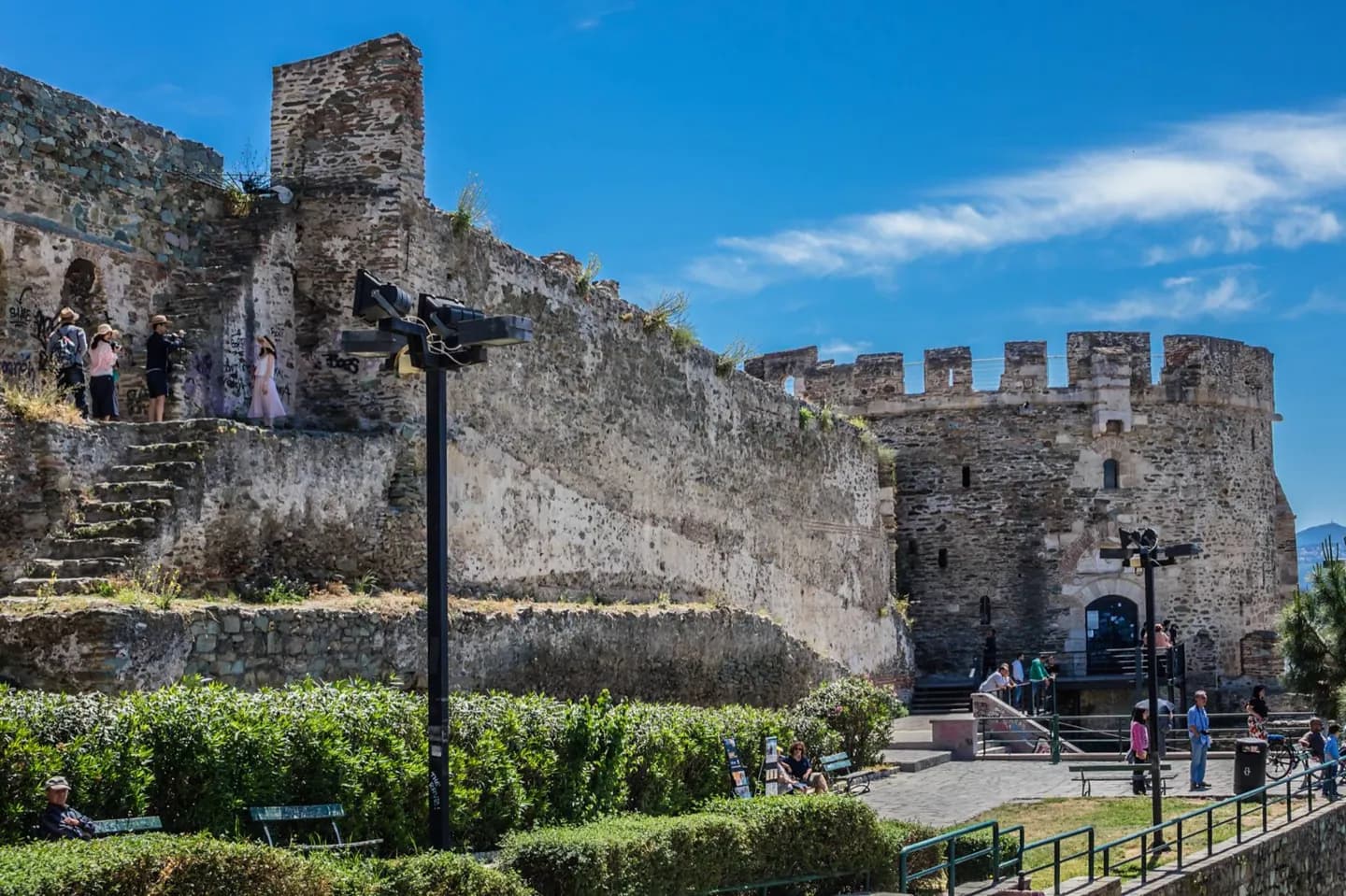
Why go
A short visit can link the Arch of Galerius with the Rotunda, or the White Tower with the waterfront. More time allows the Roman Forum, Agios Dimitrios, the Jewish Museum and the Upper Town to tell a broader story across several districts.
The full story
Thessaloniki rewards looking at how its sights relate, rather than treating every monument as an isolated stop. Around the Galerius complex, the palace remains, arch and Rotunda recall the Roman imperial city. The Rotunda later became a Christian church and then a mosque, so one building carries several chapters of its history. Byzantine churches such as Agios Dimitrios and Hagia Sophia give the medieval city a different scale and purpose. Near the central markets, Bey Hamam and the Bezesteni reflect Ottoman public and commercial life. The White Tower marks the seafront, where much of the older defensive edge was removed as the city expanded. Farther uphill, surviving walls and the Heptapyrgion show the former fortified boundary more clearly. Thessaloniki's Jewish history needs attention too: the Jewish Museum helps explain a once large Sephardic community and the devastation of the German occupation. Pair nearby sites according to the layer that interests you, then cross to another district to see what changes in the street itself.