
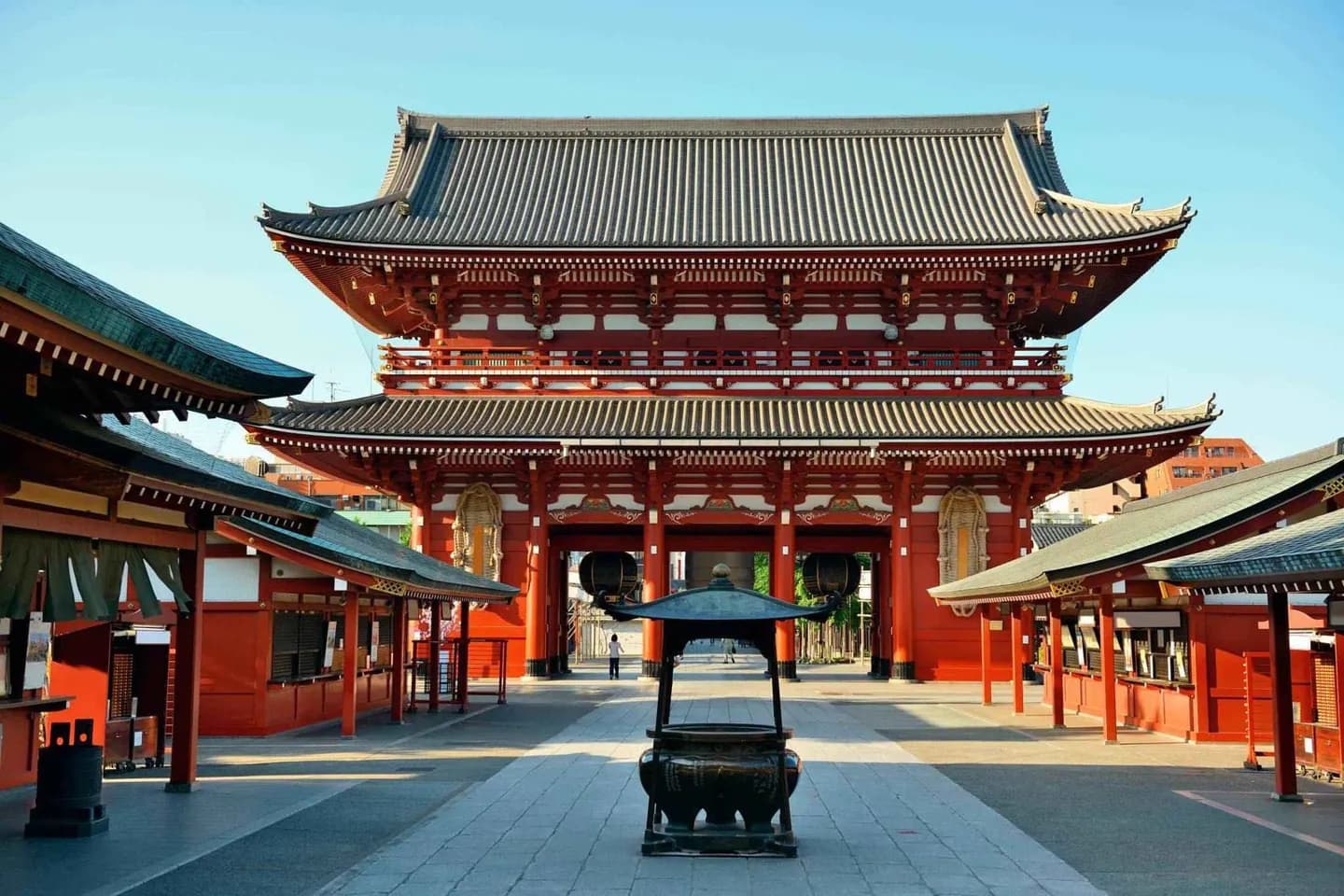
Why go
That history remains visible in temple precincts, former castle grounds, canals, parks, and neighborhoods whose street patterns survived major change. Understanding Edo’s role and Tokyo’s cycles of destruction and reconstruction gives context to both rare older monuments and the city’s strong modern architectural character.
The full story
The History of Tokyo shows the growth of Japan's largest urban center. The eastern part of Tokyo occupies land in the Kantō region that together with the modern-day Saitama Prefecture, the city of Kawasaki and the eastern part of Yokohama make up Musashi; one of the provinces under the ritsuryō system. The 23 special wards, consisting of the districts of Toshima, Ebara, Adachi and Katsushika, form the central part of Tokyo. Western Tokyo occupies the Tama district. Tokyo's oldest Buddhist temple is Sensō-ji in Asakusa. The village of Edo was established In the Kamakura period. Sengoku period The Kanto plain was settled by the 3rd millennium BC; modern Tokyo still carries some local names of former villages. Hirakawa-mura, a farming and fishing village on the shores of the Hira river, had a strategic location, commanding land, sea, and river routes along the Kanto plain. In the Kamakura period , Edo Shigenaga, the military governor of a large Kanto province, erected his castle there, calling it Edojuku. The construction of Edo Castle by Ōta Dōkan, a vassal of Uesugi Mochitomo, began in 1457 during the Muromachi period in what is now the East Garden of the Imperial Palace. Shrines and temples grew up nearby, and merchants developed businesses and open ferry and shipping routes.Hōjō Ujitsuna entered Edo Castle in 1524. Momoyama period In 1590, Tokugawa Ieyasu established himself in Edo.