
Why go
The festival is most rewarding for travelers prepared for crowding and changing street access. Its processions make local religious and neighborhood ties visible at an exceptional scale; check the current official program and choose a viewing area before entering Asakusa’s busiest streets.
The full story
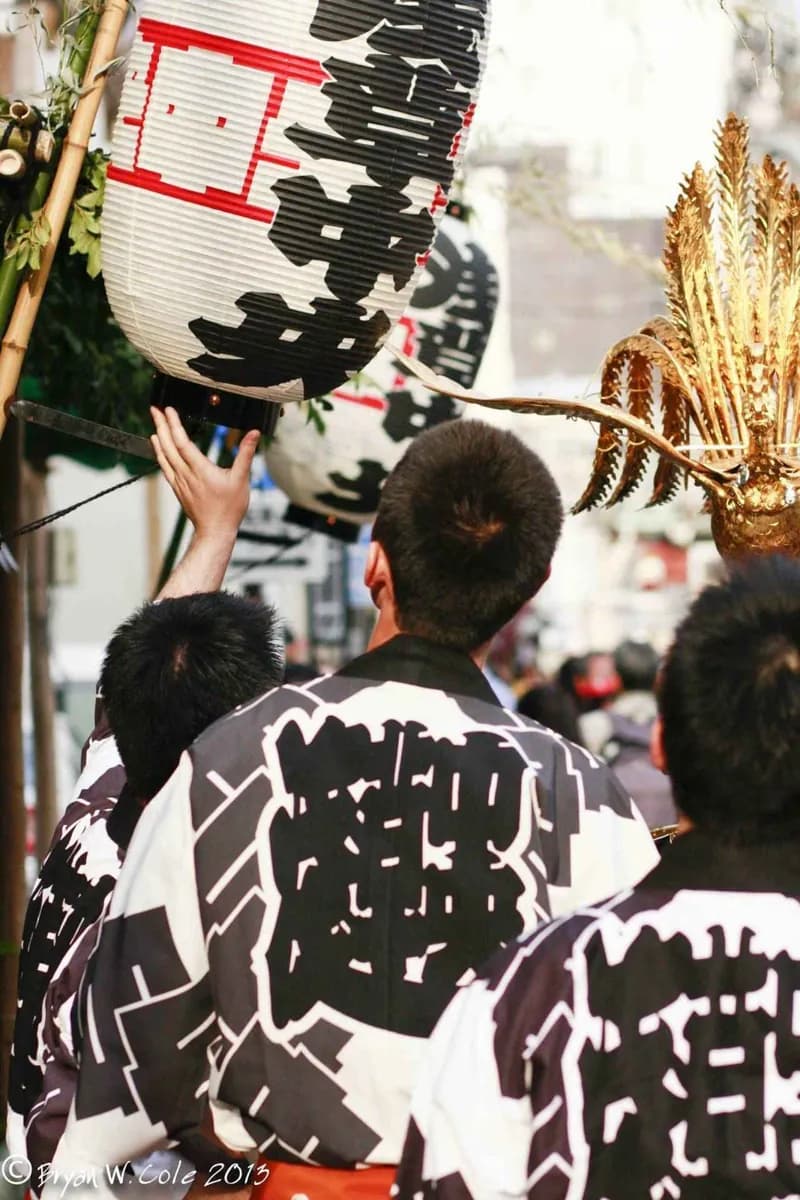
Sanja Matsuri (三社祭, literally "Three Shrine Festival"), or Sanja Festival, is one of the three great Shinto festivals in Tokyo. It is considered one of the wildest and largest. The festival is held in honor of Hinokuma Hamanari, Hinokuma Takenari and Hajino Nakatomo, the three men who established and founded Sensō-ji. Sanja Matsuri is held on the third weekend of every May at Asakusa Shrine. Its prominent parades revolve around three mikoshi (portable shrines referenced in the festival's name), as well as traditional music and dancing. Over the course of three days, the festival attracts 1.5 to 2 million locals and tourists every year. History Like many Japanese festivals, Sanja Matsuri is a religious celebration. It is a weekend-long Shinto festival that is dedicated to the kami (spirits) of three men. It is believed that two fishermen—brothers named Hinokuma Hamanari and Hinokuma Takenari—found a statuette of the Bodhisattva Kannon caught in a fishing net in the Sumida River on the early morning of March 18, 628. The third man, a wealthy landlord named Hajino Nakatomo, heard about the discovery, approached the brothers and converted them to Buddhism. The three men then devoted their lives to the Buddhist faith and consecrated the statue in a small temple. This temple, now known as the Sensō-ji, currently houses the Kannon statue and is the oldest temple in Tokyo.