
Why go
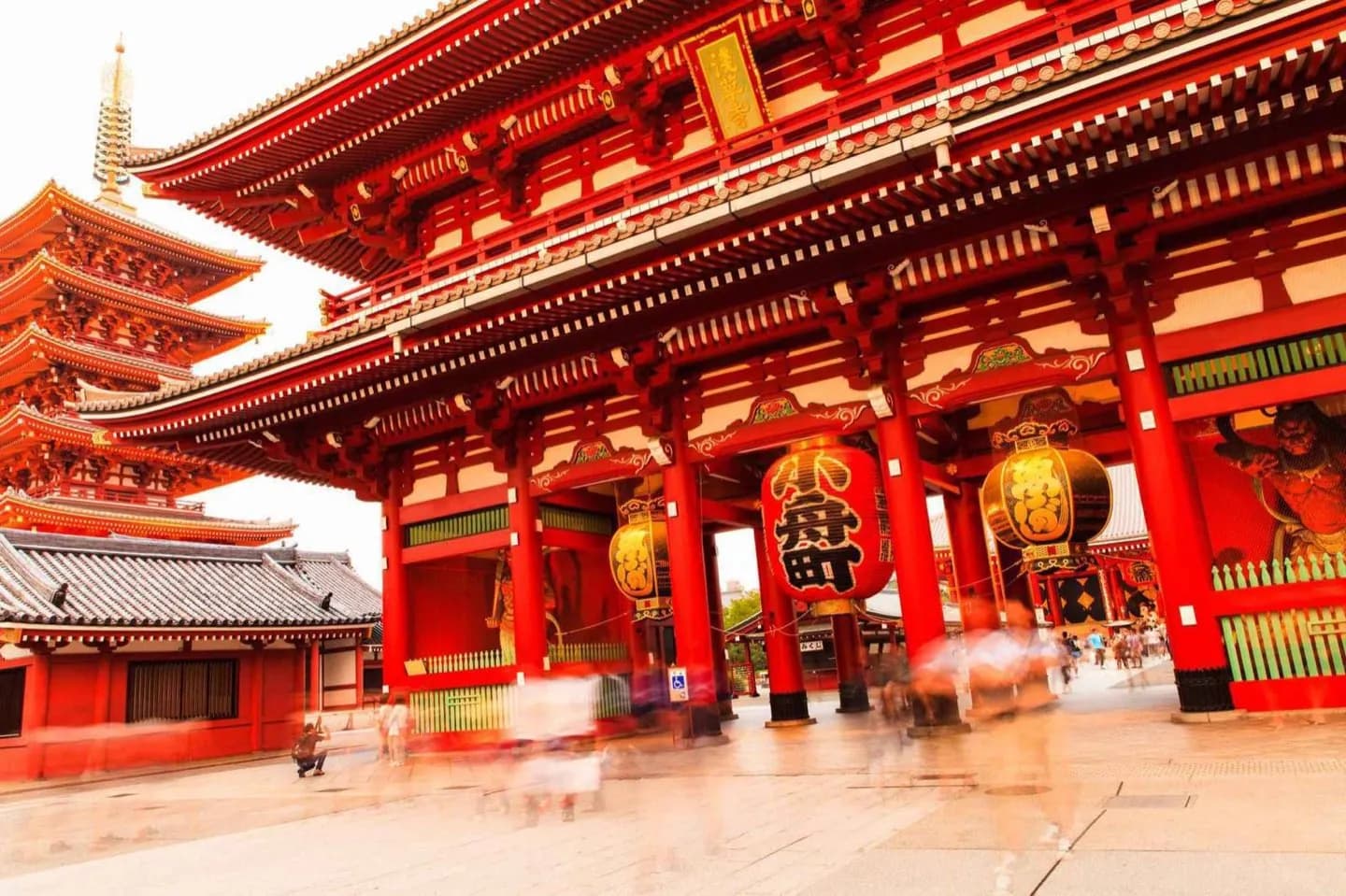
Understanding Sensoji gives context to Kaminarimon, Hozomon, Asakusa Shrine, and the surrounding district. The temple’s founding legend, repeated reconstruction, and continuing religious role explain why the precinct feels both historic and intensely active rather than preserved as a static monument.
The full story
According to temple tradition, two fishermen found an image of Kannon in the Sumida River in 628, inspiring the shrine that became Sensoji. The temple grew into one of Edo’s major religious centers and helped shape Asakusa as a district of pilgrimage, commerce, and entertainment. Repeated fires and disasters altered the buildings, and much of the precinct was destroyed during the Second World War. Its postwar reconstruction became a visible symbol of renewal. Today the route through Kaminarimon and Hozomon toward the main hall remains central to the experience, while neighboring Asakusa Shrine reflects the close coexistence of Buddhist and Shinto traditions. Reading the precinct as a sequence makes its scale and urban role easier to understand. Its living traditions continue to shape daily movement through Asakusa today.